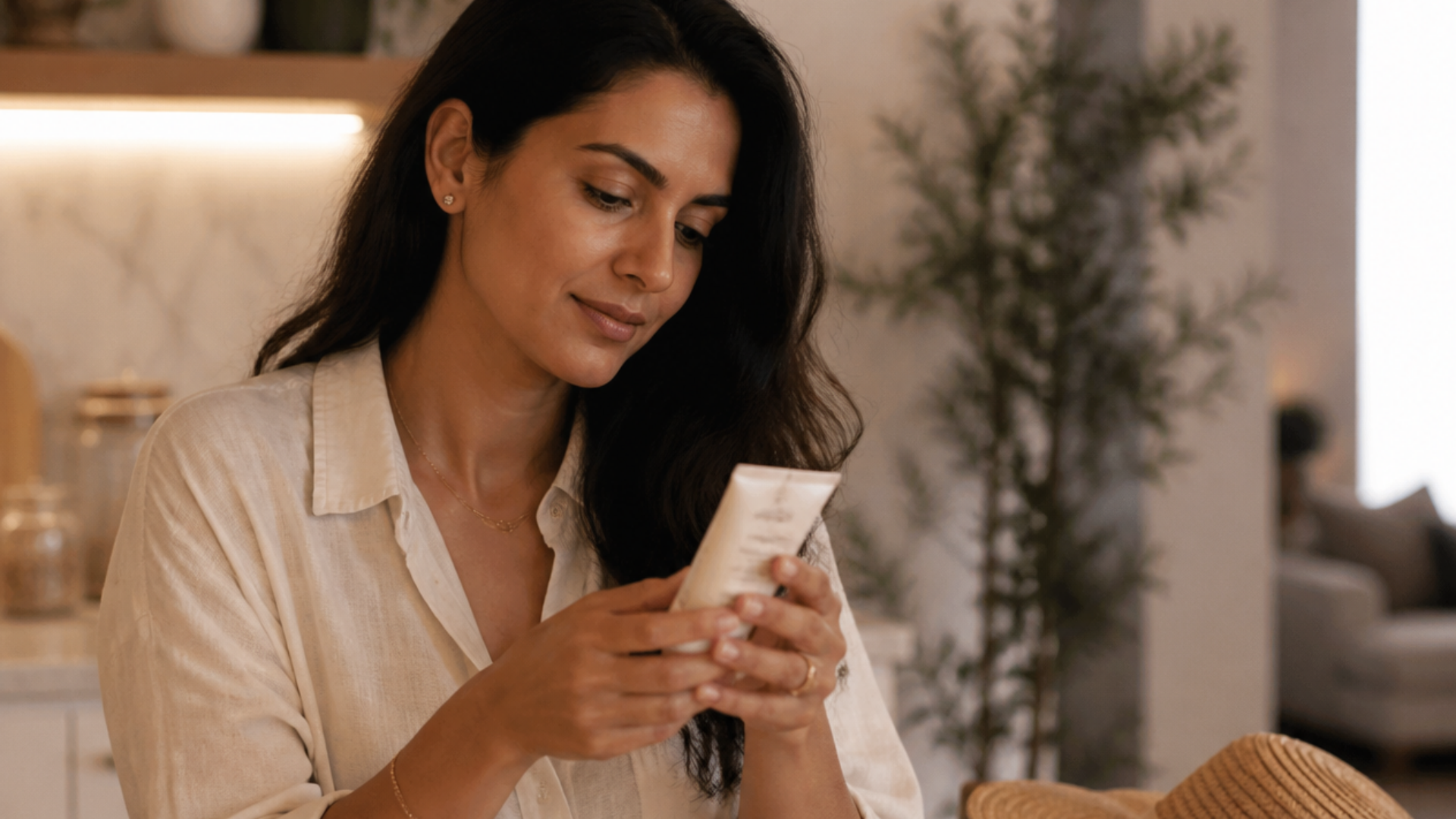
When I look at products for my daughter, I become extra careful. The packaging can be cute, the scent can be lovely, and the reviews can be glowing, but I still want to know the age guidance, the ingredients, the directions, and what to watch for if her skin reacts.
Choosing sunscreen for kids is not complicated, but it does deserve a slower look than choosing one for yourself. Here is what I check first when I choose sunscreen for kids, in the order I check it.
- Age guidance comes first with sunscreen for kids. Many sunscreen labels say to ask a doctor before using sunscreen on babies under 6 months, so please read the carton.
- Fragrance-free mineral formulas are a common starting point for sunscreen for kids, but child-safe lines on a listing are brand claims, not guarantees.
- Patch test a small area first, and stop if your child's skin reacts. Ask a pediatrician if your child has eczema, allergies, or sensitive skin.
- Amount and reapplication matter as much as the product. Reapply at least every two hours outdoors, and after swimming or sweating.
What Parents Notice First
Most of us pick sunscreen for kids based on the bottle, the scent, or what worked last summer. Those are fine places to start, but they are not the safest places to stop.
A gentle routine begins with the label. Look for the age guidance, the active ingredients, the SPF, the water resistance, and the directions. Then ask whether it is simple enough to use every time you leave the house.
Age Guidance for Sunscreen for Kids
Please do not skip this part of choosing sunscreen for kids. Many sunscreen labels say to ask a doctor before using the product on children under 6 months, and the FDA's recent decision on bemotrizinol applies to adults and children 6 months and older. Whether bemotrizinol is safe is a common question, and the age line is part of the answer.
For very young babies, the usual advice is to talk to your pediatrician about shade, clothing, and whether sunscreen is right for your child. I would not guess.
Ingredients and Fragrance in Sunscreen for Kids
The difference between mineral and chemical sunscreen matters here. Mineral sunscreens use zinc oxide or titanium dioxide, and many parents choose them as sunscreen for kids with sensitive skin. Chemical sunscreens can also be used by children, but I would check the label and ask a pediatrician if your child has reactions.
- Fragrance: Fragrance-free is a gentle starting point for kids with reactive skin.
- Filter: Mineral formulas are a common choice. Read the Drug Facts label for the active ingredient.
- Extras: Fewer additives usually means fewer things to react to, though not always.
- Texture: Lotions are easier to apply evenly than sprays, which can be hard to use on a wriggling child.
The Drug Facts label also lists warnings and directions. If the label says to stop use and ask a doctor if a rash occurs, take that seriously.
A Few Labels I Would Read Closely
The products in this section are examples of the claims you will see on sunscreen for kids listings. I have not tested them on a child, and I would not use any of them without checking the carton for age guidance.
- Clinique SPF 50 Mineral Sunscreen Fluid: The listing says it is safe for children 6 months and older and is pediatrician and allergy tested. Those are the brand's claims, so confirm them on the carton.
- Eucerin Sun Sensitive Mineral Lotion: The listing says it is hypoallergenic, free of fragrance, and suitable for face and body. It does not give an age line in our source list, so check the label.
- Blue Lizard Australian Sheer Body Mineral: The listing says it is fragrance-free, water resistant for up to 80 minutes, and uses zinc oxide. Check the label for age guidance.
Sunscreen for sensitive skin follows the same logic, and a fragrance-free mineral formula is a sensible place to begin there too. The mineral sunscreen for body options are also easier to apply in bulk, which matters when you are covering arms, legs, and ears.
Water Resistance and Reapplying Sunscreen for Kids
Water resistant means a sunscreen stays effective for 40 minutes in the water, and very water resistant means 80 minutes, according to the American Academy of Dermatology. There is no such thing as waterproof sunscreen.
Children sweat, swim, and wipe their faces with towels, so sunscreen for kids wears off faster than you expect. Reapply at least every two hours, and after swimming or sweating. The Skin Cancer Foundation also notes that most people apply far less sunscreen than lab testing uses, so be generous.
A Simple Sunscreen for Kids Routine a Tired Parent Can Repeat
A steady morning sunscreen ritual makes sunscreen for kids easier to repeat on school days, and the Drug Facts label is the place to double-check each step.
When to Ask a Pediatrician
Please ask a pediatrician before using sunscreen for kids under 6 months, or if your child has eczema, allergies, asthma, sensitive skin, or any medical condition. Stop using the product and ask for advice if you see a rash, swelling, or blistering.
Sunscreen for kids can support a routine, but it is not a replacement for shade, clothing, or medical care. Do not panic if a product does not suit your child. Just stop, and try something gentler.
My Mom Verdict
The best sunscreen for kids is one with clear age guidance, a gentle formula, and a texture you can apply evenly in a hurry. Start with the label, patch test first, and add shade and clothing. You can build from there.
What age can sunscreen for kids start?+
Many sunscreen labels say to ask a doctor before using it on babies under 6 months. Please check the label on your product and ask your pediatrician.Is mineral sunscreen for kids better?+
Mineral sunscreens with zinc oxide are a common choice for sensitive skin, but they are not automatically better. Fragrance-free formulas and a patch test matter too.Is spray sunscreen for kids okay?+
Sprays can be hard to apply evenly on a moving child, so many parents prefer lotions. Follow the label directions and ask your pediatrician if you are unsure.How often should I reapply sunscreen for kids?+
At least every two hours outdoors, and after swimming or sweating. Water resistant formulas still need reapplying.What should I do if my child reacts to sunscreen?+
Stop using it and rinse the area. If there is swelling, blistering, or the reaction does not settle, please ask a healthcare provider.