.webp&w=3840&q=75)
There's a version of the recovery pyramid that gets taught in sports science programs and posted on gym walls. It puts sleep at the base, then nutrition, then hydration, then everything else in order of evidence. I've seen it in enough textbooks to know it exists.
It's not the pyramid the recovery industry sells.
The industry pyramid is upside down. At the base sits the category with the most marketing spend and the least evidence. Devices, supplements, targeted treatments, tools that cost money and have brand partnerships behind them. The thing you're meant to build your practice on. The top of that pyramid, the part treated as optional, is where most of the actual research lives.
This article is about what's at the top.
What the Research Puts First
In 2018, a survey of elite endurance athletes found something that should have been obvious but keeps getting buried. These are the people whose recovery needs are most consequential and whose practices are most documented.
When asked which recovery methods they found most effective, sleep came first. Not by a little. Then came passive heat — sauna, steam, hot bath. Then cold-water immersion. Then nutrition. The percussion gun, the compression sleeve, the targeted peptide stack all appeared much further down, if at all.
This isn't surprising if you follow the mechanisms. Sleep is when growth hormone releases at its highest levels. Sleep is when the glymphatic system clears metabolic waste from the brain. Sleep is when muscle protein synthesis peaks. There's no recovery tool that replicates what seven to nine hours of sleep produces, and no amount of money buys a shortcut around it.
What's notable is the second item: heat. Not ice baths. Not percussion. Heat. Passive, sustained, whole-body heat of the kind a sauna or steam room produces. The cardiovascular response to heat is well-documented: raised heart rate, increased blood flow to muscle tissue, the hormonal cascade that follows a high-temperature session.
The research covers what the heat evidence actually shows in detail. The short version: cardiovascular and vascular adaptations from regular heat exposure are among the most consistently supported findings in the thermal wellness literature. The mechanisms are understood.
Why Cold-Water Immersion Is More Complicated Than You've Been Told
Cold plunges had a big moment. They still do. The breathwork-adjacent wellness community has made cold-water immersion into something between a productivity hack and a spiritual practice, and the coverage has reflected that.
The research is more equivocal.
Cold-water immersion after a hard training session does reduce perceived soreness. It does blunt the acute inflammatory response. The problem: that inflammatory response after training is part of the adaptation signal.
The inflammation isn't just discomfort. It's the body telling the muscle to get stronger. Cold-water immersion, by blunting that signal, may also blunt the strength and hypertrophy adaptations that follow.
A 2021 meta-analysis published in Sports Medicine found that cold-water immersion after resistance training reduced muscle soreness but was associated with smaller strength gains compared to passive recovery over time. The effect was most pronounced with repeated cold immersion in the 24–48 hour window immediately following training.
This doesn't make cold-water immersion useless. For endurance athletes whose priority is reducing soreness and returning to volume quickly, the trade-off is defensible.
For someone new to heat and contrast therapy, our first-time banya guide covers how to structure the heat-cold sequence before adding cold immersion as a deliberate variable. For someone trying to build strength or muscle, timing matters: cold-water immersion more than four hours after training, or on rest days, appears to produce less interference with adaptation.
The question is what you're trying to get out of it.
The Percussion Gun Problem
The percussion massager category (Theragun and its category-mates) is one of the more successful recent expansions in the recovery industry. The devices are expensive, the marketing is polished, and the professional athlete endorsements are everywhere.
The research is not especially impressive.
A 2020 review in the Journal of Clinical Medicine found that percussion devices reduced perceived muscle soreness to a degree comparable to foam rolling. Not better. Comparable. Which raises the obvious question: if the outcome is the same, what does the $500 device add over the $30 roller?
The answer appears to be convenience and perceived intensity. Percussion massagers require less effort to use than foam rolling, and they produce a sensation of intervention that foam rolling doesn't quite replicate. The research doesn't show that sensation reflects a different physiological effect.
There are specific use cases where percussion has an edge: pre-performance activation, working into areas difficult to reach with a roller, and the psychological effect of a deliberate recovery protocol. These are real. But the evidence for percussion over traditional soft-tissue work is thinner than the marketing suggests, and the price differential isn't justified by the outcome data.
Where Heat Actually Sits in the Pyramid
After sleep, heat is the most consistently supported recovery method in the literature. This is worth saying plainly because it tends to get lost in the noise around newer, more expensive interventions.
The mechanisms are multiple. Sauna-level heat increases growth hormone output. One study found levels 16 times above baseline following a protocol of two 20-minute sessions at 80°C. Heat exposure also increases heat shock protein production, which plays a role in cellular stress response and repair.
The cardiovascular effects of regular heat exposure are documented across multiple studies and population groups: reduced resting heart rate, improved endothelial function, reduced arterial stiffness.
The practical implication is less complicated than the mechanism list suggests. Regular heat exposure, done consistently, produces recovery and adaptation benefits that are hard to replicate with any marketed device.
The format matters less than the frequency and duration. A sauna session three to four times per week is a different intervention than one session after a hard workout, and it's the longitudinal effects that the research actually tracks.
The cold contrast after heat adds its own layer: the vascular response to moving between heat and cold, the shift in autonomic nervous system state, the specific quality of recovery that follows a hot-cold-rest cycle. The Russian banya built its three-room structure around exactly this sequence. The post-sauna recovery guide covers what the window after a session should look like in practice.
The Collagen and Cherry Problem
Two supplements dominate the sports recovery category in terms of search volume and consumer spend: collagen peptides and tart cherry extract.
The collagen research is interesting. Keith Baar's work on collagen synthesis and tendon repair suggests that hydrolyzed collagen taken with vitamin C before exercise may increase collagen synthesis in connective tissue. The finding is real and the mechanism is plausible.
It's also been marketed well beyond its evidence base. The studies are small, short, and conducted in specific populations: older adults and people with existing joint complaints.
The leap from "may support collagen synthesis in tendons in this context" to "supports joints and recovery for everyone who works out" is a large one, and the supplement category has made it enthusiastically.
Tart cherry has a better evidence base. Multiple randomized controlled trials support its effect on muscle soreness and inflammation markers after exercise. The active compounds (anthocyanins and procyanidins) have measurable anti-inflammatory effects. The effect size is real, if modest.
The question worth asking: if you sleep seven to nine hours, do heat exposure two to three times per week, and eat a diet with adequate protein and colorful produce, how much of the tart cherry effect are you capturing anyway? The research on tart cherry is almost always conducted against a control of doing nothing. The comparison to a well-structured recovery practice hasn't been done.
The Question Underneath All of It
A large part of what feels like recovery may not come from the specific intervention. The reduced soreness, the mental clarity, the sense that the body has been tended to. It may come from the 30 minutes away from the screen, the deliberate pause in the day, the act of treating your body as something worth attending to.
This is hard to study because you can't blind someone to a sauna session. But it's not nothing. Placebo effects in pain and recovery research are among the largest in medicine.
There's also something the wellness industry consistently underrates: repetition. Think about perfume. A scent means nothing the first time. Spray it on your pillow night after night and eventually it tells your brain, without asking, that it's time to sleep.
The repetition is the mechanism, not the product. A nervous system doesn't learn recovery from a one-time intervention. It learns through ritual and consistent repetition.
That's not a reason to dismiss the evidence for heat. The Laukkanen cardiovascular data is not a placebo effect. Those are hard endpoints tracked over 20 years. But it does put the percussion gun and the collagen powder in a different light. If what they're primarily providing is a ritual structure and a sense of doing something, that's worth considerably less than the price suggests.
The honest answer to "what recovery method works" is: sleep, then heat, then movement, then nutrition. Everything after that is either a moderate add-on with real but modest effects, or a ritual whose value is mostly psychological. Some rituals are worth keeping. None of them are worth building the pyramid on.
The Two Home Heat References
For readers who want to add heat to their practice at home, the home sauna guide covers the full cabinet category — what to look for and what separates a useful setup from an expensive one. The infrared blanket guide covers the portable format for anyone without dedicated space.
HigherDOSE Infrared Sauna Blanket
Best For: Home heat practice without a sauna installation
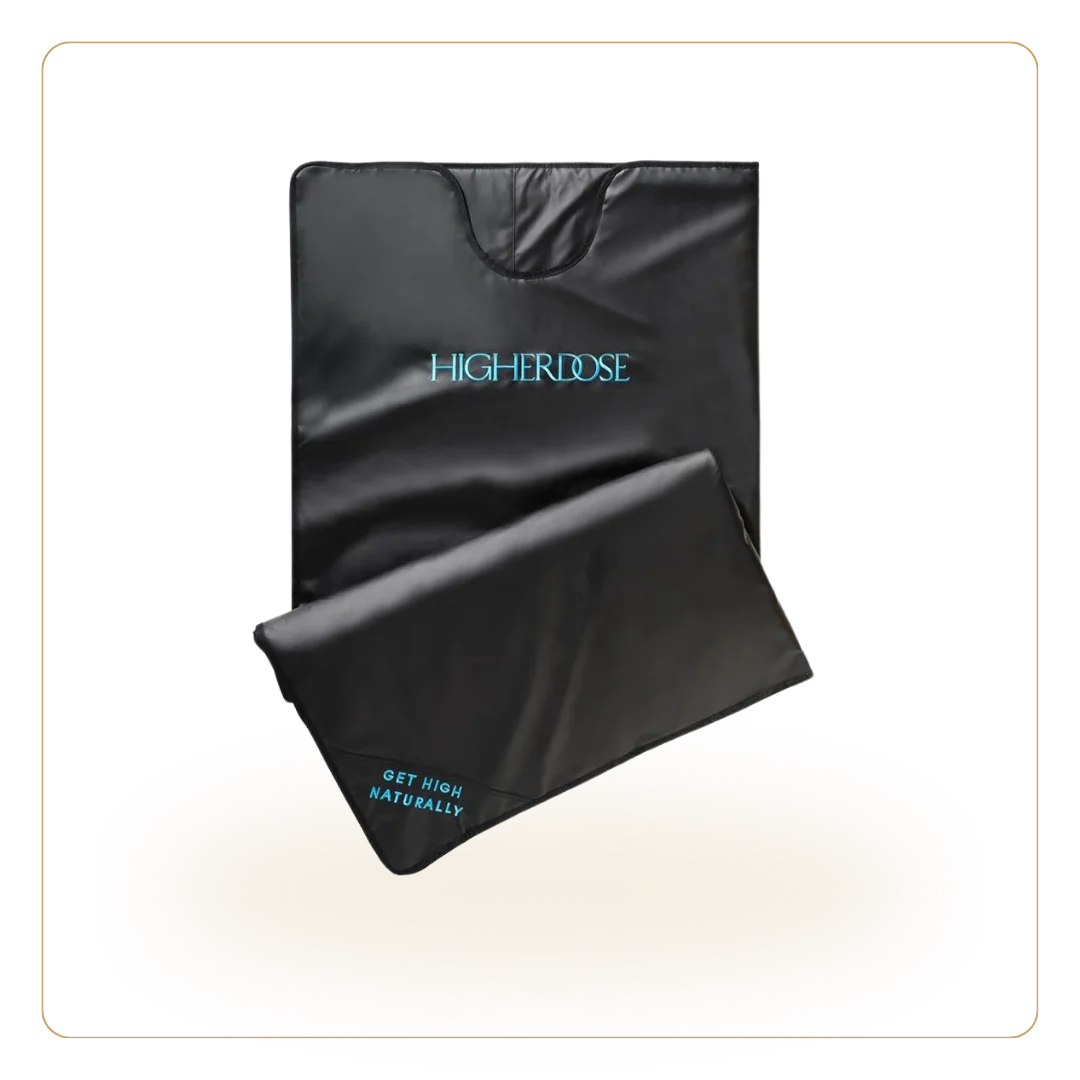
The HigherDOSE blanket is the most reviewed home infrared product with a real durability record: 275 reviews at 4.2 stars, 9 temperature levels, low EMF, stores flat. The blanket format heats faster than a cabin and requires no dedicated space.
At $699 it's a real purchase, which is why the infrared blanket guide covers the full category including lower-price options and the use cases where they make sense.
For the recovery pyramid specifically: a 45-minute infrared session raises heart rate, increases core temperature, and produces the hormonal and cardiovascular response the evidence points to. The format is less intense than a traditional sauna, which means longer sessions are more comfortable. That's a feature for recovery-focused use, not a limitation.
Why We Like It
The most credible home infrared option with real user data behind it. Low EMF, 9 heat levels, and a durability track record most blankets in this category lack.
Price
$699 (check current pricing)
Hydrofy Hydrogen Water and Electrolytes
Best For: Post-heat session recovery. Replacing what sweat takes out.
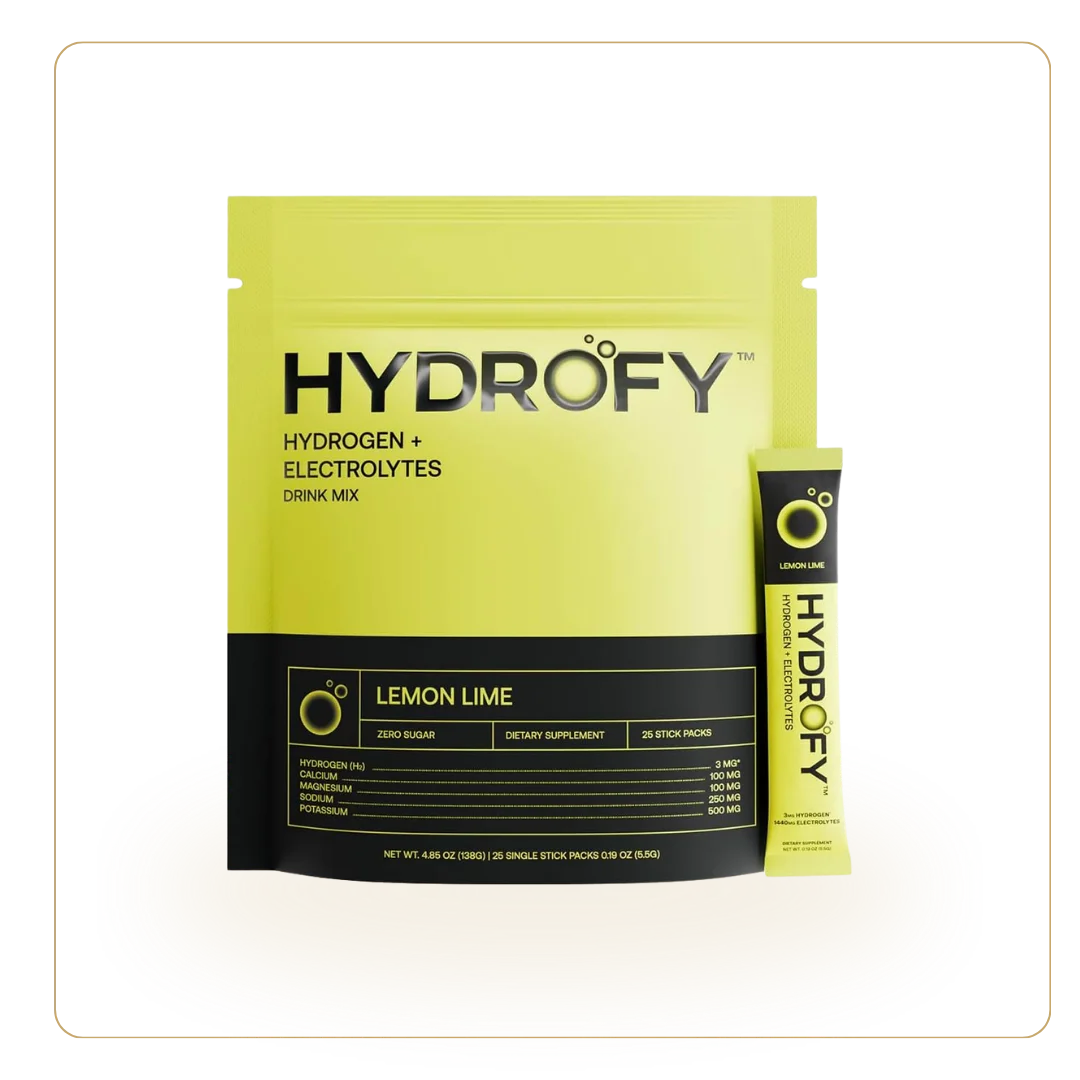
This is the recovery add-on with the clearest rationale: a full heat session depletes sodium, potassium, and magnesium through sweat, and replacing them with water alone is slower and less complete than an electrolyte-matched drink.
Hydrofy sits higher on potassium and magnesium than most sports drinks, which is the relevant ratio for post-heat recovery rather than mid-exercise performance. No sugar, 25 packets per box, $44.99.
It fits at the end of the recovery pyramid precisely because it's not a headline intervention. It's the thing you do after the heat session that makes the session work better. That's exactly the role a recovery supplement should play, rather than trying to be the recovery itself.
Why We Like It
Electrolyte ratios matched to post-heat depletion rather than mid-exercise performance. The supplement that earns its place by doing a specific, clear job.
Price
$44.99 (check current pricing)
Editorial Disclaimer
The Ritual Guide is an independent publication. Our picks aren't influenced by brand payments. The two products here are included as practical references for readers who want to add heat and post-session recovery to their practice.
Does sauna actually help with muscle recovery?+
Yes, with some nuance. Sauna-level heat increases blood flow to muscle tissue, raises growth hormone output, and produces heat shock proteins involved in cellular repair. Regular heat exposure — two to four sessions per week, 20 minutes or more per session — is associated with recovery and adaptation benefits across multiple studies. The key word is regular: a single post-workout session has a different effect profile than a consistent weekly practice, and the longitudinal benefits are what the research tracks.Should I do a cold plunge after lifting?+
It depends on your goal. Cold-water immersion immediately after resistance training reduces soreness but may also blunt the strength and hypertrophy adaptations you're training for. The inflammation that causes soreness is part of the muscle-building signal. If you're an endurance athlete whose priority is reducing soreness and returning to volume quickly, cold-water immersion in the immediate post-training window is defensible. If building strength or muscle is the primary goal, waiting at least four hours after training, or saving cold exposure for rest days, preserves more of the adaptation signal.Is a percussion massager worth the money?+
The evidence base for percussion massagers shows outcomes comparable to foam rolling for soreness reduction, not better. The devices are more convenient and produce a more intense sensation, which some people find motivating. For pre-performance activation and reaching areas difficult to foam roll, they have a genuine edge. For overall recovery, the price premium over traditional soft-tissue tools isn't supported by outcome data. If you already have one and use it, keep using it. If you're deciding what to buy, a foam roller and the money saved on sleep and heat exposure will likely produce better results.Do collagen supplements work for recovery?+
The evidence is specific and narrower than the marketing suggests. Hydrolyzed collagen taken with vitamin C before exercise may support collagen synthesis in tendons and connective tissue. The studies supporting this are real but small and specific in population. The broader claim — that collagen supplementation supports recovery for the general exercising population — extends beyond what the research shows. If you have a connective tissue injury or are specifically training around joint health, there's a rationale for collagen. As a general recovery tool for muscle soreness and performance, the evidence isn't there.What's the simplest evidence-based recovery routine?+
Seven to nine hours of sleep, consistently. Two to three heat sessions per week of 20 minutes or more. Adequate protein from food. Movement on rest days. Cold-water immersion timed away from strength sessions if you use it. Everything else is optional and the evidence for most of it is modest. The marketing order — devices first, then supplements, then basics — is not the evidence order. The evidence order is roughly the reverse.Disclosure: The Ritual Guide is reader-supported. When you buy through links on this page, we may earn an affiliate commission. We independently select and review every product. Our recommendations are never influenced by brand partnerships. Learn more about our editorial process.