.webp&w=3840&q=75)
The best recovery session I've ever had cost about fifteen pounds and involved a stranger working me over with a bundle of wet leaves.
This was London, early in my career building a startup. The kind of period where you're either raising money or running out of it, often both, and a good week is one where you sleep more than five hours and remember to eat. A wellness club opened near me with a proper Russian banya, and it quietly reorganized my entire week.
The banya isn't a sauna. It's a circuit. You move from the steam room to parenie, a ritual steam massage using a venik, a bound bundle of birch or oak branches, and then straight into a cold plunge. You rest, you hydrate, you go again. I started going every Sunday. It could erase a terrible week. It rebooted something I didn't have a word for at the time.
Then life moved. New York, then Atlanta. I stopped for years.
When I came back to it and started reading the research, the first thing that struck me was how upside-down the recovery industry is. The most-studied tools are the unglamorous ones nobody is selling.
The expensive gear with the biggest marketing budgets sits at the bottom of the evidence pyramid. The banya, and the heat-and-cold contrast it's built around, sits near the top. Here's what the science actually supports.
What Happens to Your Body During a Banya Session
The banya's core mechanism is heat stress followed by acute cold exposure, repeated in cycles. This isn't intuitive wellness. It's a deliberate physiological stressor.
In the steam room (the parilka), your core temperature rises rapidly. Blood vessels dilate. Your heart rate climbs. Research suggests sauna use can push heart rate to 120–150 beats per minute, roughly equivalent to moderate aerobic exercise. Sweat output is substantial: studies in controlled sauna conditions estimate 0.5–1 liter of fluid lost per 30-minute session.
Then comes the cold plunge or cold dousing. Peripheral blood vessels constrict sharply. Blood redirects toward the core. The nervous system registers a threat and responds. Heart rate drops, and a wave of alertness follows. This contrast, vasodilation then vasoconstriction and heat stress then cold shock, is the mechanism behind most of the recovery literature.
What makes the banya distinct from a Finnish sauna is the addition of parenie: a trained steam master uses soaked venik bundles to direct superheated air down onto the prone body, pressing and sweeping across muscle tissue while the heat is at its peak. It's the part of the session most people don't expect — and the part they remember longest.
The Cardiovascular Evidence: This Is Where the Case Is Strongest
Most of the rigorous data on sauna and health outcomes comes from one large Finnish cohort study. It's worth understanding what it actually measured before citing it.
63%
Lower sudden cardiac death risk
The Finding
Among 2,315 middle-aged Finnish men followed for a median of 20.7 years, those using the sauna 4–7 times per week had a 63% lower risk of sudden cardiac death compared to once-weekly users. All-cause mortality followed a dose-dependent pattern in the same direction.
JAMA Internal Medicine, 2015 · Prospective cohort · 2,315 men · 20.7-year follow-up
A 2018 narrative review in the Mayo Clinic Proceedings synthesized this cohort's findings across multiple outcomes, noting associations with lower rates of hypertension, stroke, and pulmonary disease alongside the cardiovascular mortality data.
The honest caveat belongs here: both papers studied dry Finnish sauna. The Russian banya uses wet steam at lower air temperatures, and to date there's no equivalent large-cohort trial isolating wet-steam banya specifically. The physiological mechanisms are plausible and partially shared, but the banya hasn't earned the Kuopio study's numbers on its own. We should say so.
Contrast Therapy: What Cold After Heat Actually Does
The banya's hot-cold cycle isn't decoration. It's a studied protocol, though the evidence is more modest than the marketing around cold plunges suggests.
There's a finding here that matters and almost nobody talks about. Cold immersion taken immediately after strength training may blunt the muscle and strength gains that session was building.
The timing is the whole story. The banya's tradition of long rest periods between rounds, and the predbannik relaxation room after, isn't incidental. It's a built-in buffer that modern cold-plunge culture tends to skip.
What the Research Says About Skin
The heat-and-sweat cycle has a skin-specific evidence base, though it's narrower than the cardiovascular literature.
~10%
Reduction in water loss
The Finding
Regular sauna use was associated with a more stable epidermal barrier, reduced transepidermal water loss, and improved stratum corneum hydration in a study of 41 volunteers, with the effect lasting up to 72 hours after exposure.
Dermatology, 2008 · Controlled study · 41 volunteers
The venik adds a layer the sauna literature doesn't capture. Birch bark and leaves contain betulin, a compound with documented wound-healing properties in pharmaceutical research. A betulin-based gel, Episalvan, received EU approval in 2016 for partial-thickness wounds.
The betulin in a venik isn't pharmaceutical-grade, and skin exposure during parenie isn't equivalent to a clinical application. But the biological rationale for the venik's skin effects isn't made up.
Respiratory Health: An Underreported Finding
This one surprised me when I found it.
41%
Lower respiratory disease risk
The Finding
In a 25.6-year follow-up of 1,935 Finnish men, frequent sauna use (4+ sessions per week) was associated with a 41% lower risk of respiratory disease compared to once-weekly use. A companion analysis found a roughly 37% lower risk of pneumonia in the same direction.
European Journal of Epidemiology, 2017 · Prospective cohort · 1,935 men · 25.6-year follow-up
The eucalyptus and birch infusions poured over the banya's stones add an aromatherapeutic layer that the Finnish sauna literature doesn't account for. Eucalyptus steam has its own respiratory literature around mucus clearance and airway opening. The banya's traditional aromatics weren't chosen randomly.
What the Evidence Doesn't Support
The banya's benefits are real. The specific claims attached to it often aren't.
"Detox" language is the worst offender. The liver and kidneys process metabolic waste. Sweating excretes trace amounts of certain compounds, but the idea that a sauna session meaningfully detoxifies the body has no rigorous clinical backing. This isn't a reason to skip the banya. It's a reason to be skeptical of how it's marketed.
Stress and cortisol claims are equally murky. Cortisol responses to heat are variable. In habituated sauna users, cortisol doesn't reliably spike or drop in the directions commonly claimed.
The calm that follows a banya session is real. It's driven by endorphin release, parasympathetic activation in the rest period, and 90 minutes away from a screen in a room where phones aren't allowed. Attributing it specifically to cortisol reduction is a step beyond what the data support.
The acute recovery case is weaker than the long-term health case. The Kuopio data tracks outcomes over decades. Sauna's effect on yesterday's workout soreness, specifically, is modest and contested. If you're using the banya to recover from a training session, the cold contrast helps with perceived soreness. The cardiovascular case is the stronger argument for making it a regular practice.
The Evidence Gap We Should Name
There's a wet-steam-specific evidence gap that deserves honesty.
The landmark studies, the Kuopio cohort and the Mayo review, come from dry Finnish sauna. Wet steam has different physics: lower air temperatures, higher humidity, a different heat transfer profile. Those differences may matter for the outcomes studied. They may not. We don't have the trials to say.
The Russian banya's health case is built on extrapolation from adjacent research plus centuries of use. That's a reasonable starting point. It's not the same as a direct evidence base. Anyone writing or reading about banya benefits should hold that clearly.
Where the Russian Banya Fits in a Recovery Stack
The shape of the evidence maps well to how the Russian banya has always been practiced.
Heat and cold contrast, repeated over time, appears to support cardiovascular health in a dose-dependent way. The effects accumulate with frequency. One session is a pleasant experience. Weekly sessions are a habit. The Kuopio data's strongest results come from people who went four to seven times per week, not people who went occasionally.
This is the thing that got lost when I stopped going. The London banya worked because it was scheduled, not because I went when I remembered or felt like it. The Sunday slot wasn't negotiable. The moment I stopped treating it that way, it disappeared from my life for years.
The research on recovery is littered with treatments that feel good in one session and do nothing when measured over time. The russian banya's cardiovascular and respiratory associations are specifically longitudinal. They're built by consistency, not by individual sessions. That's a different argument than the one most wellness products make.
The evidence ranks heat and cold contrast near the top of the recovery stack. The cool-down window after a session matters more than most people realize. What you drink, when you eat, and how long you rest before jumping back in all affect how much of the benefit actually lands.
Our Picks for Getting Started at Home
Neither of these replaces the real thing. But if a proper banya isn't accessible, they're the two items most supported by the evidence for home heat therapy and post-session recovery.
HigherDOSE Infrared Sauna Blanket
Best For: Home heat therapy between banya visits
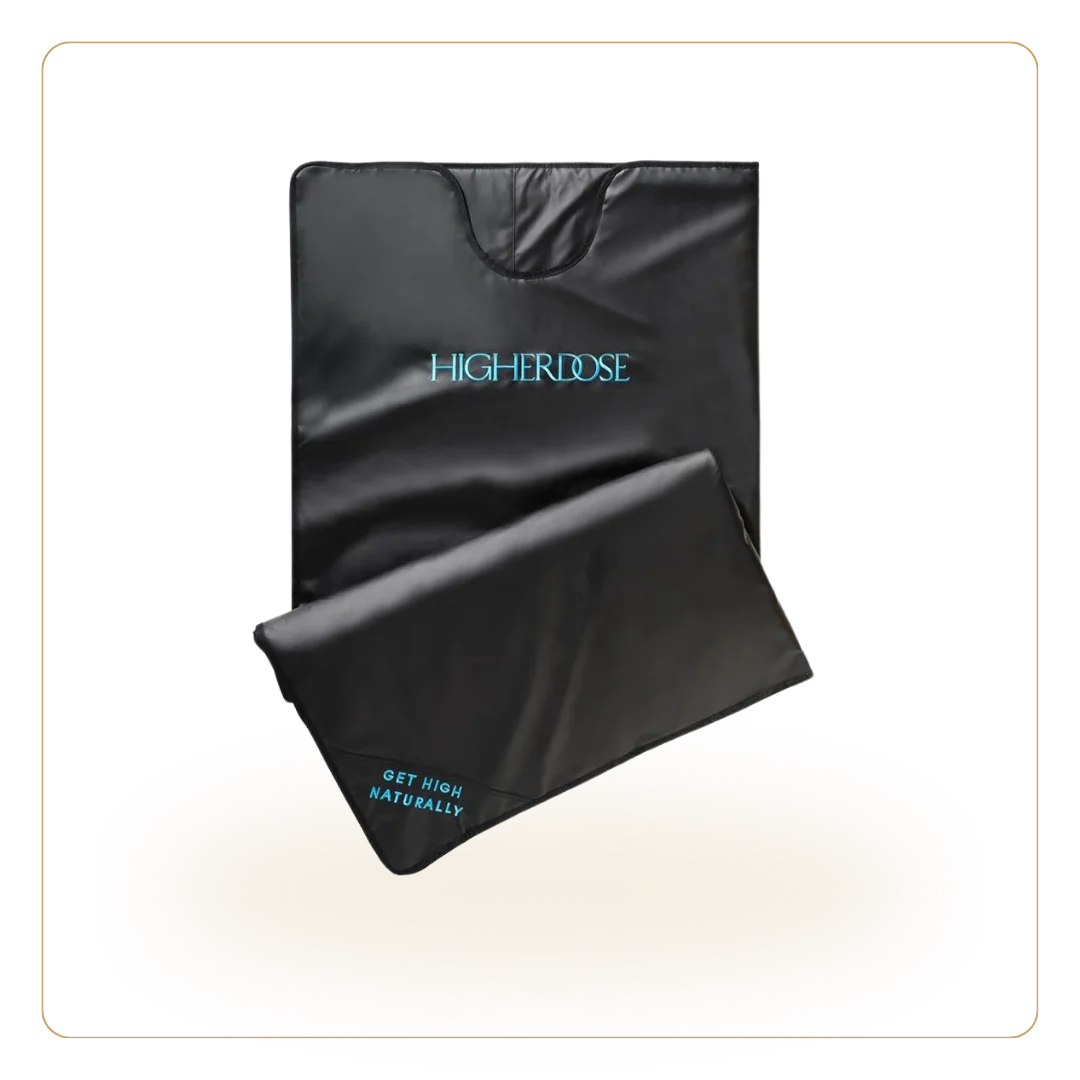
Far infrared heat won't replicate the cardiovascular demand of a full banya circuit, and it won't give you parenie. What it does is make regular heat exposure genuinely accessible, which is the variable that matters most in the longitudinal research.
Consistency beats intensity every time the evidence is this long-term. The HigherDOSE blanket is the most widely used option in this category and has a meaningful track record for home use.
Why We Like It
It makes consistent heat exposure realistic for people who don't have a banya nearby, and consistency is what the evidence actually rewards.
Price
$699 (check current pricing)
Hydrofy Hydrogen Water + Electrolytes
Best For: Post-session rehydration after heat exposure
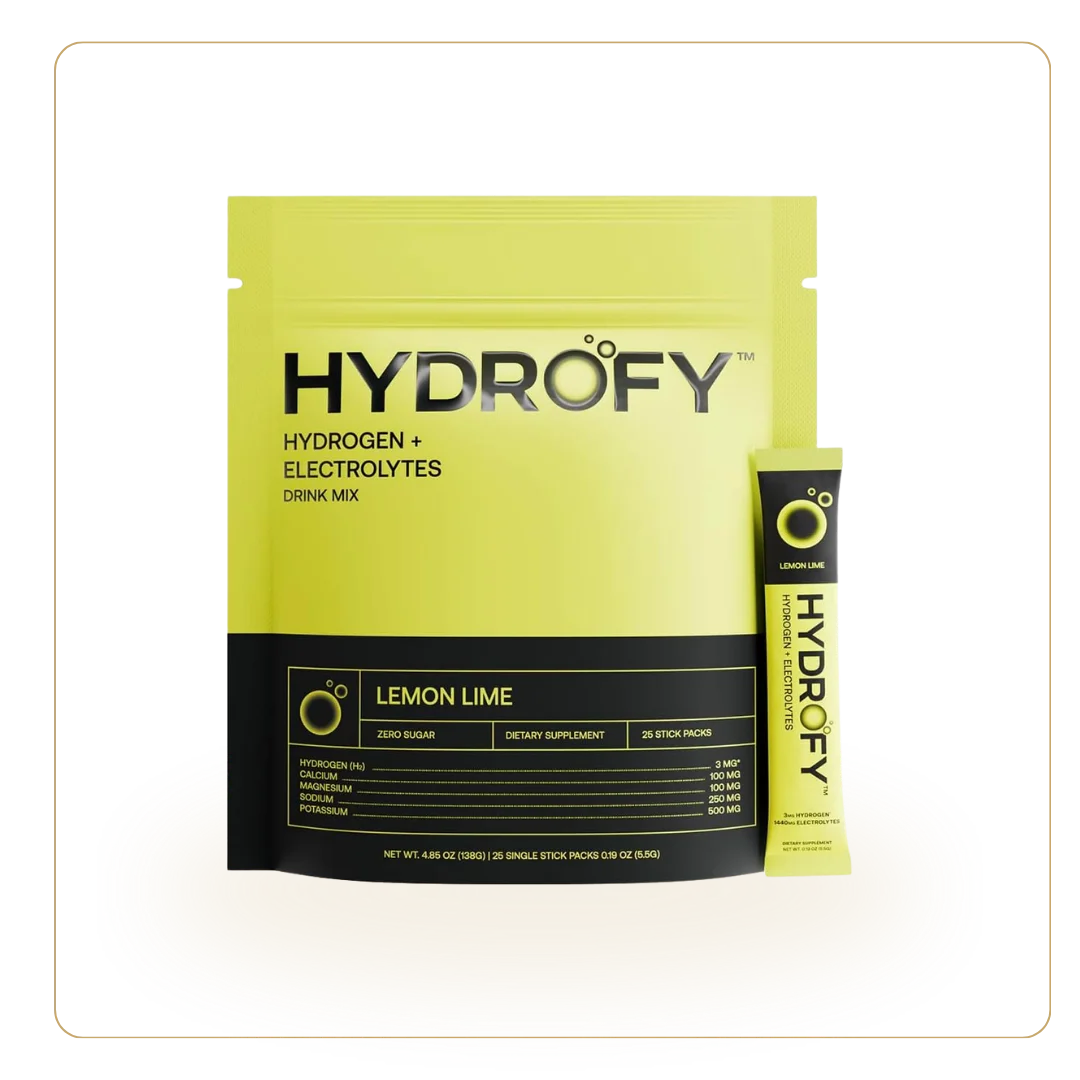
A banya session loses you 0.5 to 1 liter of fluid. Plain water won't cover it cleanly. Without sodium to hold onto it, the fluid moves through without replenishing what was lost. The traditional banya answer is kvass and herbal tea in the predbannik, both of which carry electrolytes naturally.
Hydrofy is a practical modern equivalent: a clean electrolyte mix with potassium, sodium, magnesium, and calcium in ratios built around actual deficiency rather than sodium overload. No sugar, no dyes, and it dissolves quickly in the 15-minute window when absorption matters most.
Why We Like It
The electrolyte ratios are built around common deficiencies rather than just sodium, which makes a real difference in how you feel in the hour after a session.
Price
$44.99 for 25 servings (check current pricing)
Is a Russian banya the same as a Finnish sauna?+
No. A Finnish sauna uses dry heat at higher air temperatures (typically 80–100°C) with low humidity. A Russian banya uses wet steam at lower air temperatures (typically 60–80°C) with humidity of 40–70%. The banya also centers on parenie, a ritual steam massage using bundled branches, which has no direct equivalent in Finnish sauna culture. The physiological effects overlap but aren't identical, and the research base for each is largely separate.How many times a week do you need to use a sauna to see health benefits?+
The Kuopio cohort data shows dose-dependent results, with the strongest associations appearing at four to seven sessions per week. Even twice or three times weekly showed improvements over once-weekly use. Benefits build over months and years of consistent use, not from individual sessions.Does the banya actually detox your body?+
Not in the way "detox" is typically used in wellness marketing. The liver and kidneys handle metabolic waste clearance. Sweating contributes trace amounts of certain compounds but isn't a meaningful detoxification mechanism. The banya's documented benefits are cardiovascular, respiratory, and skin-related.Who shouldn't use a banya?+
People who are pregnant, have uncontrolled hypertension, have had a recent cardiac event, or take medications affecting temperature regulation or blood pressure should speak with a healthcare provider before using a banya or any sauna.Does the cold plunge after heat actually help with muscle recovery?+
It may reduce perceived muscle soreness, yes. But cold immersion taken immediately after a strength session may blunt muscle adaptation. The better application is after endurance work, or on recovery days rather than right after lifting.Disclosure: The Ritual Guide is reader-supported. When you buy through links on this page, we may earn an affiliate commission. We independently select and review every product — our recommendations are never influenced by brand partnerships. Learn more about our editorial process.