.webp&w=3840&q=75)
There's a version of this article that ranks the five main heat formats from best to worst and tells you which one wins. This isn't that article.
The honest version is more useful and less satisfying: each format has a different evidence base, a different physiological mechanism, and a different relationship to the kind of person who'll actually use it consistently. The format that produces the best outcomes in a clinical setting is not automatically the one that produces the best outcomes for you. If you're approaching this for the first time, the first-time banya guide covers what a first session actually involves in practice.
What I'm going to do here is lay out what's actually known about each format, where the evidence is strong, where it's thin, and where the marketing has outpaced the research. Then I'll give you the question that actually matters for your decision.
The Five Formats
The comparison covers five formats that overlap in the wellness conversation but are physiologically distinct: the Russian banya, the Finnish dry sauna, the Turkish hammam, the Korean jjimjilbang, and infrared (blankets and cabins).
They share heat as the core mechanism but differ considerably in how that heat is delivered, what temperatures and humidity levels are involved, and what the research base looks like.
A quick orientation before the comparison:
Temperature and humidity are not interchangeable. A Finnish sauna at 90°C and 10% humidity produces a different physiological experience than a banya at 70°C and 70% humidity, even if both feel "very hot."
The dry heat of the Finnish sauna allows sweat to evaporate quickly, which cools the surface. The wet heat of the banya slows evaporation and intensifies the perceived warmth on the skin. These are different tools.
The research base is not format-neutral. The Finnish sauna has the longest and most robust evidence trail. When someone says "research shows sauna use is associated with reduced cardiovascular mortality," they almost always mean dry Finnish sauna, specifically the work from Laukkanen's group in Finland tracking 2,315 middle-aged men over 20 years.
That finding doesn't automatically transfer to the banya, the hammam, or the infrared cabin. The underlying mechanism may be similar, but the evidence is not.
Format 1: The Russian Banya
Temperature: 60–80°C | Humidity: 60–80% | Evidence base: Moderate, extrapolated from dry sauna literature
The Russian banya is the oldest format in this comparison. Its three-room structure (predbannik for rest, moechnaya for washing, parilka for steam) is organized around contrast therapy: heat, cold plunge, rest, repeat. The venik work (parenie) adds a manual dimension that none of the other formats include.
The research specific to the banya is thinner than the Finnish sauna literature. Most of what we know comes from extrapolating dry sauna findings to wet-steam conditions. That's reasonable but not direct evidence. The cardiovascular demand is real: heart rate elevates meaningfully in the parilka, and the cold contrast produces a sharp vascular response with its own physiological effects.
Where the banya differentiates itself is structure. The three-room sequence imposes a rest protocol that most Western wellness formats don't. The predbannik isn't a lounge. It's where the physiological recovery from the heat round actually happens. That structural rest, built into the ritual, is not accidental.
Best fit: People who want contrast therapy as a complete system, not a collection of separate interventions. People for whom the social and ritual dimension of heat practice matters.
Format 2: The Finnish Dry Sauna
Temperature: 80–100°C | Humidity: 10–20% | Evidence base: Strong
The Finnish sauna has the most robust evidence base of any heat format. The Laukkanen 2015 study (PMID 25705824) tracked sauna use against cardiovascular mortality across two decades. The Mayo 2018 review (PMID 30077204) synthesized the broader cardiovascular literature.
The associations are consistent: more frequent sauna use correlates with lower cardiovascular mortality and lower all-cause mortality in the populations studied.
The mechanism is reasonably well understood. Dry heat at 80–100°C raises core temperature, increases heart rate (equivalent to moderate-intensity exercise in some studies), and triggers a series of cardiovascular adaptations. Regular exposure appears to produce adaptations that benefit the heart and vascular system over time.
The limitation worth naming: this is observational data on a Finnish population with specific cultural patterns around sauna use. Frequency, duration, and sauna culture may all confound the results. And as mentioned, these findings don't transfer automatically to other heat formats.
Best fit: People who want the most evidence-backed heat practice currently available. People who want the simplest format with no ritual overhead.
Format 3: The Turkish Hammam
Temperature: 40–55°C | Humidity: 90–100% | Evidence base: Thin
The hammam runs cooler and wetter than either the banya or the Finnish sauna. The heat is gentler, which means the cardiovascular demand is lower, and the humidity is near-total. The experience centers on the marble slab (the gobek tasi), passive heat absorption, and traditional body scrubbing with a kese mitt.
The hammam doesn't have a meaningful independent research base. The heat levels are low enough that the cardiovascular findings from the dry sauna literature apply only loosely, if at all.
What the hammam does well is the passive heat-and-water ritual, the exfoliation element, and the long, unhurried structure. It's a different kind of thermal experience rather than a less effective version of the sauna.
Best fit: People for whom the social and somatic experience of the ritual matters more than physiological optimization. People who find high-heat formats overwhelming.
Format 4: The Korean Jjimjilbang
Temperature: 40–90°C (varies by room) | Humidity: Low–moderate | Evidence base: Minimal independent research
The jjimjilbang is a multi-room public bathhouse format. Most have several heated rooms at different temperatures, ranging from warm clay rooms to very hot charcoal rooms, alongside cold pools and often sleeping areas. The experience is extended: people frequently stay for hours, sleeping between sessions, and the whole thing is heavily social.
The format doesn't have a dedicated research base. The physiological effects of the heated rooms are similar to other dry-heat formats at comparable temperatures, but the jjimjilbang's distinguishing feature is the social infrastructure: it's designed for extended stays, mixed ages, and the kind of recovery that happens over a whole day rather than an hour.
Best fit: People who want a full-day thermal experience with social context. People for whom the Korean bathhouse tradition specifically is the draw.
Format 5: Infrared (Blankets and Cabins)
Temperature: 40–60°C surface | Humidity: Dry | Evidence base: Emerging, with notable overclaiming
Infrared is the most marketed format in this comparison and the one where the gap between claims and evidence is widest.
The basic mechanism: far infrared radiation penetrates the skin to a few centimeters deep, heating tissue directly rather than heating the surrounding air first. This produces sweating and cardiovascular elevation at lower ambient temperatures than a traditional sauna requires. That's the genuine advantage of the format.
People who find the 90°C heat of a Finnish sauna overwhelming may tolerate an infrared cabin at 55°C without difficulty.
The "detox" claim that leads most infrared marketing is not well-supported. Sweat is primarily water, sodium, and a small amount of trace minerals. The idea that infrared sweating releases toxins that other sweating doesn't is not backed by evidence. What sweating does is regulate core temperature and, in high volumes over extended periods, create a mild cardiovascular stimulus.
What the infrared research does show is more modest and more defensible: some cardiovascular benefit similar to other heat forms at equivalent physiological load, some benefit for musculoskeletal pain in small trials, and improved sleep quality in some studies.
The heat therapy evidence base from the Finnish sauna literature may partially apply to infrared exposure at equivalent cardiovascular intensities, but this is extrapolation, not direct evidence.
The blanket versus cabin distinction matters. A blanket provides more direct contact between the emitter and the skin surface, which changes the heat distribution. A cabin is closer to the ambient-heat experience of a traditional sauna. Neither is strictly superior; they're different exposure geometries.
Best fit: People who want heat therapy at home without a full sauna installation. People who run cold or find high-heat formats difficult to tolerate.
The Two Home Formats Worth Knowing About
Given that most readers of a comparison piece are trying to make a decision about home practice, two formats are worth covering in more depth.
HigherDOSE Infrared Sauna Blanket
Best For: Home infrared practice. The market-leading blanket with real reviews behind it
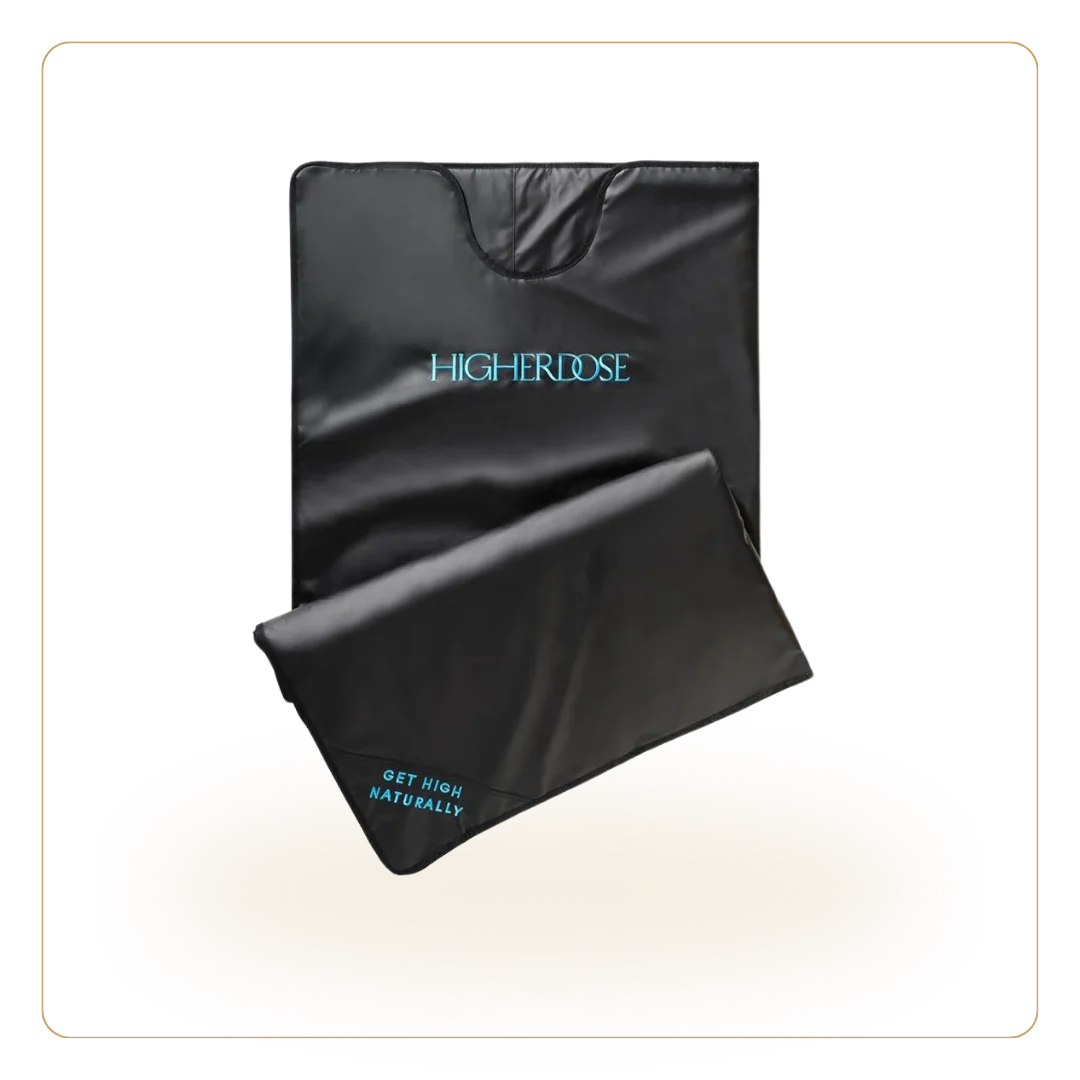
275 reviews at 4.2 stars puts the HigherDOSE blanket in a category of one for home infrared: it's the only blanket format product with enough real-world use behind it to say something meaningful about durability and consistency.
The 9 temperature levels, low EMF claim, and the brand's unusually transparent approach to specs are the reasons it keeps appearing in serious wellness reviews rather than just sponsored content.
The blanket format heats faster than a cabin and stores flat. The trade-off is the enclosed position. You're lying in it rather than sitting, which affects the use-case. For post-workout recovery or a 45-minute evening session while doing nothing else, the blanket format works well. For the extended, multi-round experience of a banya or Finnish sauna session, a cabin is closer.
At $699 it's the entry point for quality in this category. The full infrared blanket guide covers the full range, including lower-price options and the cases where they make sense.
Why We Like It
The most reviewed home infrared product with real durability data behind it. Low EMF, 9 heat levels, transparent specs.
Price
$699 (check current pricing)
DYNAMIC SAUNAS Elite 1-Person Infrared Cabin
Best For: Home Finnish-style or infrared practice. The most reviewed cabin in this price range
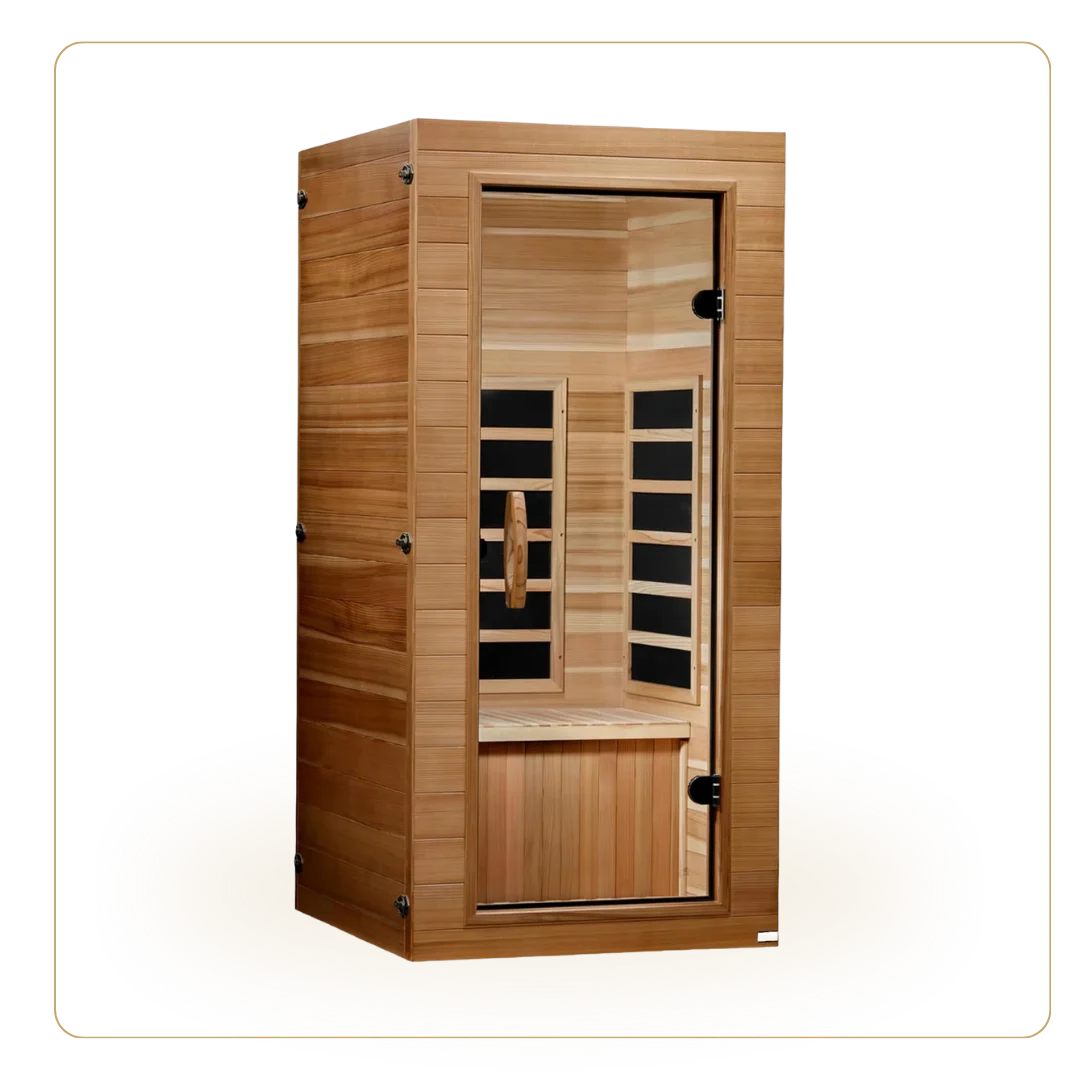
700 reviews at 4.6 stars is a meaningful sample for a $1,499 home purchase. The Dynamic Saunas Elite is Amazon's most-reviewed infrared cabin in the mid-range price bracket.
The review distribution is honest: people flag the assembly time (30–45 minutes for most, longer for some) and the need for a dedicated 15-amp circuit, alongside consistent praise for heat-up time and consistency of temperature.
Far infrared, red light panel, Bluetooth speakers, Pacific cedar construction, ultra-low EMF certification. It runs 1-person but also comes in 2-person and 3-person configurations at different price points. The cabin format gives you the seated ambient-heat experience rather than the lying-in-a-blanket format, which is closer to how the evidence base was built.
For someone comparing this format to a Russian banya practice: the cabin is quieter, lower-maintenance, and requires no cold plunge infrastructure. The banya produces a more complete contrast-therapy protocol. They're solving different problems, and the full home sauna guide covers the full cabin comparison in detail.
Why We Like It
700 reviews, honest durability data, correct cedar construction, and the most credible mid-range infrared cabin currently on Amazon.
Price
$1,499.99 (check current pricing)
The Question That Actually Matters
Every comparison piece in wellness eventually has to answer: which one should I do?
The honest answer is that the format with the best clinical evidence doesn't automatically win. The best format for you is the one you'll do consistently, at a frequency and duration that produces the adaptations you're looking for.
The Finnish dry sauna has the strongest evidence base. If you want the most evidence-backed heat practice and you have access to one, that's your answer.
The Russian banya has the most complete ritual structure. If you want contrast therapy as a designed system rather than a set of individual interventions, and if the social dimension of shared thermal practice matters to you, the banya offers something the other formats don't.
Infrared is the most accessible home option. If you need something that fits in a spare room, doesn't require plumbing, and allows you to practice heat therapy at home without high-heat tolerance, infrared is a reasonable entry point. Just don't pay for claims the research doesn't support.
The hammam and the jjimjilbang are experiential formats. They're worth doing for the experience itself, without requiring a performance-optimization justification.
The underlying principle that all five share is the same: deliberate thermal stress, followed by adequate recovery.
How you produce the stress and how you structure the recovery differs by format. But the principle holds across all of them. The banya's predbannik isn't a detail. The Finnish cooling lake isn't an optional flourish. The rest is the point, and the heat is what makes the rest work.
Which has the strongest research base?+
The Finnish dry sauna, by a clear margin. The Laukkanen group's longitudinal research tracking sauna frequency against cardiovascular mortality over 20 years is the most robust evidence in the category. The banya, hammam, jjimjilbang, and infrared formats all have thinner or more extrapolated evidence bases. That said, "most researched" isn't the same as "best for you." Frequency and consistency matter more than format for most people.Does infrared actually detox the body?+
No, not in the way the marketing usually describes. Sweat is primarily water and sodium, with trace amounts of minerals. The idea that infrared sweating removes heavy metals or environmental toxins in meaningful quantities is not supported by the current evidence. What infrared does do is produce heat stress that elevates heart rate, increases sweating, and may produce cardiovascular and musculoskeletal benefits similar to other heat forms at equivalent physiological intensities. That's worth having. The detox claim on top of it is not.Is the Russian banya better than a Finnish sauna?+
Not on evidence. The Finnish dry sauna has more research behind it. The banya has a more complete ritual structure: the three-room sequence, the venik work, the enforced predbannik rest. The question of how much that structure improves outcomes compared to a Finnish sauna session depends on how the sessions are actually conducted. A well-run banya session with proper contrast therapy and rest is physiologically complete in a way a brief dry sauna session isn't. But the format isn't what makes the difference. The protocol is.Can I replicate the banya at home?+
Partially. A steam shower with a soaked venik and sauna-grade aromatics approximates the sensory and aromatic dimensions of the banya. A home sauna with a steam function and a cold shower for contrast gets you the heat-cold protocol. The full three-room structure with a dedicated kamenka is hard to replicate without real investment. What you can replicate is the principle: heat, cold contrast, rest, in sequence. That's the part that matters most.How do I choose between a sauna blanket and a cabin?+
Blankets are more portable, cheaper, and faster to heat. They're also a lying-down format, which works for some use cases (post-workout recovery, evening relaxation) and not others (reading, extended sessions). Cabins are larger, require a dedicated space and a specific electrical circuit, and give you the seated ambient-heat experience that's closer to how the sauna evidence was built. If space and budget are the constraint, a blanket is a reasonable starting point. If you're setting up a permanent home practice and have the space, a cabin is closer to the real thing.Editorial Disclaimer
The Ritual Guide is an independent publication. Our picks aren't influenced by brand payments. The two products featured here are selected as the strongest home-format references in their respective categories, not as exhaustive recommendations.
Disclosure: The Ritual Guide is reader-supported. When you buy through links on this page, we may earn an affiliate commission. We independently select and review every product. Our recommendations are never influenced by brand partnerships. Learn more about our editorial process.