
My mom loves trying new supplements. Last year she came home with a fish oil that said 2,000mg across the front in giant letters, and she was thrilled. She asked if it was the good kind. I honestly didn't know yet.
So I flipped the bottle. I'm not a practicing pharmacist, but my pharmacy degree makes me read the Supplement Facts panel before I trust any front label. The EPA and DHA were only a fraction of that 2,000mg, and nothing said which one led. EPA vs DHA wasn't a question the box wanted to answer.
That's the part most buyers miss. These two aren't a spelling difference. EPA and DHA are separate fatty acids with different jobs, and the ratio decides which job your fish oil does better. It's like buying a controller without checking which buttons are mapped.
We read the research, ran the label math on two picks, and sorted out who should lean which way. Cute label, meet dose check.
The Quick Answer on EPA vs DHA
EPA is the one most often studied for mood and inflammation signaling. DHA is the one your brain and eyes use as a building block. A blend with more EPA than DHA is the common all-rounder, and a DHA-first formula makes more sense when brain support is the goal.
What EPA Does in the Body
EPA is a 20-carbon omega-3 your body uses to make signaling molecules that shape inflammation and immune response. It competes with an omega-6 fat called arachidonic acid for the same enzymes, and the molecules it produces tend to be less inflammatory.
That competition is the core reason fish oil has an anti-inflammatory reputation.
Mood is where EPA gets most of its research attention. A meta-analysis of 15 depression trials found that benefit tracked with how much of the supplement was EPA.
That doesn't make fish oil a treatment for anything. It does tell us the ratio on your label isn't trivia.
What DHA Does in the Body

DHA has 22 carbons and a different job. It works as a structural fat, and your brain and retina use it to build and maintain cell membranes. Your brain doesn't absorb it by accident either.
A dedicated transporter at the blood-brain barrier moves DHA in, which is why cognition research leans on DHA more than EPA.
Dose is where many brain-health buyers stumble, and it's a big part of the omega-3 dose gap. DHA also gets extra attention during pregnancy and breastfeeding, so that's a conversation for your OB or midwife, not a label hack.
EPA vs DHA Head-to-Head
Both fats can dial down inflammatory signaling, so they aren't opposites. The difference is where they do their best work.
The Dose Question

Here's where label math gets humbling. Many omega-3 trials don't report EPA and DHA separately, and the doses swing wildly. Two recent reviews of exercise recovery show the problem.
So research suggests omega-3 may support recovery markers, but nobody has a clean number.
We judge a label by what's in a serving, not by the front. If you want a real baseline, an Omega-3 Index blood test measures EPA plus DHA in your red blood cells. Source matters too, and krill oil versus fish oil is its own debate.
Choose EPA-Heavy or DHA-Heavy
- Mood or inflammation support is your main reason for taking omega-3
- You train hard and want a recovery-minded routine
- You already get DHA from fatty fish or a prenatal
- Your provider is comfortable with a higher EPA dose
- Memory, focus, or brain support is the main goal
- You're pregnant or nursing and your provider recommended DHA
- You rarely eat fish and want DHA specifically
- You want an algae-based option with no fish
Our Picks: One for Each Lean
Two picks, one for each lean. Neither was influenced by a brand payment, and we ran the same math on both: EPA divided by EPA plus DHA. These two are a starting point, since the best omega-3 supplements span a wide range of splits.
Now the other direction, for anyone shopping brain-first.
Where Omega-3 Fits in Your Day
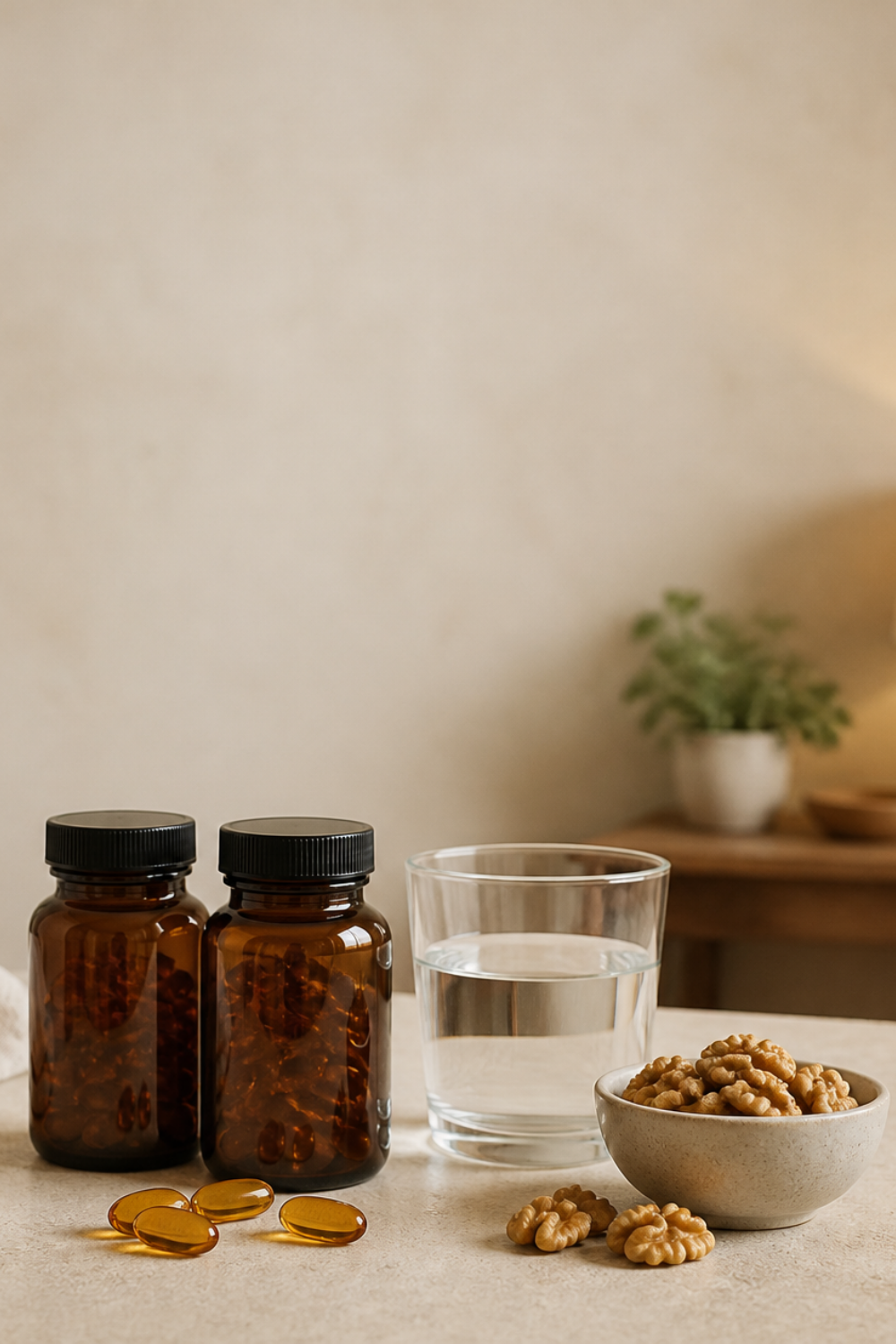
Timing is simple. Take your softgels with a meal that includes some fat, since that may support absorption, and keep the time consistent.
Trials run from days to months, so give any change several weeks before judging it.
EPA vs DHA: How We'd Choose
So EPA vs DHA comes down to the job. Mood and inflammation point toward EPA. Brain and eye support point toward DHA. Omega-3s on GLP-1 medications come with their own timing questions, especially when appetite is low, and fish oil is one piece of a bigger set of supplements for GLP-1 users.
Is EPA or DHA better for inflammation?+
Both can dial down inflammatory signaling, but EPA is the one most often studied for it. Research is mixed on exact doses, so a higher-EPA blend is the usual starting point rather than a guarantee.Can one fish oil softgel cover both?+
Yes, most fish oils contain both. What changes is the ratio, so read the Supplement Facts panel for the EPA and DHA amounts per serving instead of the total fish oil number on the front.Which one do I need for brain health?+
Research on brain structure focuses on DHA, since the brain moves it in through a dedicated transporter. Talk to your healthcare provider about the right amount for you.How do I read EPA and DHA on a label?+
Ignore the big front number. Find the EPA and DHA lines under Supplement Facts, check the serving size, then divide EPA by the sum of the two to see which way the formula leans.Should I take omega-3 with food?+
Many people take it with a meal that includes some fat, since that may support absorption. A consistent daily time matters more than the exact hour.