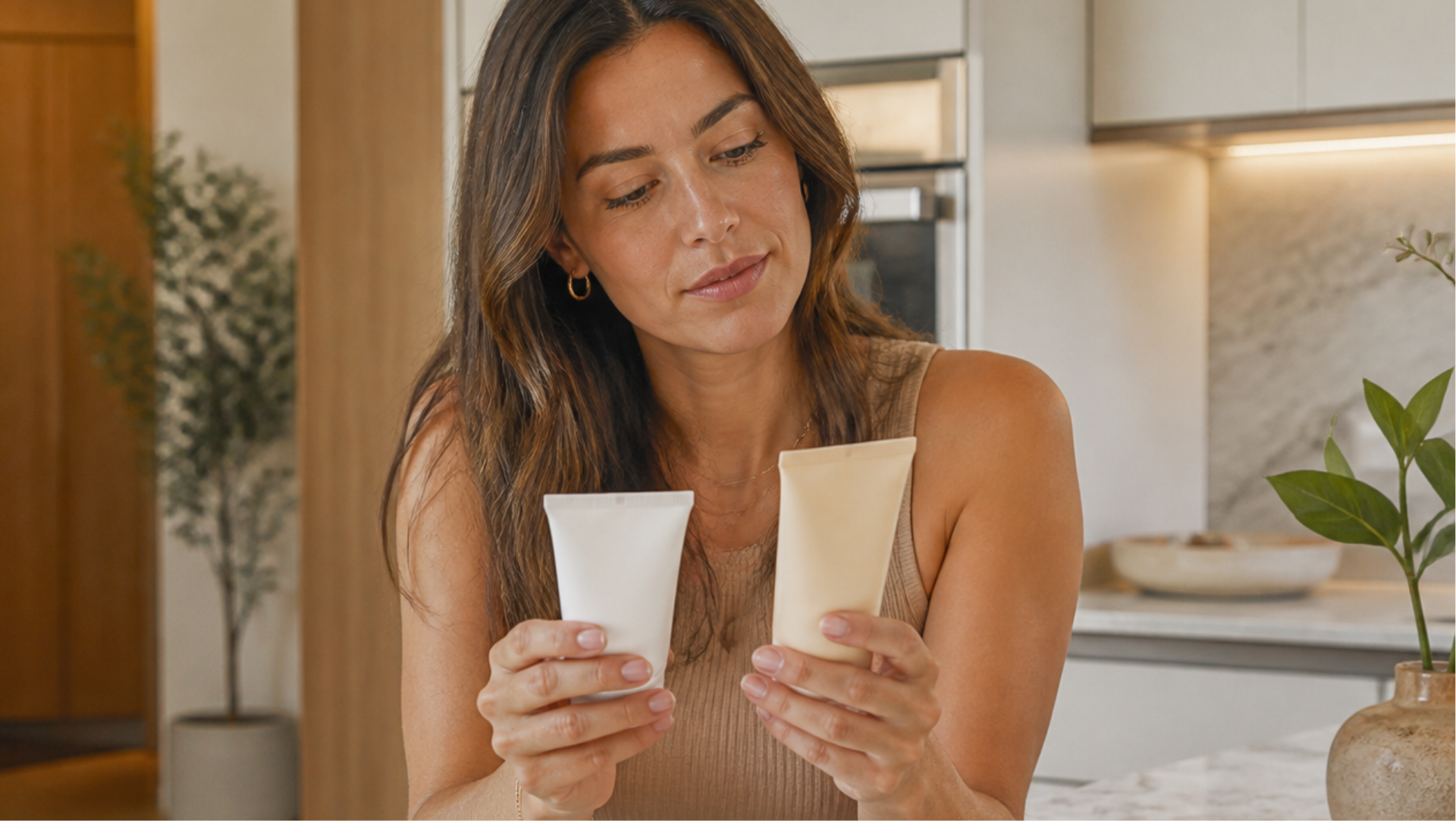
Cute number. Suspicious math. SPF 50 sounds like it should be way better than SPF 30, because 50 is a lot more than 30. Then you read the label and wonder why you're paying more for what looks like a small bump.
I'm a pharmacy graduate, not a practicing pharmacist, so my brain goes straight to the numbers. Let's flip the label and check the dose on SPF 30 vs SPF 50, then see what it costs in real life.
- SPF 30 filters about 97 percent of UVB, per the American Academy of Dermatology. By the same math, SPF 50 filters about 98 percent, so the gap in UVB is small.
- In the products we looked at, SPF 30 and SPF 50 cost about the same per face application, so price rarely decides it.
- Neither number replaces applying enough. Most people apply far less than lab testing uses, and reapplication every two hours matters regardless of SPF.
- SPF measures UVB. Look for broad spectrum on the label for UVA protection too.
SPF 30 vs SPF 50 at a Glance
- SPF 30: Filters about 97 percent of UVB. Common in tinted moisturizers and some zinc-only formulas, such as Good Molecules, Native, and CeraVe Tinted.
- SPF 50: Filters about 98 percent of UVB by the same math. Common in newer mineral serums and lotions, such as CeraVe Invisible, Cetaphil, and Eucerin.
- Higher numbers: SPF 60+ and SPF 70 exist, such as Shiseido and Neutrogena's mineral liquid. They add a little more UVB filtering, but the same reapplication rules apply.
The Label Math Behind SPF 30 vs SPF 50
Here's the dose check. SPF is a ratio: SPF 30 means 1 out of 30 UVB rays gets through, and SPF 50 means 1 out of 50. That works out to about 97 percent filtered for SPF 30 and about 98 percent for SPF 50.
Blue Lizard's listing makes the same claim, saying its SPF 50 filters 98 percent of UVB rays. The American Academy of Dermatology says SPF 30 filters out 97 percent of UVB rays. So in the SPF 30 vs SPF 50 comparison, the jump is about one extra percentage point of UVB.
SPF 30 vs SPF 50 sounds like a big gap, but it is tiny. The numbers get less dramatic as SPF climbs. SPF is a ratio, not a straight line.
What SPF 30 vs SPF 50 Costs in Real Life
Okay, but does the higher number cost more in the SPF 30 vs SPF 50 matchup? In the sunscreens we've looked at, not really. Here's the cost per face application, using a quarter-teaspoon benchmark. That benchmark is ours, not a brand direction.
Good Molecules is SPF 30 at about $0.29, and Cetaphil is SPF 50 at about $0.31. Two cents apart. So if you're choosing between SPF 30 vs SPF 50, price probably isn't the tiebreaker. Finish and skin type are.
When SPF 30 Is Enough in the SPF 30 vs SPF 50 Debate
In the SPF 30 vs SPF 50 choice, for a day mostly spent indoors, a commute, or errands, an SPF 30 you'll actually wear beats an SPF 50 you'll skip. If SPF 30 gets you the finish you like, that's a perfectly reasonable choice.
- You like a tinted formula, since many tinted mineral sunscreens are SPF 30.
- You're comparing a formula you love with an SPF 50 you tolerate.
- You'll reapply properly, which matters more than the number.
When SPF 50 Wins the SPF 30 vs SPF 50 Question
A higher SPF gives you a little more margin on long outdoor days, which is useful because people tend to under-apply. The Skin Cancer Foundation notes that most people apply far less sunscreen than the amount used in lab testing, so a higher SPF may leave you a little more cushion.
- You're outdoors for hours, at the beach, or on a trail.
- You tend to under-apply, which most of us do.
- You have skin that's sensitive to the sun, and your healthcare provider recommended extra care.
SPF 50 can also be the default choice because most newer mineral serums and lotions come in SPF 50. Invisible sunscreens, for example, mostly start there.
The Part That Matters More
Here's the honest answer on SPF 30 vs SPF 50. Neither number rescues a thin layer. The Skin Cancer Foundation says reapplication every two hours matters regardless of the SPF number, and notes that sunscreen should be applied thickly.
A steady morning sunscreen ritual beats a perfect SPF you only use on beach days. And the Drug Facts label on the back of the tube is where you'll confirm the number and the active ingredients.
My Verdict on SPF 30 vs SPF 50
If you're choosing between SPF 30 vs SPF 50 and the price is the same, I'd pick the SPF 50 for the extra margin, as long as the finish is one you like. If the SPF 30 is the one you'll wear daily, wear that.
The best sunscreen for your face is the one you actually apply. Pick the finish, then check the number.
What the Research Says
The research that supports sunscreen is about regular use. In a randomized trial of 903 adults followed for about 4.5 years, daily sunscreen users showed no detectable increase in skin aging.
Is SPF 50 much better in SPF 30 vs SPF 50?+
Not by much on UVB. SPF 30 filters about 97 percent, and SPF 50 filters about 98 percent by the same math. Applying enough and reapplying matter more.Does SPF 50 last longer than SPF 30?+
No. The SPF number doesn't change how long a sunscreen lasts. Reapply at least every two hours either way.Should I buy SPF 100 instead?+
Higher numbers add only a small amount of extra UVB filtering, and the same reapplication rules apply. We'd look at finish and broad spectrum first.Does SPF protect against UVA?+
SPF measures UVB. Look for broad spectrum on the label for UVA protection too.What SPF should I wear daily after weighing SPF 30 vs SPF 50?+
Many people wear SPF 30 or higher. Choose the finish you'll wear every day, and ask your healthcare provider if you have a skin condition.