Guide

The Best Sunscreen for Face Use: Invisible, Tinted, and Clear Picks

The best sunscreen for face use comes down to finish. We picked two each from invisible mineral, tinted mineral, and bemotrizinol sunscreens.

By Roberta Diaz|11 min read|Updated November 3, 2026
The Best Sunscreen for Face Use: Invisible, Tinted, and Clear Picks
The Short Version
The best sunscreen for face use is the one whose finish you'll tolerate daily, so we picked two each from invisible, tinted, and bemotrizinol formulas. CeraVe is our value pick.

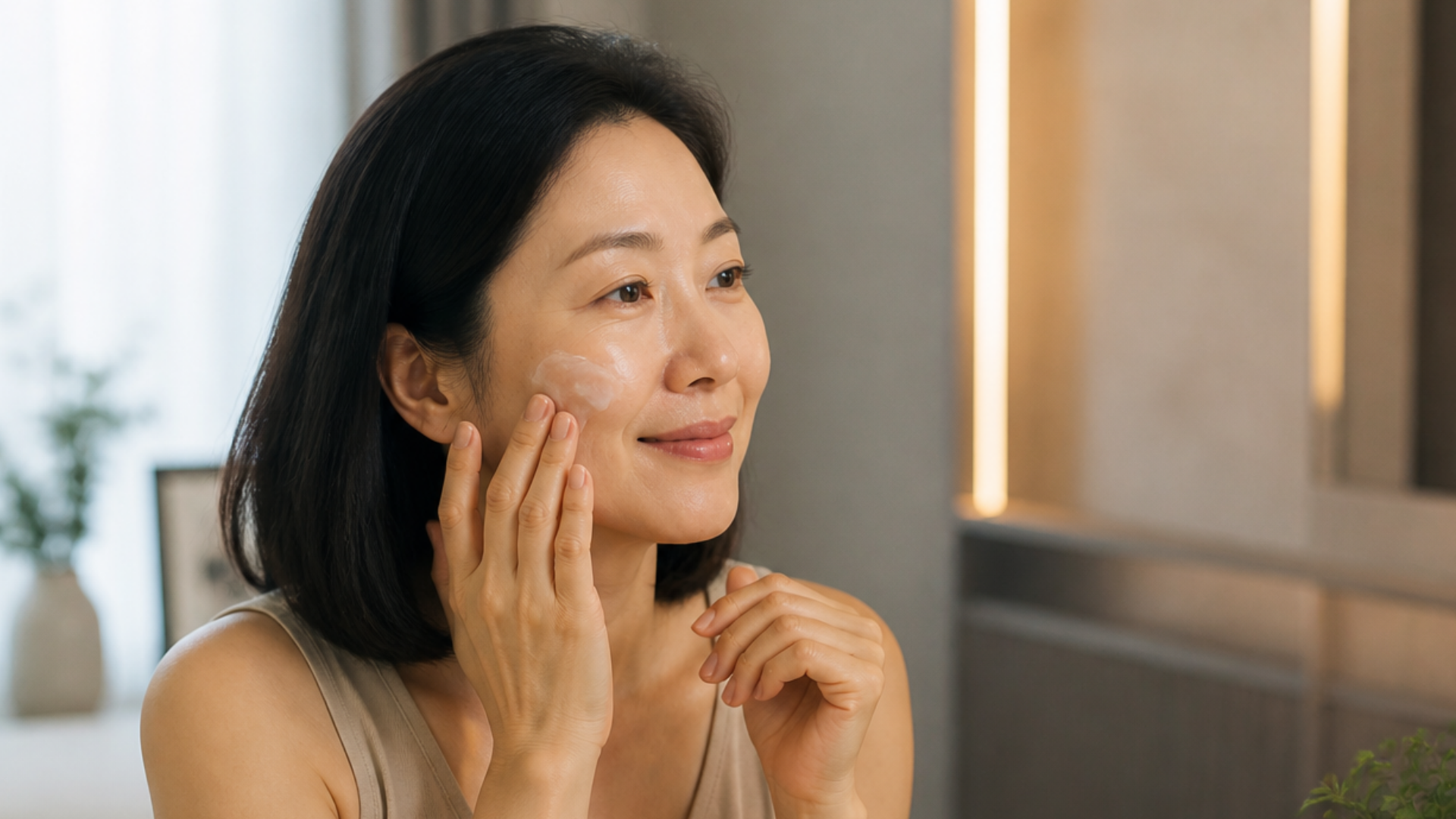
Choosing a sunscreen for face use is weirdly personal. Your body sunscreen can feel like a greasy sandwich and nobody cares. Your face has to survive meetings, mirrors, and makeup, and that's a much tougher audience.

The problem with most lists is that they treat every face sunscreen as the same product. They aren't. A sheer mineral, a tinted mineral, and a modern chemical formula behave very differently on skin, and the finish decides whether you wear it or abandon it by Thursday.

So we sorted the best sunscreen for face use by type. Two invisible mineral picks, two tinted mineral picks, and two bemotrizinol picks, each with a Save or Splurge verdict. Pick the finish you'd actually tolerate first, then let your budget vote.

Medical Disclaimer This guide is editorial and informational, not medical advice. The Ritual Guide reviews products independently and doesn't diagnose, treat, or cure any condition. Please patch test new products, and check with your healthcare provider before starting a new active or supplement, especially if you're pregnant, nursing, taking medication, or managing a health condition.
Key Takeaways
  • The best face sunscreen is the one you'll wear daily, and finish is what decides that: invisible, tinted, or clear chemical.
  • Our value pick is CeraVe, at about $0.36 per face application for the invisible version and $0.34 for the tinted one.
  • Tinted formulas use iron oxides, and research suggests they may help even out pigmentation in people with melasma. The tint is not what protects you, so apply a full amount either way.
  • Bemotrizinol sunscreens are clear, newer chemical formulas. They're worth a look if mineral sunscreens leave a cast on you.
Editor's Pick

CeraVe Invisible Mineral Sunscreen SPF 50
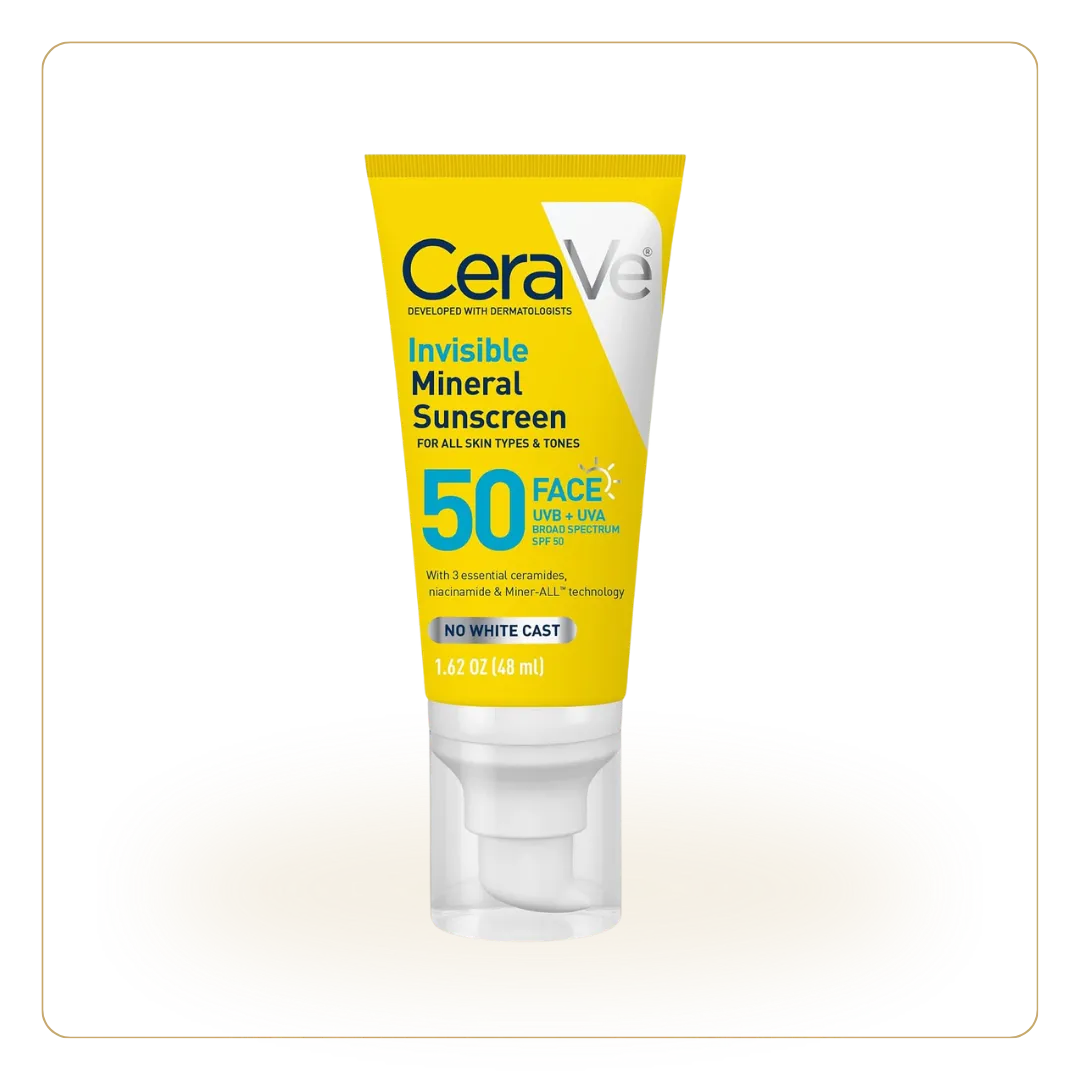
Best For: Everyday wear on a budget If we could only recommend one sunscreen for face use to a stranger, this would be it. It's a fragrance-free zinc oxide mineral formula, sheer enough to wear alone or under makeup, at a price that lets you apply a full amount.
$13.97 for 1.62 fl oz (about $0.36 per face application) (check current pricing)

Pick Your Finish Before You Pick a Brand

A sunscreen for face use can look and feel like one of three things. Most shopping regret comes from buying the wrong one for how you live.

  • Invisible mineral: Zinc oxide formulas made to blend in. Good if you want skincare-like wear and don't need color.
  • Tinted mineral: Zinc oxide plus iron oxide pigment, so it blends in and may even out tone. You have to match the shade.
  • Clear chemical (bemotrizinol): A newer filter, clear and light, with no mineral cast and no shade to match.

If you're unsure how mineral and chemical formulas differ, the short version is that mineral filters sit on top of the skin, while chemical filters absorb UV and convert it. Both can work. The mineral and chemical sunscreen debate is more about preference than a clear winner.

Best Invisible Mineral Sunscreen for Face

Invisible mineral sunscreens are the easiest place to start. They look like skincare, they layer under makeup, and many are cheap. The catch is that invisible is a finish claim, and zinc oxide can leave a faint cast on deeper skin tones.

1

CeraVe Invisible Mineral Sunscreen SPF 50

Best For: Budget daily wear
CeraVe Invisible Mineral Sunscreen SPF 50
CeraVe says its mineral formula has a 100 percent invisible finish, with zinc oxide, niacinamide, and vitamin E. The listing calls it fragrance-free, non-comedogenic, and suitable for sensitive and acne-prone skin. It's a sunscreen for face use that you can also treat as a primer, per the brand. Shake it before applying.
Why We Like It Save. It's the cheapest way to see whether sheer mineral works on you.
Price $13.97 for 1.62 fl oz (about $0.36 per face application) (check current pricing)
2

La Roche-Posay Anthelios UVAir Sunscreen Serum SPF 50
Best For: A lightweight serum splurge
La Roche-Posay Anthelios UVAir Sunscreen Serum SPF 50
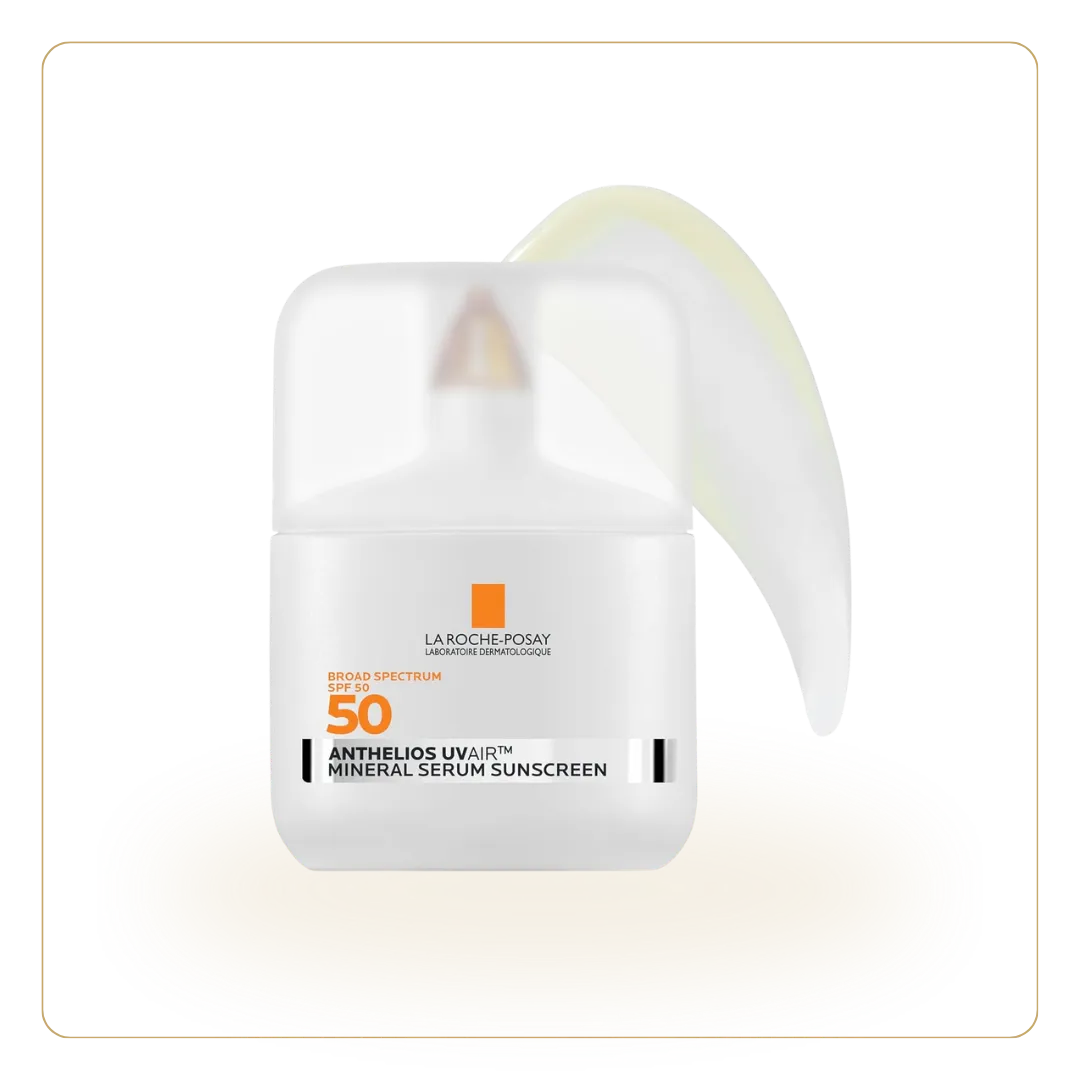
This sunscreen for face use is a serum, with niacinamide, hyaluronic acid, and antioxidants, and the listing says it layers well under makeup. It's the pick if texture is your main reason for skipping sunscreen. Check the number before you buy: the listing's spec line shows SPF 40 while the title says SPF 50. Confirm on the carton.
Why We Like It Splurge, but only if texture is the dealbreaker.
Price $42.99 for 1.7 fl oz (about $1.05 per face application) (check current pricing)

Best Tinted Mineral Sunscreen for Face

Tinted sunscreens do two jobs at once. The iron oxide pigment hides the white cast, and a 2025 randomized study in women with melasma found a tinted sunscreen narrowed the color gap between melasma and surrounding skin. That's why they're worth knowing about, though you have to nail the shade.

3

CeraVe Tinted Sunscreen for Face, Mineral SPF 30
Best For: Budget tinted wear
CeraVe Tinted Sunscreen for Face, Mineral SPF 30
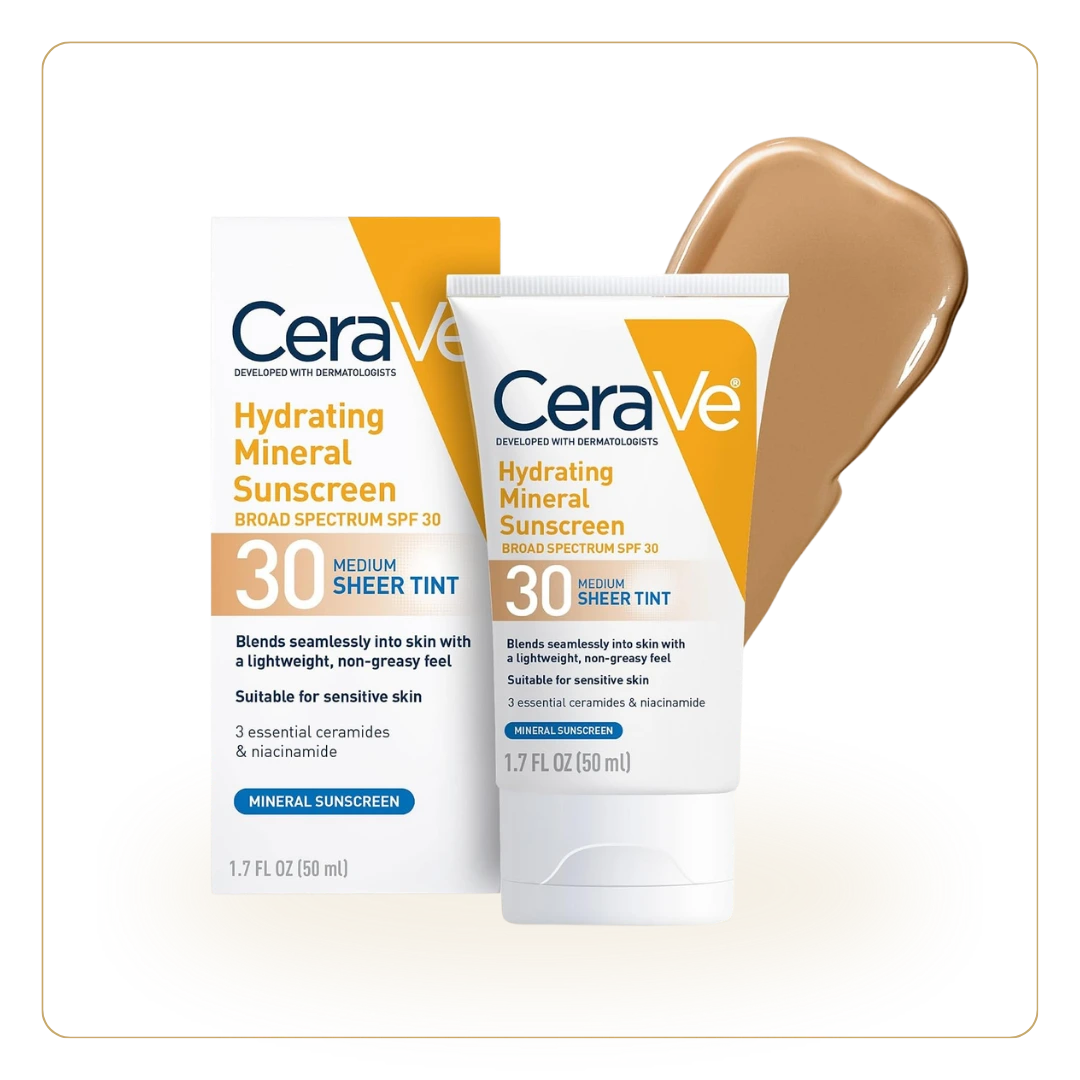
CeraVe's tinted formula uses zinc oxide and titanium dioxide, with iron oxides for a sheer tint. It comes in Light, Medium, and Deep, and adds niacinamide, hyaluronic acid, and ceramides. Three shades is a short list. If you land between two, swatch on your jawline in daylight first.
Why We Like It Save, if you fall inside the three shades.
Price $13.99 for 1.7 fl oz (Medium) (about $0.34 per face application) (check current pricing)
4

EltaMD UV Clear Tinted Face Sunscreen SPF 46
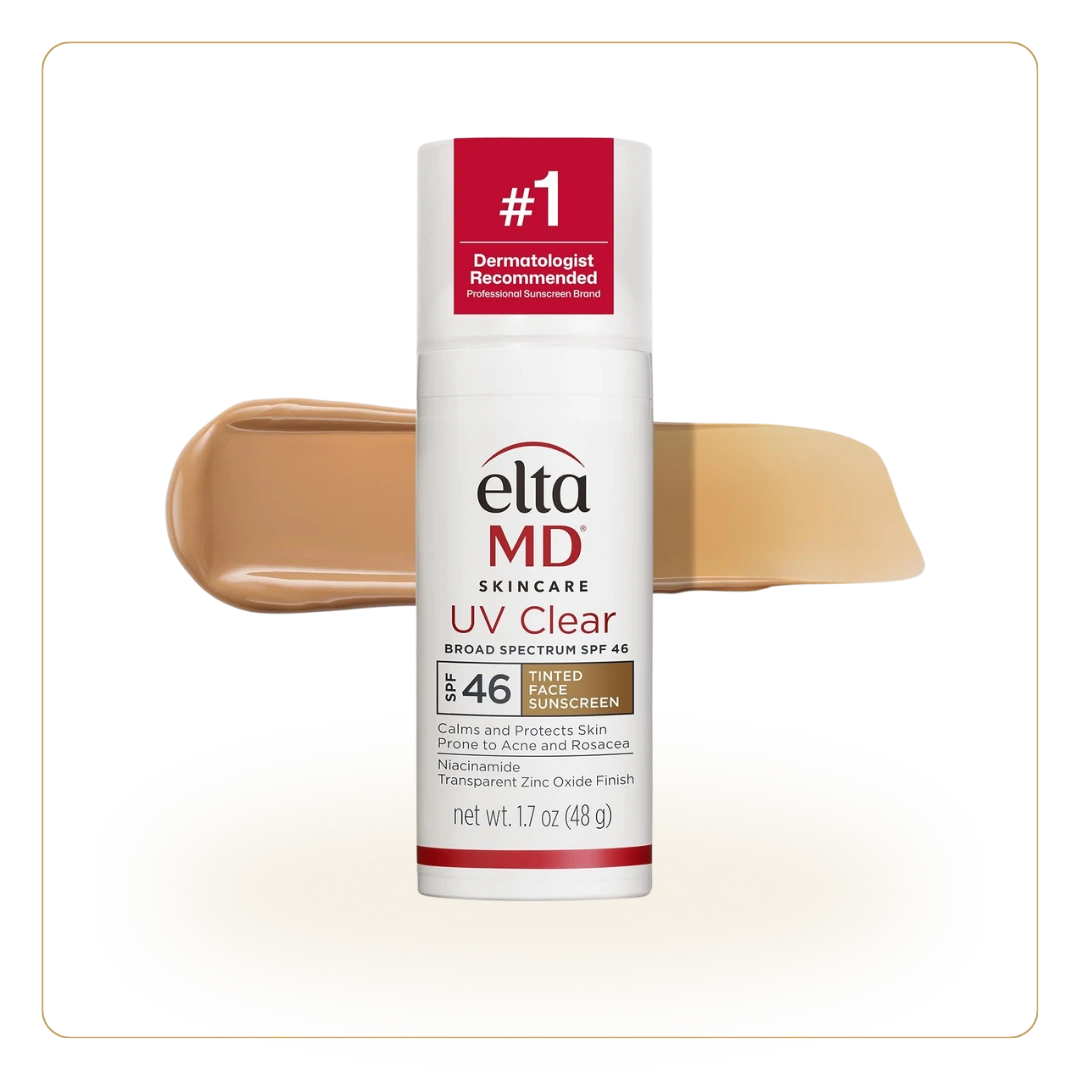
Best For: Acne-prone and sensitive skin
EltaMD UV Clear Tinted Face Sunscreen SPF 46
EltaMD UV Clear Tinted is an oil-free formula with transparent zinc oxide and niacinamide, designed for normal, oily, acne-prone, and rosacea-prone skin. The listing shows two tinted shades. The tinted version is SPF 46 rather than 50. That's a small difference, but it's the sort of detail worth knowing before you click buy.
Why We Like It Splurge if breakouts or redness steer your choices.
Price $48.00 for 1.7 oz (about $1.18 per face application) (check current pricing)

Best Bemotrizinol Sunscreen for Face

Bemotrizinol (BEMT) is a newer chemical filter the FDA allowed in sunscreens in 2026, up to 6 percent. Formulas with it tend to be clear and light. Bemotrizinol has been used in Europe since 2000, so what bemotrizinol is isn't new science, just new to US shelves. Whether BEMT sunscreen is safe is the question most people ask next.

5

Neutrogena Ultra Sheer Daily Face Sunscreen SPF 70 with BEMT

Best For: Everyday wear under makeup
Neutrogena Ultra Sheer Daily Face Sunscreen SPF 70 with BEMT
Neutrogena's brand page lists bemotrizinol at 6 percent, plus avobenzone, homosalate, and octisalate, so this is a blend rather than a pure BEMT formula. It's built for daily wear with no white cast. At about $0.51 per face application, it's the easiest way to try the new filter. Know that it's a blend before you buy it for the filter alone.
Why We Like It Save. It's easy to find and easy to buy again.
Price $16.97 for 1.4 fl oz (about $0.51 per face application) (check current pricing)
6

Ultra Violette Unblock Screen SPF 50 Breakout-Friendly Skinscreen
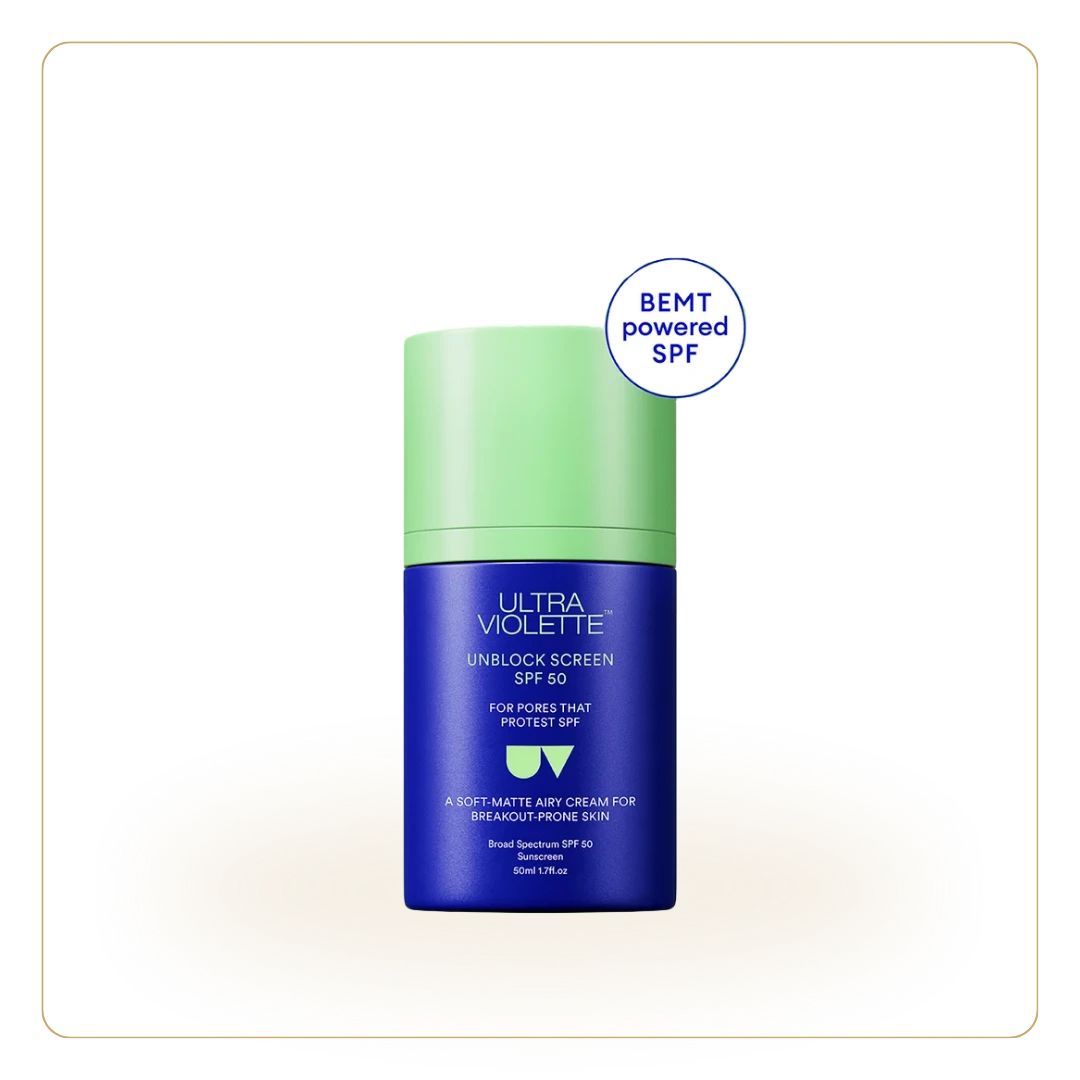
Best For: Oily or reactive skin
Ultra Violette Unblock Screen SPF 50 Breakout-Friendly Skinscreen
Ultra Violette pairs bemotrizinol with zinc in a soft-matte SPF 50 made for oily, acne-prone, and reactive skin. It adds Bix'Activ for shine control and Pentavitin for hydration. The pump doesn't measure an exact dose, and the brand's directions call for a quarter teaspoon on the face. That's the same benchmark we use for cost per use.
Why We Like It Splurge, if breakouts make you wary of sunscreen.
Price $40.00 for 50 mL (about 1.7 fl oz) (about $0.99 per face application) (check current pricing)

What Each Sunscreen for Face Use Costs per Application

Here's how the six picks compare on cost per face application, using a quarter-teaspoon benchmark. That benchmark is ours, not a brand direction.

Cost per Face Application
1
CeraVe Tinted Tinted mineral
$0.34
2
CeraVe Invisible Invisible mineral
$0.36
3
Neutrogena Ultra Sheer BEMT Clear chemical blend
$0.51
4
Ultra Violette Unblock Screen Clear chemical and zinc
$0.99
5
La Roche-Posay UVAir Invisible serum
$1.05
6
EltaMD UV Clear Tinted Tinted mineral
$1.18

Notice that the range is about a dollar. Over a year, a sunscreen for face use that costs $0.35 per application versus $1.05 adds up to a few hundred dollars. Spend more only if the finish gets you to wear it daily.

Which Sunscreen for Face Use Fits Your Situation

  • Oily or breakout-prone: Look for a matte finish, which is why picks for oily skin lean on Ultra Violette and EltaMD.
  • Sensitive or reactive: Fragrance-free is the starting line. Options for sunscreen for sensitive skin start with CeraVe.
  • Daily makeup wearers: Pick something marked for use under makeup. Sunscreen under makeup works best when the layers have a few minutes to set.
  • Deeper skin tones: Zinc oxide can leave a cast, so tinted mineral sunscreens with a real shade range, or a clear bemotrizinol formula, are worth testing.
  • Wanting the whole category: Invisible sunscreens vary a lot by finish and cost per use, so it pays to compare them.

How to Wear a Sunscreen for Face Use Every Day

The Ritual
7:00 AM
Cleanse, then apply moisturizer and any serum. Let each layer settle for a minute.
7:10 AM
Apply sunscreen as the last skincare step. Use about a quarter teaspoon for face, plus neck.
7:15 AM
Wait a few minutes, then apply makeup. This helps sunscreen set instead of pilling.
Midday
Reapply if you're outdoors. At least every 2 hours, per standard label directions.

Where vitamin C and retinoids fit is easier to sort out once your morning sunscreen ritual is steady. The Drug Facts label on the back of the tube confirms the SPF, the active ingredients, and how often to reapply.

What the Research Says

The best sunscreen for face use is the one you'll wear consistently, and the research on daily use backs that up. In a randomized trial of 903 adults followed for about 4.5 years, daily sunscreen users showed no detectable increase in skin aging.

Annals of Internal Medicine 2013 · Randomized Trial
Daily sunscreen users showed no detectable increase in skin aging over about 4.5 years. The trial tested broad-spectrum sunscreen in general, not these specific products. It's a reminder that consistency beats a perfect formula. Read the full study in Annals of Internal Medicine.
The Bottom Line Choose the finish first, then the brand. If you want to start somewhere, CeraVe is the safest bet in either invisible or tinted. Move up to La Roche-Posay, EltaMD, or Ultra Violette only if you know the finish is what's been stopping you.
Guides Best Invisible Sunscreens Nine invisible sunscreens ranked by finish, skin-type fit, and cost per use. Read more →
Guides Best Tinted Mineral Sunscreens Eleven tinted picks ranked by shade range, finish, and cost per use. Read more →
Frequently Asked Questions
What is the best sunscreen for face use?+ The best sunscreen for face use is the one whose finish you'll tolerate daily. For most people we'd start with CeraVe's invisible or tinted mineral option because of the price.
Should I use mineral or chemical sunscreen on my face?+ Both can work. Mineral sunscreens sit on skin and use zinc oxide or titanium dioxide, while chemical filters absorb UV. Newer bemotrizinol formulas are clear and light, which some people prefer.
Do I need a separate sunscreen for my face?+ Many face sunscreens are formulated for lighter feel and use under makeup, while body sunscreens can feel heavy. Some, like Shiseido and Eucerin, are sold for both.
Is tinted sunscreen better than untinted?+ Not necessarily. Tint helps with white cast and may help with pigmentation concerns like melasma, but you have to match the shade. Untinted formulas skip that step.
How much sunscreen should I put on my face?+ We use a quarter teaspoon as a face benchmark for cost math, and Ultra Violette's directions say the same. Follow the label directions on your product.
Disclosure: The Ritual Guide is reader-supported. When you buy through links on this page, we may earn an affiliate commission. We independently select and review every product, and our recommendations are never influenced by brand partnerships. Learn more about our editorial process.

‍

Share This Guide
The Ritualist
One tested ritual a week. No noise.
Subscribe on Substack →
The Ritualist — Weekly

For women who take recovery as seriously as ambition.

Science-backed, founder-curated. One email a week. No noise.

Subscribe →
You’ll be taken to Substack to complete your signup.