
People started asking me about Lustriva side effects the same week my GLP-1 hair loss piece went up, which tracks. If a stranger on the internet tells you to add a new supplement to your routine, "is this actually safe" is the correct first question, not an afterthought.
So I did what I do with anything I'm about to recommend to you: I read the actual clinical trial, not the marketing page. And I've also used Lustriva myself. Here's what the research says about Lustriva side effects, drug interactions, and the one precaution that matters more than any of it.
Key Takeaways
- The one published trial on Lustriva found no adverse events in either dose group, with bloodwork staying in normal range for 12 weeks.
- The real concern isn't a side effect, it's that the 10,000mcg biotin dose can throw off thyroid and other lab tests. Stop 48 to 72 hours before any blood draw.
- No pregnancy-specific data exists yet. Talk to your OB first if that applies to you.
- If you're on blood pressure meds, nitrates, blood thinners, or diabetes and GLP-1 medications, the arginine in Lustriva is worth a quick conversation with your doctor before you start.
What Exactly Is Lustriva?
Lustriva is a patented ingredient complex from Nutrition21, not a supplement brand of its own. It's the licensed ingredient brands like Nature Made and MaryRuth's build their own formulas around. Two compounds make it up: magnesium biotinate, a more bioavailable form of biotin, and inositol-stabilized arginine silicate, which delivers silicon and arginine together.
It carries self-affirmed GRAS status from the FDA, the standard regulatory bar for an ingredient with a documented safety dossier. If you want the full breakdown of how it works and how it compares to plain biotin, we've covered it in our full Lustriva roundup and our Lustriva vs. biotin analysis.
What the Safety Data Actually Shows
That's a genuinely reassuring data point for a 12-week window. It's also, so far, the only controlled trial on the compound itself. Looking at the individual ingredients adds more context: biotin is water-soluble and excreted rather than stored, so excess mostly just leaves your body. Arginine can cause mild bloating or loose stools at high doses, though the amount in a standard 160mg Lustriva serving is small next to what's in a pre-workout supplement. Dietary silicon has a long, clean safety record.
The One Real Precaution: Biotin and Lab Tests
This is the part that actually matters, and it has nothing to do with your hair.
The affected tests include thyroid hormones (TSH, free T4, free T3), troponin (the cardiac marker used to diagnose heart attacks), hCG (used in pregnancy tests), parathyroid hormone, and several cancer markers. High biotin can fake a picture of Graves' disease or hyperthyroidism that isn't actually there.
The fix is simple. Stop taking Lustriva and any other biotin-containing supplement at least 48 to 72 hours before a blood draw, and tell whoever's ordering the test what you've been taking. The American Thyroid Association recommends a minimum two-day washout. This isn't a reason to skip Lustriva, it's a reason to mention it before your next lab panel.
Drug Interactions Worth Knowing
There's no documented interaction between Lustriva as a whole compound and common medications, but its individual ingredients do interact with a few things worth knowing about.
- Biotin and anticonvulsants. Valproic acid and carbamazepine can lower biotin levels over time. Worth a mention to your neurologist if you're on long-term therapy.
- Arginine and blood pressure medications, nitrates, or GLP-1 drugs. Arginine is a vasodilator, it relaxes blood vessel walls. If you're taking tirzepatide or semaglutide for diabetes, or any blood pressure medication or nitrate, stacking arginine on top can push your numbers lower than intended. Worth flagging to whoever manages your prescription, especially if your blood pressure has already been improving on your current regimen.
- Arginine and diabetes medications. It may lower blood sugar in some people, so it's worth discussing if you're already managing glucose with medication.
- Anticoagulants. Arginine has mild antiplatelet effects. Check with your doctor first if you're on a blood thinner like warfarin.
Who Should Be More Careful
The clinical research on Lustriva was done exclusively in healthy women without underlying conditions, so that's the population the safety data actually covers.
- Anyone with a thyroid condition, especially if you're on levothyroxine. The lab interference issue above matters most here, a false panel could lead to a dose change you don't need.
- Anyone with cardiovascular disease or on cardiac medication should run the arginine question by a cardiologist first.
- People with kidney disease. No specific contraindication exists, but impaired kidney function can change how the body processes silicon and minerals. Worth disclosing to a nephrologist.
- Anyone on blood thinners. Low-risk given the modest arginine dose, but not zero-risk if you're already managing a condition with medication.
Editor's Note
My blood pressure only just started improving on tirzepatide, so the arginine-and-blood-pressure-meds note above is personal for me too. I checked with my own doctor before adding anything with arginine in it, and I'd tell you to do the same rather than take my word for it.
Pregnancy and Breastfeeding Safety
No Lustriva-specific safety data exists in pregnancy. The clinical trial enrolled healthy, non-pregnant women only.
Biotin is common in prenatal vitamins, but usually around 30mcg, a fraction of the 10,000mcg in a standard Lustriva serving. If you're pregnant or breastfeeding, this is a talk-to-your-OB-first situation, not a guess-and-check one.
Wait, Does Lustriva Cause Shedding?
This question comes up because some people notice more shedding right after starting a new supplement and assume it's the cause. In the 12-week trial, hair thickness improved compared to placebo, not the other way around, with changes showing up as early as week three.
What's actually happening for a lot of people is telogen effluvium, hair shifting into its resting phase from a trigger like rapid weight loss, stress, or illness, which can coincidentally line up with when they started a new supplement. If that sounds familiar, I broke down why GLP-1 hair loss happens in the first place and the actual timeline to expect.
Allergic Reactions and Normal Side Effects
Lustriva itself doesn't contain shellfish, gluten, or tree nuts. Always check the full label of the specific product though, brands add their own fillers and flavoring.
Real allergic reaction signs: hives, itching, swelling around the face or throat, difficulty breathing, a rapid heartbeat. Stop and get medical attention if any of these show up.
Mild nausea or bloating in the first few days isn't an allergic reaction, it's common and usually settles once you start taking it with food.
What We Don't Know Yet
The 2021 trial is the only controlled study on the Lustriva compound itself, twelve weeks, no long-term follow-up. The ingredient launched commercially around 2021 and only received self-affirmed GRAS status in early 2026.
Editor's Note
This is the honest gap, and I'd rather tell you than pretend it doesn't exist. The individual pieces, biotin, arginine, silicon, have decades of safety data behind them. The specific combination is genuinely new. I'd like to see independent 6-to-12-month data before I'd call the long-term picture fully settled, and I'll update this piece the moment that research exists.
If You're Ready to Try It
Two of the seven Lustriva products I've actually vetted are worth calling out here specifically, since dose and format matter more than the marketing copy once you know what you're watching for.
Nature Made Hair Growth Softgels with Lustriva
Best For: Knowing your exact dose
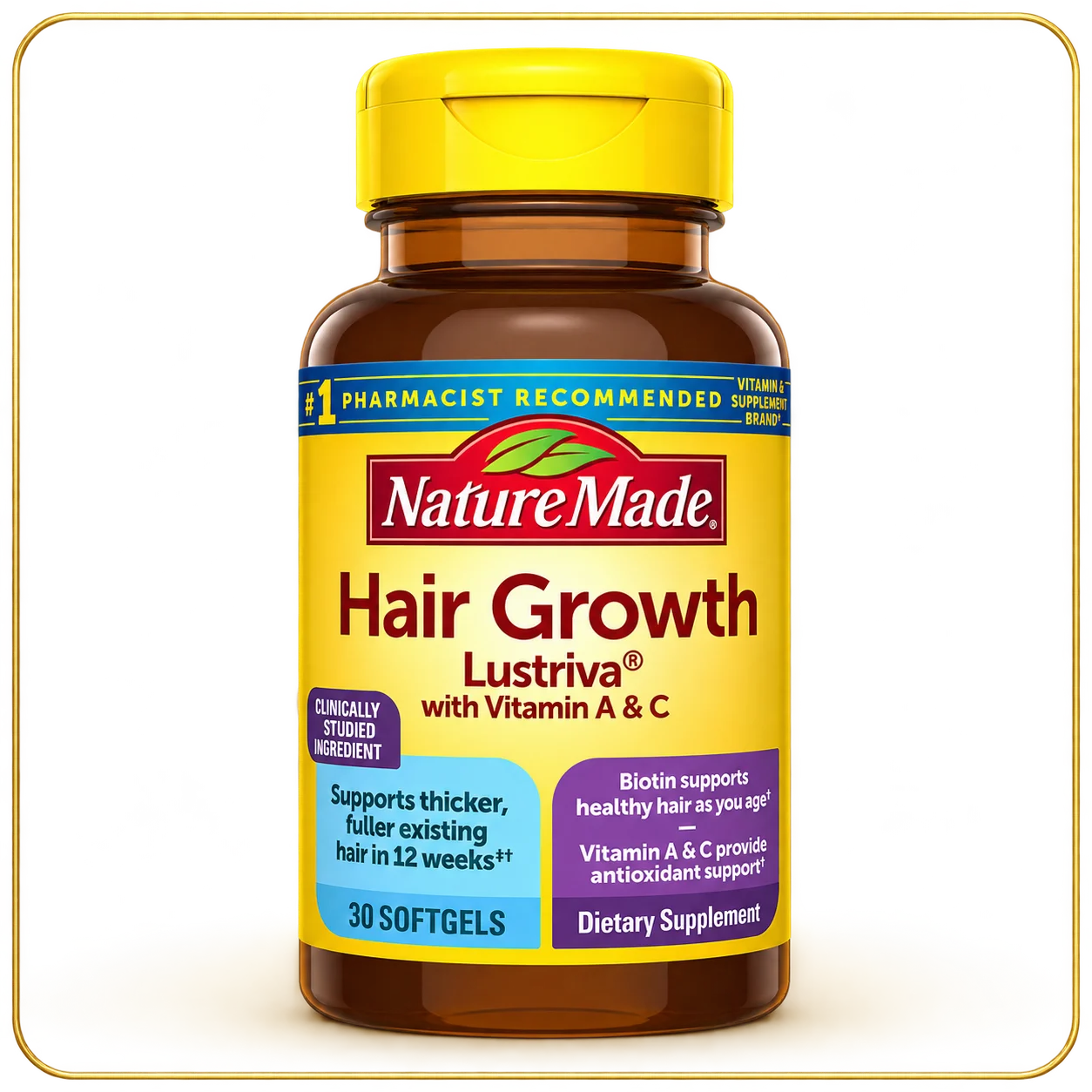
One softgel, 160mg of Lustriva printed right on the label. If everything above made you want to know precisely what and how much you're taking before a blood draw, this is the easiest one to track.
Price
$19.68 for 30 softgels (check current pricing)
MaryRuth's Liquid Multivitamin + Hair Growth
Best For: A gentler starting point if your stomach is sensitive
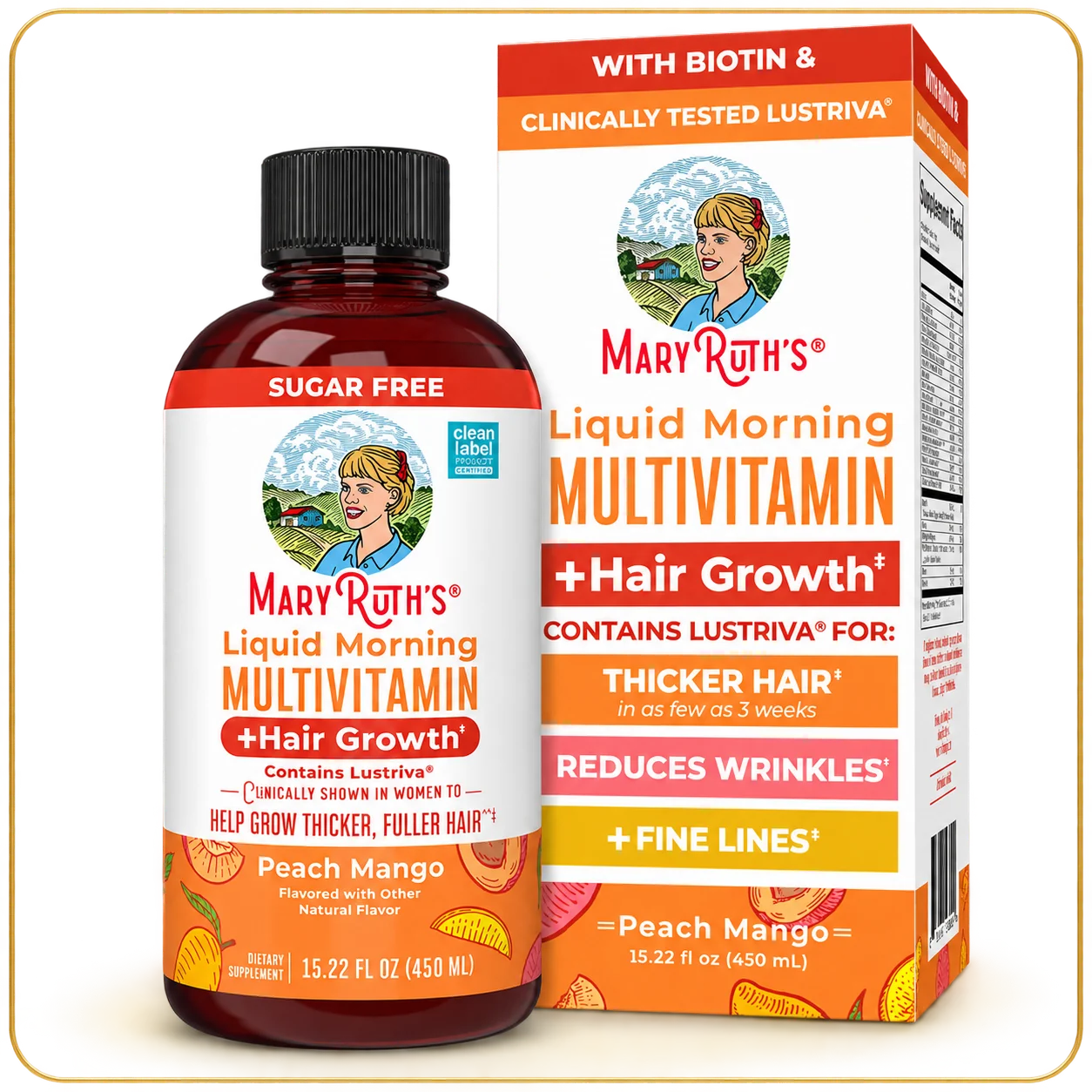
Taken with food, which the research above suggests helps with the mild nausea some people report from any new supplement. Two tablespoons a day, nothing to swallow.
Price
$26.88 for 15 servings (check current pricing)
For the other five, and how they compare on price and format, that's the full Lustriva supplements roundup.
The Bottom Line
Lustriva appears safe for most healthy adults. The real precaution is telling your doctor about it before bloodwork, not worrying about the supplement itself.
The controlled trial found no adverse events over 12 weeks. The ingredients on their own have long safety records. The honest gap is long-term data beyond that window, and the one thing every user should actually do: stop 48 to 72 hours before a blood draw, and say something.
If GLP-1 hair loss is what brought you here specifically, our full supplement guide built around that situation covers formats that are easier on a sensitive stomach, and part two of that series walks through the daily protocol I'm actually running.
Medical Disclaimer
This article is for informational purposes only and isn't medical advice. The Ritual Guide doesn't diagnose, treat, or cure any condition. Talk to your healthcare provider before starting any new supplement, especially if you're pregnant, nursing, taking medication, or managing a health condition like diabetes or blood pressure.
Does Lustriva have side effects?+
The one published 12-week trial found no adverse events in either the high-dose or low-dose Lustriva group, with bloodwork staying within normal range throughout.Is Lustriva safe to take with other supplements or medications?+
There's no documented interaction with the compound as a whole, but its arginine content can interact with blood pressure medication, nitrates, diabetes and GLP-1 drugs, and blood thinners. Worth a quick check with your doctor if any of those apply to you.Does Lustriva affect blood test results?+
Yes. The 10,000mcg of biotin in most Lustriva products can interfere with thyroid panels, troponin, hCG, and several other common lab tests. Stop taking it 48 to 72 hours before a blood draw and mention it to whoever's ordering the test.Is Lustriva safe during pregnancy?+
No pregnancy-specific safety data exists yet for the compound itself. Talk to your OB before using it if you're pregnant or breastfeeding.Who should avoid Lustriva or check with a doctor first?+
Anyone with a thyroid condition, cardiovascular disease, or kidney disease, and anyone on blood thinners, blood pressure medication, or diabetes and GLP-1 drugs. The clinical research was done in healthy women only, so that's the population the safety data actually covers.Does Lustriva cause hair shedding?+
No. The clinical trial showed improved hair thickness compared to placebo, not worsening. If shedding started around the same time you began taking it, it's worth ruling out iron, thyroid function, or a recent illness before blaming the supplement.Disclosure: The Ritual Guide is reader-supported. When you buy through links on this page, we may earn an affiliate commission. We independently select and review every product, our recommendations are never influenced by brand partnerships. Learn more about our editorial process.