Half the questions I get about my Lustriva picks aren't really about which bottle to buy. They're some version of "Lustriva, what is it actually?" or "is Lustriva just biotin with a marketing budget?" Fair questions both. I wondered the same thing before I read a single study on it.
So here's the actual breakdown: what Lustriva is made of, who invented it, what the clinical research shows, and where the evidence genuinely holds up versus where it's still thin.
Key Takeaways
- Lustriva is a patented ingredient complex, not a supplement brand, developed by Nutrition21. It combines magnesium biotinate (a more bioavailable biotin) with inositol-stabilized arginine silicate (a bioavailable silicon).
- You can't buy Lustriva by itself. It only shows up inside other brands' formulas, MaryRuth's, Force Factor, and Nature Made among them.
- The primary human trial, a 12-week randomized controlled trial (RCT) in 90 women, found improved hair thickness at the 160mg dose, with changes measurable by week 3.
- Standard biotin has weak evidence in people who aren't deficient. Lustriva's actual argument is about bioavailability and silicon, not a bigger biotin dose.
- Give it a minimum of three months before deciding whether it's working. Hair biology doesn't move faster than that for anyone.
What Is Lustriva?
Lustriva is a patented ingredient complex from Nutrition21, an Everwell Health company, built around two compounds: inositol-stabilized arginine silicate and magnesium biotinate.
In plain terms, it's a proprietary form of silicon paired with a proprietary form of biotin, both engineered to absorb better than either ingredient does on its own.
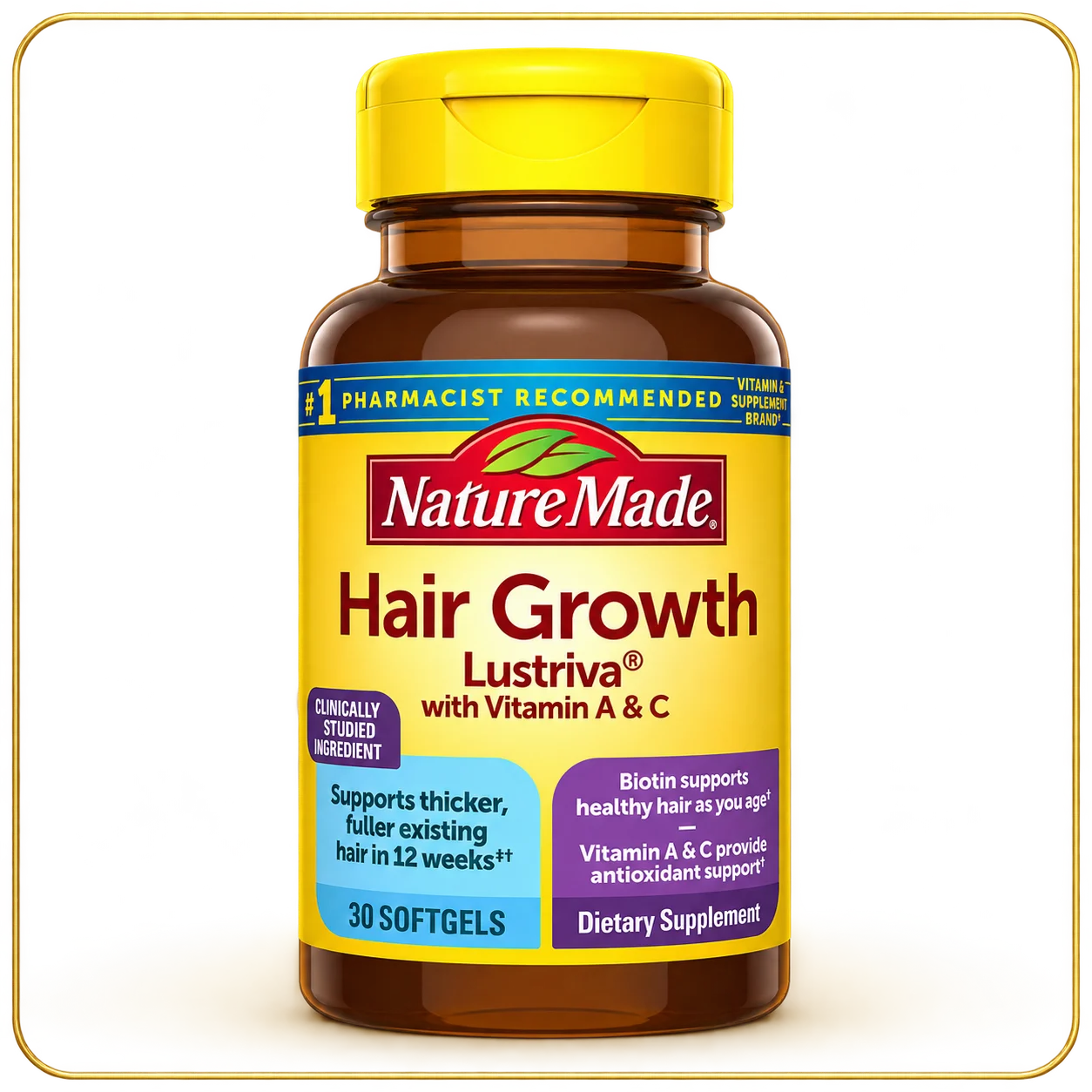
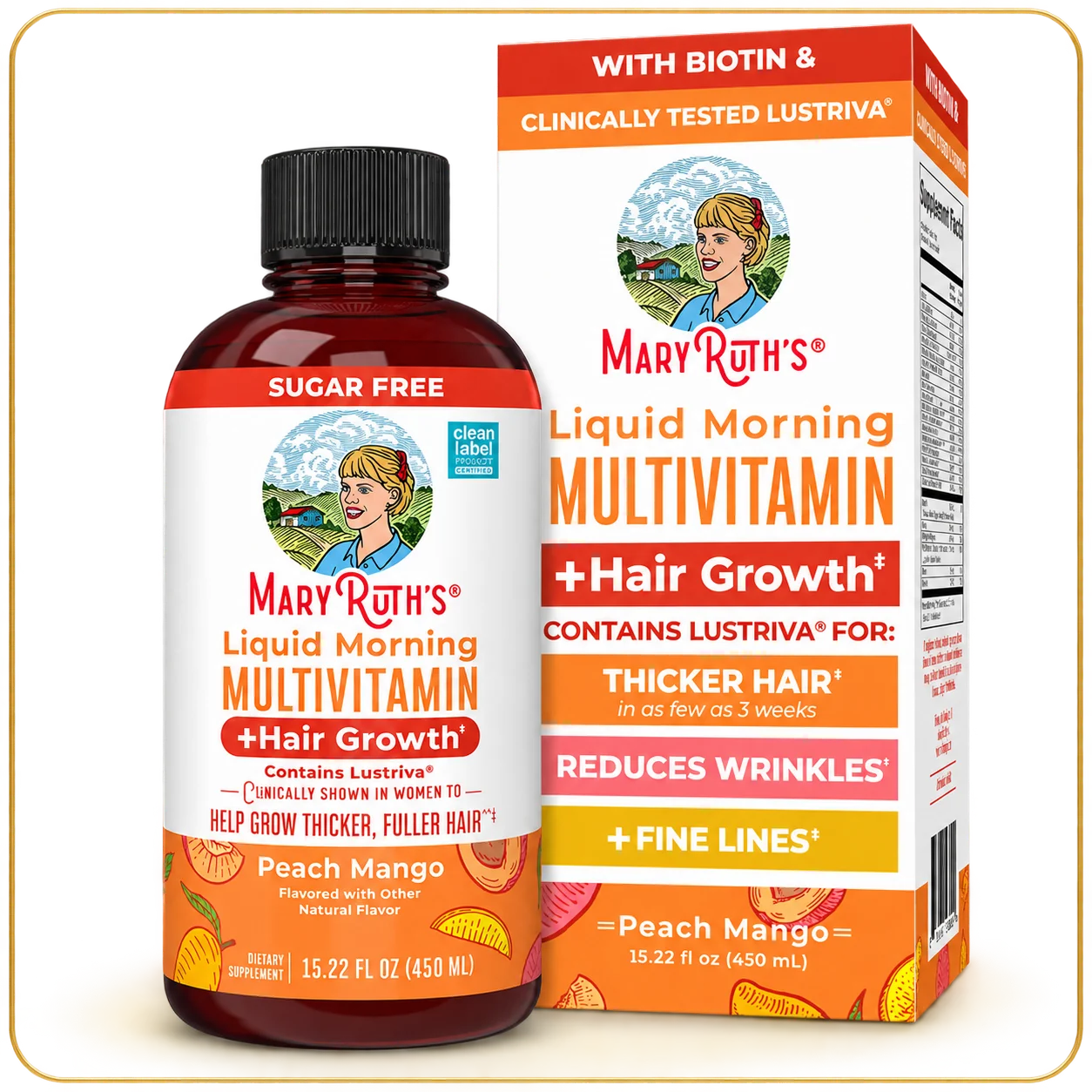
It's a licensed ingredient, not a shelf product you buy under its own name. It shows up inside other brands' formulas instead, MaryRuth's, Force Factor, and Nature Made among them. Seeing "Lustriva" on a label means you're buying a product that contains it.
How Does Lustriva Work?
Two ingredients, two different jobs, working on parallel tracks.
Magnesium Biotinate (the Biotin Part)
Standard biotin, the D-biotin form most supplements use, doesn't dissolve especially well, which limits how much of it your body actually absorbs. Nutrition21 says their magnesium-bound version is up to 40 times more soluble, meaning more of it reaches your tissues and does something useful, like supporting keratin production, instead of passing through.
Inositol-Stabilized Arginine Silicate (the Silicon Part)
Silicon is the third most abundant trace mineral in the human body, and it plays a role in collagen synthesis and connective tissue. The arginine half may also support blood flow to hair follicles, which matters since follicles are high-demand structures that need a steady nutrient supply.
A 2016 review in Anais Brasileiros de Dermatologia outlines silicon's role in collagen synthesis, noting that higher silicon content in the hair has been associated with lower rates of hair loss and increased brightness.
Together, the idea isn't to trigger brand-new growth from nothing. It's to make the environment better for the hair you already have to grow thicker and hold on longer. Animal studies on the complex found it appeared to activate the Wnt/beta-catenin pathway, a signaling route tied to hair follicle cycling, which may explain the shift researchers saw between resting and active-phase hairs.
What's Actually in Lustriva? The Evidence for Each Half
The two Lustriva ingredients don't have the same evidence behind them, so it's worth looking at them separately.
Biotin is a B vitamin that acts as a coenzyme in fatty acid synthesis, amino acid metabolism, and keratin production. The problem is the popular story around it: that taking more biotin grows more hair.
A 2017 review published in Skin Appendage Disorders looked at every published case report and clinical trial on biotin for hair loss and found no proven benefit in healthy people, every case that showed improvement involved someone with an actual biotin deficiency or a diagnosed disorder. A 2024 review in the Journal of Clinical and Aesthetic Dermatology reached the same conclusion.
So why bother with the biotin half of Lustriva at all? Because the pitch isn't "take more biotin." It's that the form matters if your body isn't absorbing standard biotin well. That's a claim about bioavailability rather than dose, and it's a more defensible one.
What the Lustriva Clinical Research Actually Shows
This is where I want to be careful, because the honest answer to "does Lustriva work for hair growth" is: probably, a little, for the right person. Here's the actual data behind that answer, straight from the trial rather than the marketing copy.
The primary human trial was a 12-week, randomized, double-blind, placebo-controlled study of 90 women aged 35 to 58 with self-reported thinning hair, published in the Journal of Clinical and Experimental Dermatology Research (Kalman & Hewlings, 2021). Participants took a low dose, a high dose (160mg), or a placebo.
A separate 2021 open-label trial tested a two-step Lustriva system, capsules plus a topical serum, in 12 women over 3 months, and found self-reported improvements in hair volume, thickness, shine, and nail and skin quality.
Here's the honest context: the pivotal trial was funded by JDS Therapeutics, Lustriva's parent company at the time, enrolled a fairly specific population, and was relatively small. None of that disqualifies it, ingredient research routinely works this way, but the evidence is early-stage compared to something like minoxidil or finasteride. It's a real signal, not a verdict.
Pros
- +Placebo-controlled RCT in 90 women with real hair thickness improvements
- +Magnesium biotinate is up to 40x more soluble than standard D-biotin
- +Dual mechanism, bioavailable biotin plus silicon for structure
- +Generally Recognized As Safe (GRAS) status, available in liquid, gummy, and capsule formats
Cons
- −One industry-funded trial, no independent replication yet
- −Research conducted only in women aged 35 to 58
- −Costs $30 to $60+/month vs. $5 to $10 for basic biotin
- −Won't touch hair loss driven by hormones, stress, or a real nutrient deficiency
How Long Does Lustriva Take to Work?
The earliest measurable changes in the trial showed up around week 3. The fuller picture came together at 12 weeks.
Hair biology just moves slowly. A single hair cycle, growth, transition, resting, can span two to six years for scalp hair, so nothing that supports the follicle environment is going to show results overnight.
If Lustriva is doing something for you at three weeks, it's usually subtle, hair that feels a little denser, less in the shower drain. That vellus-to-terminal ratio shift is the real metric here. It's not new hair appearing from nowhere, it's your existing hair cycling back in at a sturdier diameter. Give it a minimum of three months before deciding either way.
Lustriva vs. Biotin: The Key Difference
If you're Googling lustriva vs biotin because you already own a bottle of the cheap stuff and want to know if Lustriva is just the same thing dressed up, the short answer is they're different in every way that matters.
Standard biotin's evidence for hair growth is weak once your levels are already normal, and the literature is consistent on that. D-biotin, the form in most supplements, has modest solubility, and there's no established benefit to taking more of it if your levels are already fine.
Lustriva uses magnesium biotinate instead, a more water-soluble form, and pairs it with silicon, which works through its own separate mechanism. It's also been tested as this specific combination in a placebo-controlled trial, which most plain biotin supplements have never gone through.
The tradeoff is real too. Lustriva-containing products typically run $30 to $60 or more a month against $5 to $10 for basic biotin.
If your main concern is thinning and thickness rather than growth speed, the silicon half is probably carrying most of the actual benefit, worth knowing before you pay the premium. For the full ingredient-by-ingredient comparison, I put together a Lustriva vs. biotin breakdown that lays out the evidence side by side.
Lustriva vs. Other Hair Growth Ingredients
Here's how it stacks up against the other names you'll see most.
Lustriva vs. Saw Palmetto
Saw palmetto works through a completely different mechanism, it may block DHT, the androgen behind hormone-related hair loss. Lustriva doesn't touch DHT at all. If your thinning is hormonal, saw palmetto targets the upstream cause. Lustriva supports the follicle's nutrition further downstream.
Lustriva vs. Collagen
Collagen peptides may support hair through amino acids like glycine, proline, and hydroxyproline that feed into hair protein synthesis. Silicon and collagen actually work together here, silicon appears to support collagen synthesis in connective tissue, including the follicle environment, which is why you'll see them stacked in the same product fairly often.
Lustriva vs. Keratin
Keratin treatments are topical, applied to the outside of the hair shaft. Lustriva works from the inside to influence the conditions hair grows in. Different tools for different problems that just happen to sit in the same supplement aisle.
Quick Summary
Different form of biotin, an added silicon mechanism, and actual RCT data on the specific combination. The price premium over plain biotin is real, and so is the differentiation behind it.
Who Should Consider a Lustriva Supplement?
The trial population gives the clearest signal: women aged 35 to 58 with self-reported thinning hair saw measurable thickness improvements at the high dose over 12 weeks.
It's worth considering if:
- You have thinning hair rather than outright hair loss. Lustriva isn't a treatment for androgenetic alopecia or any diagnosed medical condition.
- Your shedding started around a big life change, rapid weight loss, GLP-1 hair loss, postpartum, illness, and you're looking for nutritional support while things stabilize.
- You've already tried plain biotin with nothing to show for it and want something working through a different mechanism.
- You want a combined hair and skin benefit, since the skin data from the trials is genuinely solid.
It's probably not the right first move if:
- Your hair loss has an undiagnosed medical cause. See a dermatologist before adding any supplement.
- Speed matters more to you than thickness or density.
- Budget is a real constraint. The silicon mechanism alone is available for a fraction of the price.
For the full breakdown of which products actually hit the studied 160mg dose, that's the best Lustriva supplements guide. And if you want the side effects and who should be careful with it before you buy anything, I covered that separately too.
Where to Find Lustriva
Lustriva isn't sold as its own standalone product. You'll find it as a labeled ingredient inside other brands' formulas, on Amazon and in most retail supplement aisles. Look for "Lustriva" by name on the ingredient list.
The studied dose in the human trial was 160mg of the complex, worth checking for specifically, since some formulas use less. If you're curious how it stacks up against the broader field of hair growth ingredients, or want to look into newer names like millet seed extract while you're at it, those comparisons are worth a read too.
Two of the products carrying the studied dose worth knowing by name:
The Bottom Line
Lustriva earns its price. It's just not a miracle, and it's not for everyone.
The primary trial found real thickness gains by week 12, backed by a legitimate mechanism, not just a bigger biotin number. But it's one industry-funded study, not a mountain of independent proof, and it was tested in women dealing with thinning, not hair loss overall.
Match it to what you're actually dealing with. If something else is going on, a dermatologist beats a supplement every time.
Medical Disclaimer
This article is for informational purposes only and isn't medical advice. The Ritual Guide doesn't diagnose, treat, or cure any condition. Talk to your healthcare provider before starting any new supplement, especially if you're pregnant, nursing, taking medication, or managing a chronic condition.
What are Lustriva's ingredients?+
Two patented compounds make up Lustriva's ingredient list: inositol-stabilized arginine silicate, a bioavailable silicon form, and magnesium biotinate, a highly soluble biotin form. It was developed by Nutrition21, an Everwell Health company.Can I buy Lustriva on its own?+
No. It's only available as a licensed ingredient inside other brands' formulas, not as a standalone product.Is Lustriva just biotin?+
No. Standard biotin (D-biotin) has modest solubility and weak evidence in people who aren't deficient. Lustriva uses magnesium biotinate, which may be up to 40 times more soluble, and pairs it with silicon, a separate mechanism tied to collagen synthesis and hair shaft strength. The specific combination has also been through a placebo-controlled trial, unlike most plain biotin supplements.Does Lustriva work for hair growth?+
The one published trial found measurable improvements in hair thickness at the 160mg dose over 12 weeks, with changes detectable by week 3. That's a real, peer-reviewed signal, but it's a single industry-funded study rather than a large body of independent research, and it doesn't trigger new growth so much as support thicker, stronger existing hair.Is Lustriva natural?+
Not exactly. Lustriva is a lab-engineered complex that bonds naturally occurring elements, biotin and silicon, into more bioavailable forms. It's bioengineered rather than extracted from a plant, which is part of what's meant to make it more absorbable than either ingredient on its own.Does the research on Lustriva apply to men too?+
The clinical research was conducted exclusively in women aged 35 to 58. It doesn't cover men, and the most common cause of hair loss in men, androgenic alopecia, is a medical condition outside what a dietary supplement addresses. A dermatologist visit is the right starting point for men with hair loss concerns.Disclosure: The Ritual Guide is reader-supported. When you buy through links on this page, we may earn an affiliate commission. We independently select and review every product, our recommendations are never influenced by brand partnerships. Learn more about our editorial process.