I have a soft spot for a beautiful tube.
The packaging, the satisfying weight, the name printed in clean sans-serif — I am absolutely the kind of person who has been seduced by a skincare product that looked important before it proved anything.
Adapalene humbled me.
Because here's the thing nobody puts in the headline: every OTC adapalene gel on the market contains the exact same 0.1% adapalene USP active ingredient. The FDA standardizes the formulation. What you're actually choosing between when you pick a brand is the base — the inactive ingredients that carry the retinoid to your skin.
And the base matters more than the marketing does.
It determines how the gel absorbs, how much irritation you'll get in weeks two through six, and how well it sits under the rest of your routine. I went through the formulations on all six so you don't have to do it at 2am while your skin is peeling and you're second-guessing your life choices.
Here's what I'd actually reach for — and why.
Editorial Disclaimer
The Ritual Guide is an independent publication. We review products, we don't sell them, and our picks aren't influenced by brand payments. This guide is editorial and informational. Consult a dermatologist before starting any new topical retinoid, especially if you're pregnant, nursing, or managing a skin condition.
Key Takeaways
- Every OTC adapalene gel uses the same 0.1% adapalene USP — the FDA requires bioequivalence, so generics deliver the same active as Differin.
- La Roche-Posay Effaclar has the leanest base of the branded options — it's our top pick for sensitive and reactive skin.
- TARO is the best cost-per-gram pick — pharmaceutical-grade generic, paraben-free, 45g for roughly $20.
- Start at 2–3 nights per week. A pea-sized amount covers the whole face. More product just means more irritation.
- Commit to 12 weeks before deciding if it's working. That's not a suggestion — it's what the clinical evidence uses as its endpoint.
The Best Adapalene Gels for 2026
Every gel below contains 0.1% adapalene USP — same active, no exceptions. What changes is the base, the size, and what you'll pay per gram over a 12-week cycle.
La Roche-Posay Effaclar Adapalene Gel 0.1%
Best For: Sensitive, reactive, or congestion-prone skin that can't afford extra variables
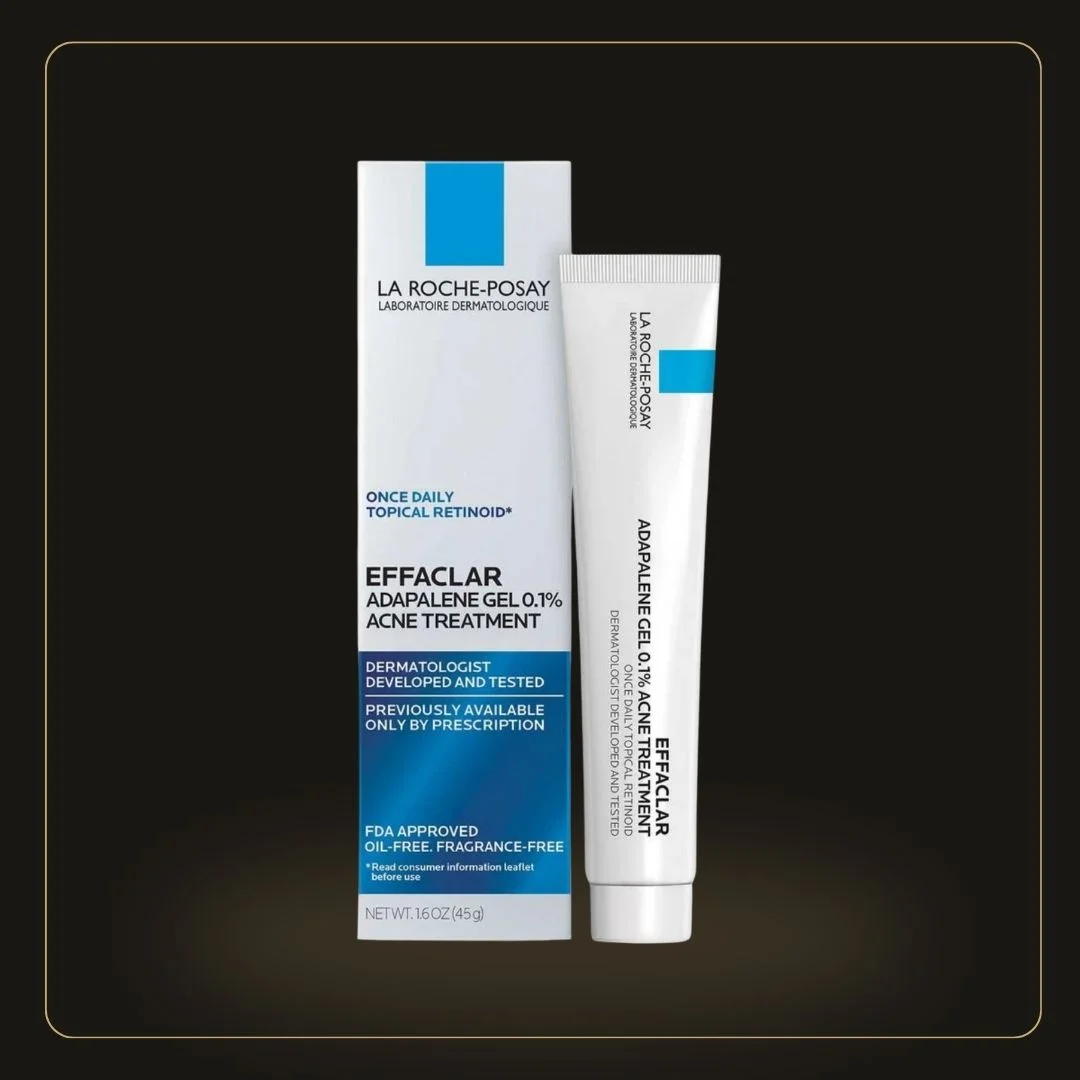
La Roche-Posay built its reputation on skin that needs gentleness as a non-negotiable. The Effaclar adapalene gel reflects that — the inactive list is short: carbomer, edetate disodium, methylparaben, poloxamer 182, propylene glycol, water, sodium hydroxide. No fragrance. No emollients that could add comedogenic risk when you're already working through congestion.
It absorbs cleanly and sits invisibly under a niacinamide serum and moisturizer without the routine feeling heavy — which matters when you're trying to keep everything calm in weeks two through six.
Three retailers stock it: Dermstore (typically the best price), Ulta, and Exclusive Beauty Club. Same 45g product across all three.
Why We Like It
The ingredient list is the pitch. When your skin is already reactive and you're adding a retinoid into the mix, a lean base removes variables. That's exactly what this one does.
Price
Around $30–$35 for 45g (check current pricing)
Differin Adapalene Gel 0.1%
Best For: First-time retinoid users who want the reference formulation — and a pump dispenser that makes dosing honest
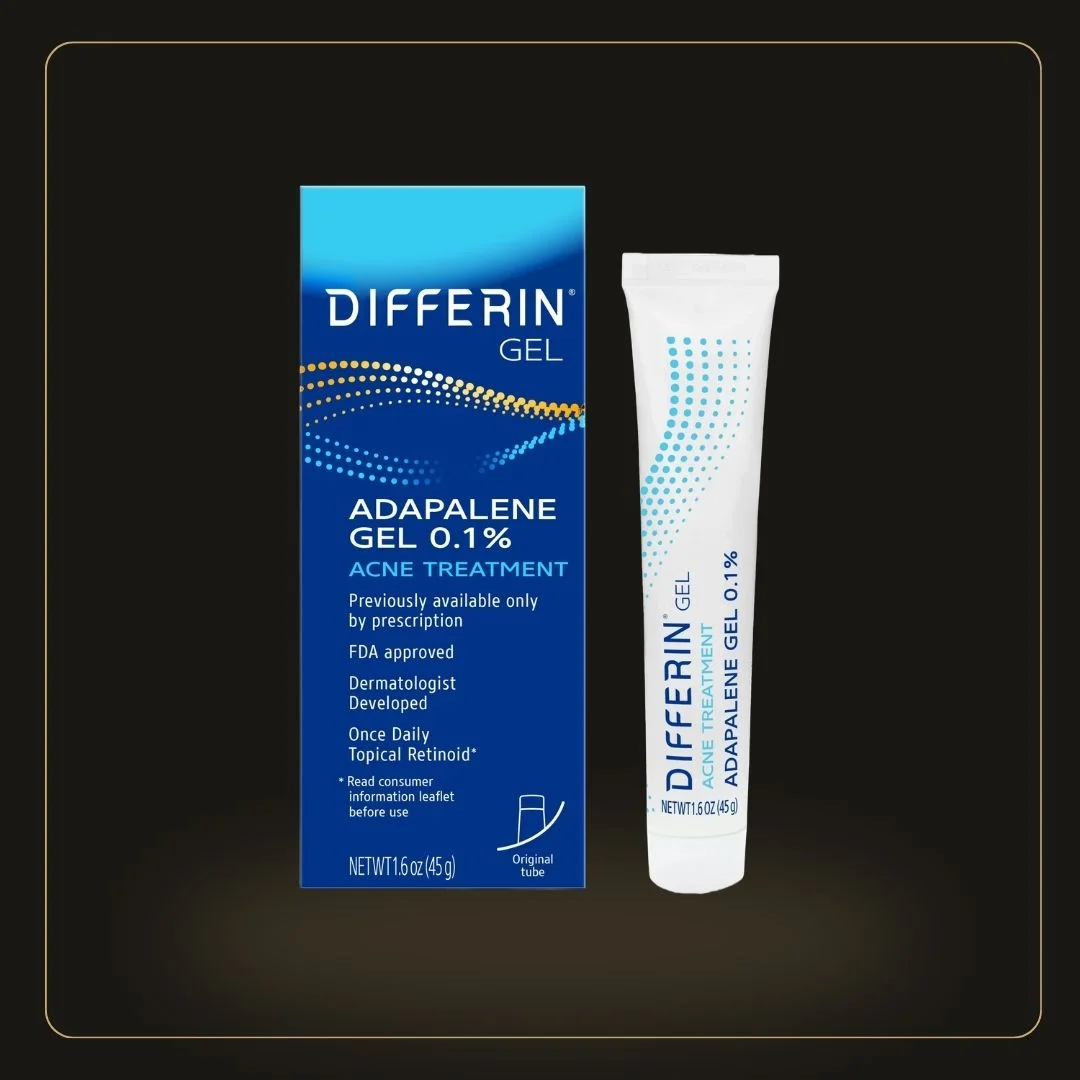
Differin is the original. When the FDA approved adapalene 0.1% for OTC sale in 2016, Differin was the brand that carried it there. Every major clinical trial you'll read about in this guide was conducted with this formulation. It's the reference product — which means when dermatologists say "try OTC adapalene," this is usually what they picture.
The 45g tube comes in a pump format, and that's genuinely useful. At a pea-sized amount per application, you get roughly 200+ uses from one tube. A pump makes consistent dosing much easier than squeezing from a tube — especially in the early weeks when you're trying not to over-apply.
Available at Ulta and iHerb. If you want to buy it alongside other skincare staples in one order, iHerb is a solid option.
Why We Like It
The pump is the real differentiator here. Most people over-apply retinoids because squeezing a tube is imprecise. One pump press keeps you honest in a way that matters over a 12-week cycle.
Price
Around $13–$18 for 45g (check current pricing)
TARO Adapalene Gel 0.1% USP (1.6 oz)
Best For: Anyone committing to a full 12-week cycle who wants the best cost-per-gram without a formulation tradeoff
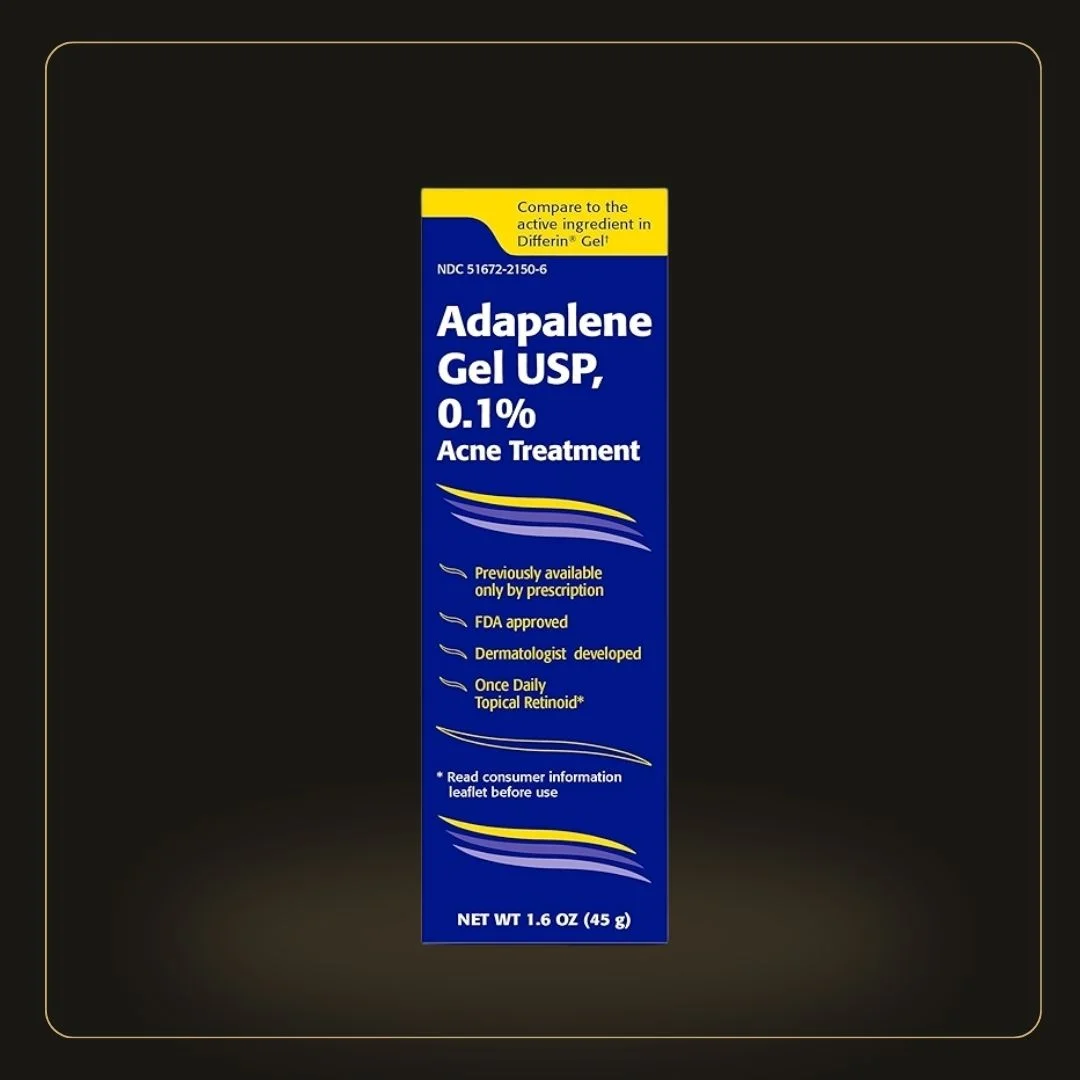
TARO isn't a beauty brand — it's a pharmaceutical manufacturer. That distinction matters. Their adapalene is filed as a generic drug product under FDA ANDA requirements, which means it must meet the same bioequivalence standards as branded versions before it can be sold.
The 1.6 oz tube is paraben-free and runs roughly $19–$22 on Amazon. That works out to around $0.44 per gram, compared to $0.71 per gram for branded options. Over a 12-week treatment cycle, the math saves you real money with no formulation tradeoff that actually matters.
The "Prescription Strength" label on the packaging just refers to the fact that this active was formerly prescription-only — it's the same 0.1% adapalene USP as everything else in this list.
Why We Like It
Once you've confirmed adapalene works for your skin, this is the sensible long-term choice. Same active, pharmaceutical-grade, half the cost per gram of the branded options.
Price
Around $19–$22 for 45g (check current pricing)
AcneFree Adapalene Gel 0.1% (1.6 oz)
Best For: Oily, acne-prone skin that needs a non-comedogenic base and doesn't want to overthink it
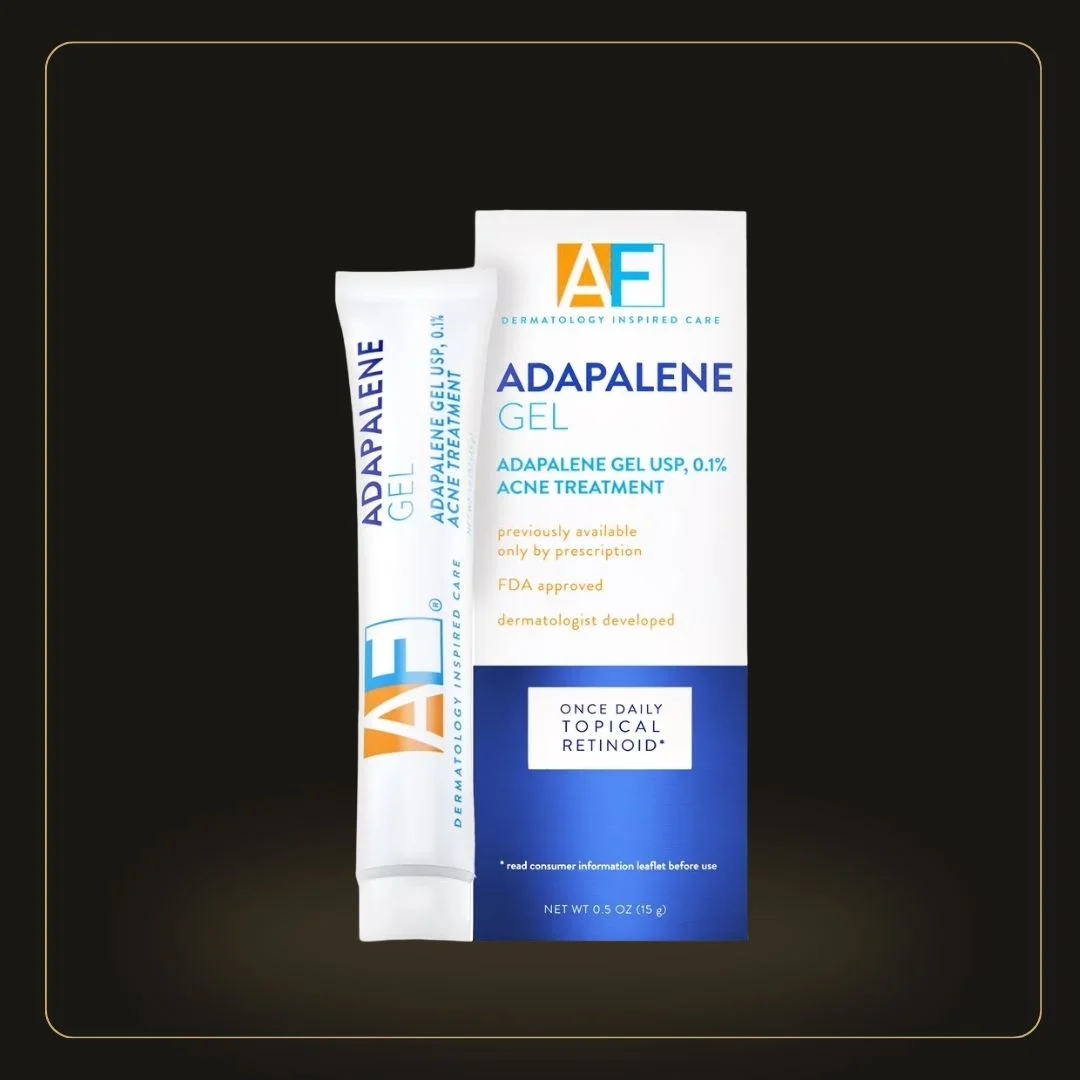
AcneFree leans into clinical positioning — "dermatology inspired" is their tagline, and it shows in how they approach the formula. The adapalene gel is oil-free, fragrance-free, and labeled non-comedogenic. For skin that's already producing excess sebum, that last point matters more than it sounds.
The full 1.6 oz size at around $21 on Amazon and iHerb puts it squarely in the value-generic range — a bit more per gram than TARO, but it's readily available and easy to reorder.
If your main concern is closed comedones or textural congestion, a non-comedogenic base is worth the slight premium over the cheapest generic.
Why We Like It
The non-comedogenic label is meaningful when you're treating skin that congests easily. The last thing you want while fighting closed comedones is a base formula that's adding to the backlog.
Price
Around $21 for 45g (check current pricing)
Neutrogena Evenly Clear Retinoid Adapalene Gel 0.1%
Best For: Adult acne with post-acne marks — the positioning aligns with what adapalene actually does to pigmentation
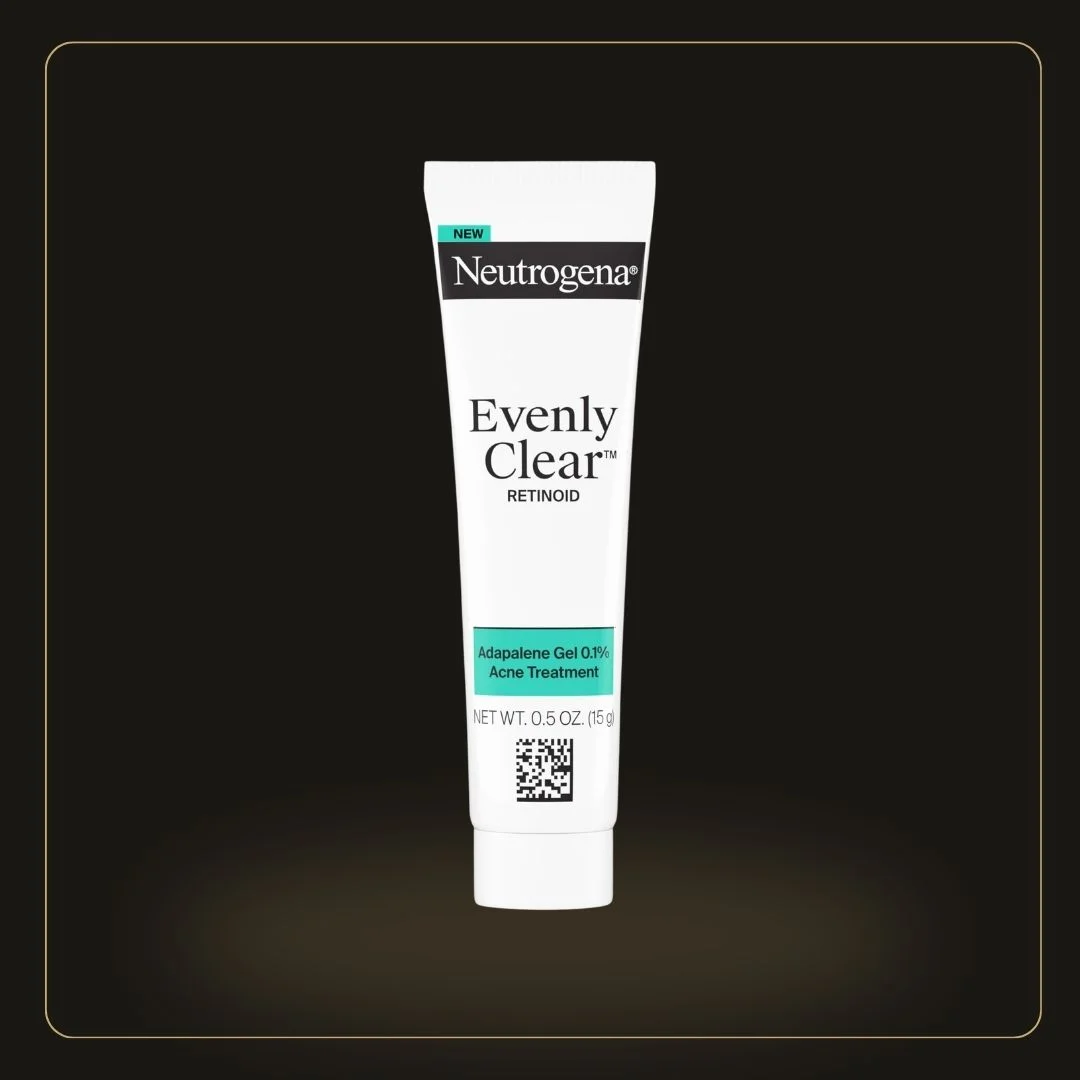
Neutrogena's Evenly Clear is pitched differently from the others — the name and the brand's messaging lean into post-acne mark fading and skin tone evening, not just active breakout clearance. That framing is actually accurate. Adapalene's accelerated cell turnover does help with post-inflammatory hyperpigmentation, so the "Evenly Clear" angle isn't just marketing.
The formula is fragrance-free with a carbomer gel base — nearly identical to LRP and Differin at the inactive level. The 0.5 oz size is the smaller of the two tube options in this guide, which makes it a reasonable starting point before committing to a 45g purchase.
Available at Ulta. The smaller size does carry a higher cost per gram, but for a first-time trial it's a fair way to test tolerance.
Why We Like It
The positioning is honest. If post-acne pigmentation is your main frustration alongside the breakouts, this is the one framed around both — which is exactly what adapalene addresses at a mechanistic level.
Price
Around $13–$16 for 0.5 oz (check current pricing)
PanOxyl Adapalene 0.1% Leave-On Gel (0.5 oz)
Best For: A low-stakes first trial for people who've had bad reactions to actives before
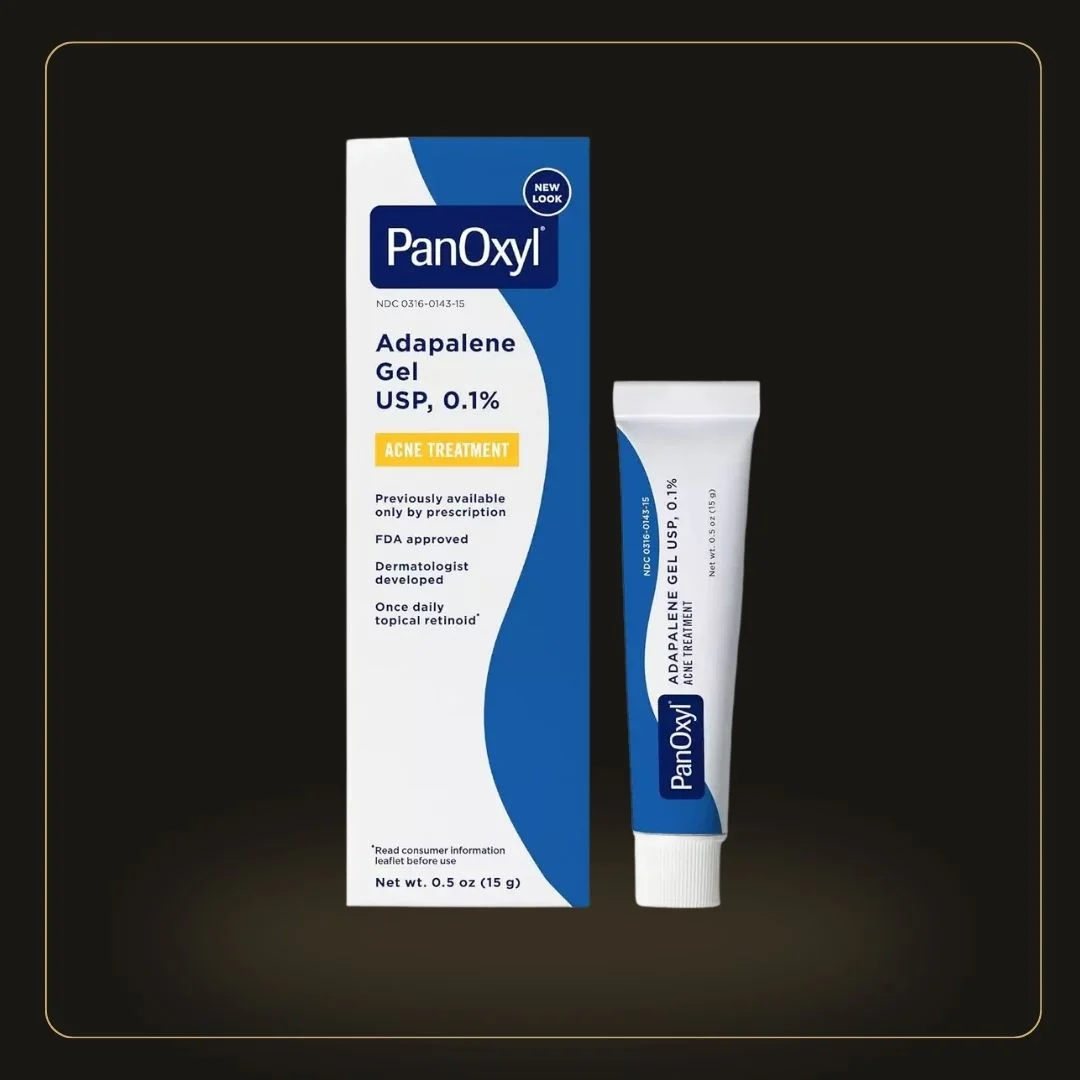
PanOxyl is best known for benzoyl peroxide washes — it's an acne-first brand, and this adapalene gel fits that identity. The formula is oil-free, fragrance-free, and paraben-free. The 0.5 oz tube is the smallest in this lineup, positioned as a 30-day starter option.
The cost-per-gram is higher than the 45g options, but the math shifts when you factor in the cost of a bad reaction to a full-size tube. If you have a history of contact dermatitis or strong reactions to actives, a smaller first investment makes sense.
Available on Amazon and iHerb. Once you've confirmed your skin tolerates adapalene, move to a 45g option for the next cycle.
Why We Like It
It's the sensible entry point for the cautious buyer. A 30-day trial before committing $30+ to a full-size tube is just good logic — not a consolation option.
Price
Around $11–$15 for 14g (0.5 oz) (check current pricing)
How to Choose the Right One
What changes between products — and what doesn't
The active is identical across all six. The FDA requires OTC drug products to meet bioequivalence standards before they can be sold, so a generic adapalene gel must deliver the same amount of active ingredient to the skin as the reference product (Differin). Full stop.
What changes is the inactive base: the polymers, humectants, and carriers that determine how it feels on skin and how reactive it gets.
A lean base (carbomer, poloxamer, propylene glycol, water) adds fewer variables for congestion-prone skin. A formula with additional skin-feel ingredients may feel more comfortable early on, but may also add comedogenic risk for some skin types.
Fragrance-free and paraben-free matter most during the retinoid adjustment phase — not because these ingredients are dangerous in general, but because your skin is more reactive than usual for the first four to eight weeks.
Small tube or full size?
Start small if you've had bad reactions to actives before, have a history of contact dermatitis, or have never used a retinoid. The cost-per-gram premium is real, but it's cheaper than abandoning a full-size tube after a reaction.
Go straight to 45g if you've already confirmed adapalene works for your skin, or if you're replacing a finished tube. The savings between the small and full-size options are significant over a full 12-week cycle.
The cost-per-gram reality
Since every product delivers the same active, cost per gram of total product is the cleanest comparison metric.
Cost per Gram — All Six Products
Differin 45g
~$15 / 45g
~$0.33/g
TARO 45g
~$20 / 45g
~$0.44/g
AcneFree 45g
~$21 / 45g
~$0.47/g
La Roche-Posay Effaclar 45g
~$32 / 45g
~$0.71/g
PanOxyl 0.5 oz
~$13 / 14g
~$0.93/g
Neutrogena Evenly Clear 0.5 oz
~$14 / 14g
~$1.00/g
What the Research Says
Adapalene's evidence base for acne and closed comedones is well-established. It's worth knowing what the studies actually show before you commit to 12 weeks of treatment.
46%
Non-inflammatory lesion reduction
The Finding
In a multicenter RCT of 323 acne patients, adapalene 0.1% gel reduced noninflammatory lesion counts by 46% at 12 weeks — versus 33% for tretinoin 0.025% gel — with consistently better tolerability across erythema, dryness, and burning.
Journal of the American Academy of Dermatology · Multicenter RCT · 323 patients · 12 weeks
The anti-aging evidence is stronger at 0.3% (prescription strength) than at 0.1% OTC. For acne, closed comedones, and skin texture, 0.1% is well-supported by the clinical literature. If anti-aging is your primary goal, our adapalene for anti-aging guide covers what the evidence actually supports at each concentration. A 12-week commitment — not two weeks, not four — is what the research uses as its standard endpoint.
How to Use It Correctly
The product choice is only half the equation. Application protocol is where most routines fall apart.
Apply at night, on fully dry skin — wait 10–15 minutes after cleansing before applying. A pea-sized amount covers the entire face. Start at 2–3 nights per week for the first four weeks, then increase to nightly as your skin builds tolerance.
Layer niacinamide serum and a fragrance-free barrier moisturizer after application. SPF every morning, no exceptions.
The full layering sequence — including what to avoid on adapalene nights and how to buffer on reactive nights — is covered in our adapalene skincare routine.
For a comparison with prescription tretinoin, including the evidence differences and who should escalate, see our adapalene vs. tretinoin breakdown.
<div style="background:#1a1814;border:1px solid rgba(201,169,110,0.2);border-radius:3px;padding:32px 28px;margin:32px 0;font-family:'Inter',-apple-system,sans-serif;"><p style="font-size:11px;font-weight:600;letter-spacing:0.14em;text-transform:uppercase;color:#c9a96e;margin:0 0 6px;">The Bottom Line</p><p style="font-family:'Playfair Display',Georgia,serif;font-size:22px;line-height:1.45;color:#f0ebe1;margin:0 0 14px;">The product is almost beside the point. Pick the right base for your skin type, then don't quit before week 12.</p><p style="font-size:15px;line-height:1.7;color:#d4cfc6;margin:0 0 12px;">For sensitive and reactive skin: La Roche-Posay Effaclar. For first-timers who want the reference formula and a pump that controls dosing: Differin. For long-term use at the best cost-per-gram: TARO. For a cautious first trial: PanOxyl or Neutrogena Evenly Clear in the smaller size.</p><p style="font-size:15px;line-height:1.7;color:#d4cfc6;margin:0;">Every product above delivers the same 0.1% adapalene to your skin. The base and the price are the only real variables. Everything else is branding.</p></div>
If dryness or irritation are slowing you down in the early weeks, our adapalene dryness and irritation guide covers the most common causes and fixes. And if you're deciding between this and a prescription-strength option, the adapalene vs. azelaic acid comparison is a useful read for anyone whose closed comedones tend to progress into inflamed breakouts.
Frequently Asked Questions
Is there a difference between Differin and generic adapalene?+
Not in the active. Generic adapalene gels must meet FDA bioequivalence standards before they can be sold as OTC drug products — meaning they deliver the same 0.1% adapalene USP to the skin as Differin. The differences are in the base formulation, tube size, and price. If efficacy is all you're comparing, the generics are equivalent.How long does a 45g tube last?+
At a pea-sized amount applied nightly to the full face, a 45g tube lasts approximately five to six months. If you're starting at three nights per week during the adjustment phase, it'll stretch considerably longer. This is why the 45g options are better value than the 0.5 oz tubes for anyone committing to a full 12-week cycle.Which adapalene gel is best for sensitive skin?+
La Roche-Posay Effaclar is our pick for sensitive skin — it has the shortest inactive ingredient list and no fragrance. But product choice matters less than application protocol: apply to fully dry skin, start at two to three nights per week, and buffer with a moisturizer if your skin is very reactive. The retinoid itself, not the brand, is what causes adjustment-phase irritation.Can adapalene be used for anti-aging?+
There's evidence it may help with fine wrinkles, texture, and hyperpigmentation — though most of the stronger anti-aging data uses the 0.3% prescription concentration. At 0.1% OTC, the acne and comedone evidence is more established. The cell turnover and pigmentation-evening mechanisms that work on post-acne marks do also apply to early photoaging, so if both concerns overlap for you, 0.1% addresses both.Should I use adapalene every day from the start?+
No — start at two to three nights per week for the first four weeks to let your skin build tolerance. Move to every other night in weeks five through eight, then to nightly from week nine onward if your skin is handling it. Daily use from day one is the fastest route to barrier breakdown and the most common reason people quit before the 12-week mark where real results appear.Disclosure: The Ritual Guide is reader-supported. When you buy through links on this page, we may earn an affiliate commission. We independently select and review every product — our recommendations are never influenced by brand partnerships. Learn more about our editorial process.