
Disclosure: The Ritual Guide is reader-supported. When you buy through links on this page, we may earn an affiliate commission. We independently select and review every product — our recommendations are never influenced by brand partnerships. Learn more about our editorial process.
I have a drawer with five abandoned planners in it. Maybe you do too.
There's the leather-bound one I bought after my late ADHD diagnosis at 24. I used it for nine days and stopped because the daily layout made me feel like I was documenting my failures in real time. There's the bullet journal I started after a TikTok convinced me this was the ADHD system. Three weeks. There's the gold-foiled one from January, bought with the energy of someone who genuinely believed this year would be different.
For a long time, I thought I was the problem. Most ADHDers do.
The truth is that most planners are built for neurotypical brains. Hand that system to a brain wired for novelty, dopamine, and time-blindness, and the system fails. Then your self-trust goes down with it.
The best ADHD planners for women are the ones built for the brain you actually have. We've spent months testing 14 planners through real life, hormonal cycles, and deadlines. We ranked them by what stayed in active rotation when things got hard.
A note before we start: planners don't treat ADHD. What a well-designed planner can do is externalize the executive function your prefrontal cortex isn't reliably doing on its own.
Key Takeaways
- Page-per-day formats almost always fail ADHD brains. A weekly spread you can see all at once beats a daily layout that hides the rest of your week.
- Women with ADHD face a real, neurochemical planning problem in the late luteal phase. Estrogen drops, dopamine availability drops with it, and the same week your meds feel less effective is the week most systems get abandoned.
- A planner that requires you to remember to look at it has already failed. Visibility beats elegance, every time.
- Cost-per-month-of-use is a better metric than sticker price. A $65 planner used for ten months costs $6.50 a month. A $25 planner abandoned in three costs $8.33, plus whatever self-trust you lose when you close it.
- Some ADHD brains don't bond with paper. Digital tools like Tiimo and Structured solve time-blindness in ways paper can't. Most of us do best with a hybrid.
Editorial Disclaimer
This guide reflects our editorial opinion based on testing, research, and lived experience with ADHD. It does not constitute medical advice. Planners, apps, and organizational systems are tools, not treatments. If you're navigating an ADHD diagnosis, speak with a qualified clinician about a full support plan.
Why Most Planners Fail ADHD Brains: The Externalization Problem
Russell Barkley, whose executive function research has shaped most of what we know about adult ADHD, has been making one argument for thirty years that planner companies mostly ignore.
ADHD isn't purely a deficit of attention. It's a deficit of self-regulation across time, specifically the ability to hold future-relevant information online while the present is happening.
That's the working memory gap. It's why you forget what you were just doing the moment you walk into a different room. And it's why a planner that requires you to remember to look at it has already failed before you open it.
Researchers call this cognitive offloading: outsourcing memory to the environment. The science behind it is one of the strongest frameworks for choosing among the best ADHD planners.
Research Note
The concept of cognitive offloading is supported by research on working memory and external scaffolding in ADHD populations. A useful starting point is Barkley's work on executive function deficits in ADHD, including his 2012 book "Executive Functions: What They Are, How They Work, and Why They Evolved."
Barkley, R.A. (2012). Executive Functions. Guilford Press.
What does this mean practically? An open weekly spread you can actually see beats a daily layout that hides the rest of your week. A planner with too much blank space defeats ADHD brains because the empty page is itself a cognitive task. A planner with too rigid a structure gets abandoned the first week things don't go as planned.
The layout you're looking for does three things at once. It shows you the future at a glance, your week and month, ideally both. It gives you somewhere to drop tasks without forcing you to schedule them by hour. And it lets you fail gracefully, meaning you can skip a week and come back without staring at a wall of empty boxes.
The Hormonal Cycle Plays a Bigger Role Than You Think
Here's something almost no ADHD planner roundup mentions: women with ADHD have a different planning problem in the late luteal phase than they do anywhere else in the cycle.
The clinical writing of Sari Solden, whose work on women with ADHD started in 1995 and remains foundational, points to a specific mechanism. Estrogen modulates dopamine availability in the prefrontal cortex.
When estrogen drops in the days before your period, dopamine availability drops with it — which means your already-strained executive function gets a real, neurochemical hit for roughly a week each month.
What this looks like in real life: the same week your meds feel less effective, your tasks feel impossible, your emotional regulation goes sideways, and your planner — the very tool that's supposed to help — feels like it's mocking you.
A lot of ADHDers I know quit their planner system in this exact week, every single month. Then they restart in the follicular phase when their brain is online again, and conclude they "just can't stick with it."
You can. The system has to plan for the bad week instead of pretending it doesn't exist.
A planner that supports cycle-aware planning lets you build a lighter version of your structure for the late luteal week. Fewer commitments scheduled in advance. More buffer in your time blocks. A protected zone of low-stakes tasks instead of high-output ones.
The best ADHD planners for women either bake cycle awareness into the layout directly or give you enough flexibility to track it yourself. Some of the picks below have explicit cycle tracking built in. Others don't, but their flexible monthly view gives you room to color-code or label the week so you can see it coming and plan around it instead of through it.
If you're in perimenopause — and based on the average age of late ADHD diagnosis in women, a lot of the readers of this guide are — the same mechanism plays out at a different scale.
Estrogen drops permanently in perimenopause and menopause, which is why so many women are getting diagnosed in their 40s. The planning principle is the same: build for the brain you have, not the brain you wish you had.
If You've Abandoned Five or More Planners, Read This First
Before we get to the best ADHD planners themselves, I'm going to tell you what nobody told me for years: the abandoned-planner drawer is not evidence that you're broken. It's evidence that the planning system you tried was wrong for the brain you have.
There are five common failure patterns I've watched ADHDers fall into. Recognize yours before you buy the next planner — otherwise you'll abandon this one too.
- You bought a daily planner with one page per day. This is the most common ADHD failure pattern. The page-per-day format hides the rest of your week, which means you have no working-memory anchor — you're back to remembering on your own. Daily planners work for some neurotypical brains. They almost never work for ADHD brains long-term. Switch to a weekly or weekly-plus-monthly view.
- The planner is too pretty to ruin. If your planner is a $60 leather thing you're afraid to mark up, you'll never use it. ADHD brains need a tool that absorbs scribbles, crossed-out tasks, and last-minute reschedules without any sense of "ruining" it. A working planner looks chaotic by month three. That's a feature.
- You over-structured on day one. A common ADHD pattern: in a moment of high motivation, you fill in the next four months with appointments, habit trackers, and elaborate weekly themes. Two weeks later, the gap between the planned version and the lived version feels so wide you can't bear to open it. The fix: never schedule more than seven to ten days out in detail.
- The system requires daily migration. Bullet journaling, for example, requires you to migrate uncompleted tasks from yesterday to today. Some ADHDers love this. Many find it punishing — the daily ritual becomes a daily "you didn't finish your list" lecture. If migration shames you, you don't have the right system. Look for a guided planner with a less-confrontational structure or a flexible weekly that doesn't demand daily reconciliation.
- You picked it during a hyperfocus dopamine high. That hour you spent watching planner-organization videos on TikTok was your brain's reward for finding novelty. The planner you bought that night is the wrong one — you bought the aesthetic, not the system. Hard rule for next time: sleep on it, then return to your shopping cart in the late luteal phase. If you still want it when your brain is tired, it's the right one.
If three or more of those describe your past planners, the issue isn't follow-through — it's pattern-matching the planner to your actual life instead of your idealized one. Everything that follows is built around that.
Editor's Note
Every planner below was tested by women on our team with diagnosed or strongly self-identified ADHD, used through real life rather than evaluated from a stack of brand samples. We've kept brands that didn't survive our rotation off the list entirely — there are good planners we've left out because they weren't right for our brains, and that's a feature, not a gap.
How We Tested These ADHD Planners
To find the best ADHD planners for women, we tested fourteen over several months across our team — five of us on this round, all women, three with formal ADHD diagnoses, one self-identifying as inattentive, one as combined-type with a recent perimenopause diagnosis.
We rotated planners every two to three weeks, kept testing notes, and compared what stayed in active rotation versus what got abandoned.
The criteria we judged on:
- Visibility at a glance. Could you see your week and your month at the same time without flipping pages?
- Failure forgiveness. Could you skip a week and resume without psychological cost?
- Structure-to-flexibility ratio. Did the layout impose too much rigidity (over-planning) or too little (blank-page paralysis)?
- Cycle compatibility. Did the layout support a different week's worth of capacity, or did every week look the same?
- Cost-per-Month-of-Use. Sticker price divided by months actually used. A $60 planner used for ten months has a cost of $6/month. A $25 planner abandoned in three months has a cost of $8/month.
Brand provenance and Amazon-versus-direct-availability also factored in. Some of the strongest ADHD-designed planners are direct-sold — meaning you'll order from the brand site, not Amazon. We've flagged that on each pick.
The Top 10+ Best ADHD Planners for Women in 2026
Below are the fourteen best ADHD planners we tested, ranked by what stayed in active rotation, with notes on which ADHD pattern each planner solves and where each one falls short.
Hobonichi Techo Cousin (A5) 2026 English Edition
Best Overall · Best for Time-Blocking

The Hobonichi Cousin is the gold standard for time-blockers, and it has been for years. The A5 size gives you a full page per day plus weekly vertical columns with a built-in time schedule — meaning you can plan your week as time blocks and execute your day with detail. The Tomoe River paper is the best on the market for fountain pens and the dot grid lays cleanly without distraction.
Why we like it: The thread-stitched binding lays completely flat, which sounds like a small thing until you've tried to write in a planner that won't stay open. The blend of yearly, monthly, weekly, and daily views in one book means you don't lose context across time horizons. The 2026 English edition includes bonus pages on focus and on sleep — surprisingly aligned with what ADHDers actually need.
Approximate price: $65
Get It on Amazon →Panda Planner Classic A5 Daily
Best Entry Point Under $30
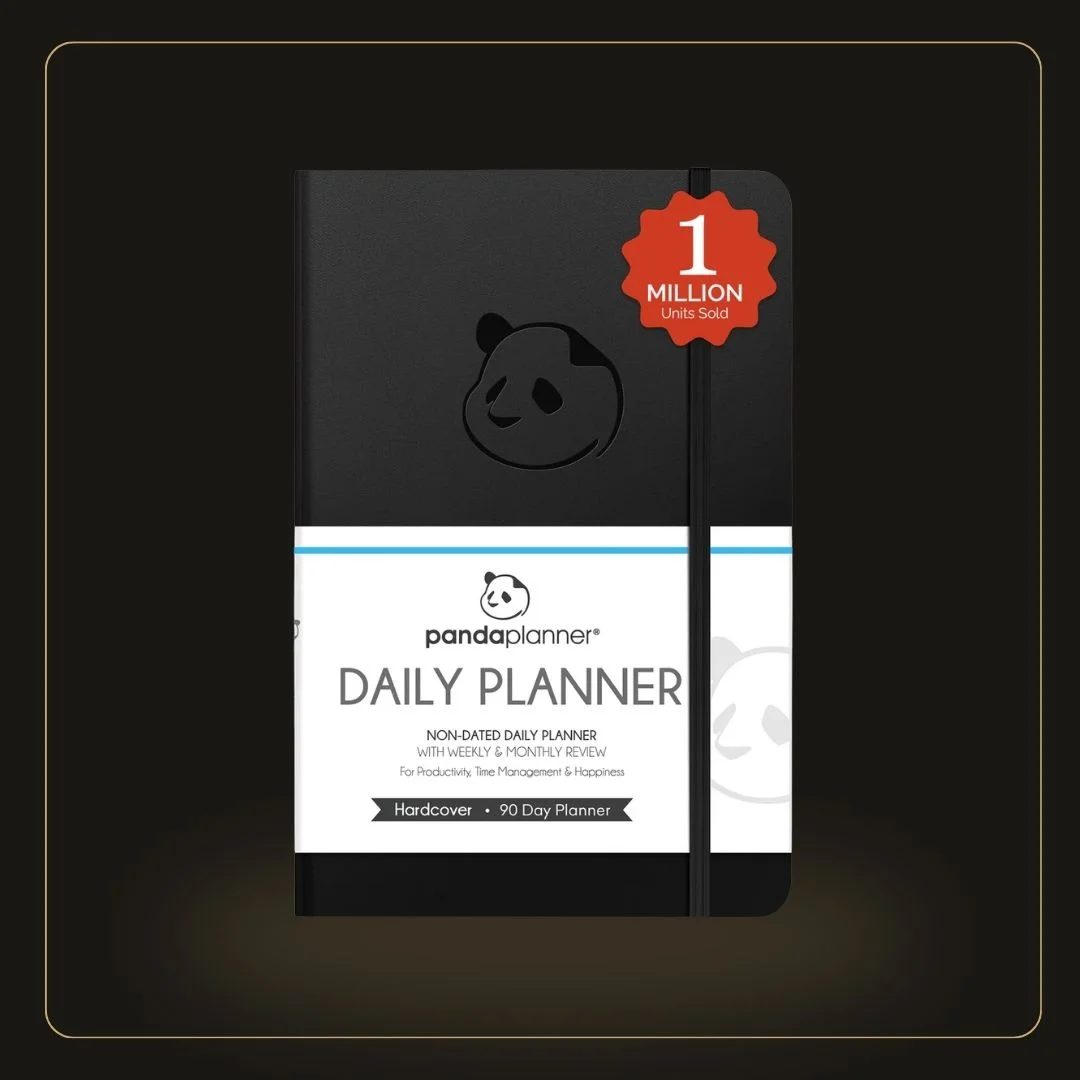
If you've abandoned five planners and you don't want to spend $60 on number six, the Panda Planner is where to start. It's structured around a positive-psychology framework — gratitude, priorities, today's wins — which sounds gimmicky until you realize that the gentle prompts are doing exactly what an ADHD brain needs: scaffolding without judgment. The undated 90-day format is meaningful for ADHDers because if you skip three weeks, you don't open it to a wall of preprinted dates from August.
Why we like it: The daily and weekly layouts both fit on a single visible spread, which solves the working-memory problem affordably. The format is structured enough that the page tells you what to do (no blank-page paralysis) but flexible enough that the prompts don't shame you when life happens. The 90-day commitment is also more honest for an ADHD brain than a full calendar year. The brand explicitly notes the planner is designed with ADHDers in mind — and it shows in the layout choices.
Approximate price: $25
Get It on Amazon →Clever Fox Planner PRO
Best for Goal-to-Task Translation
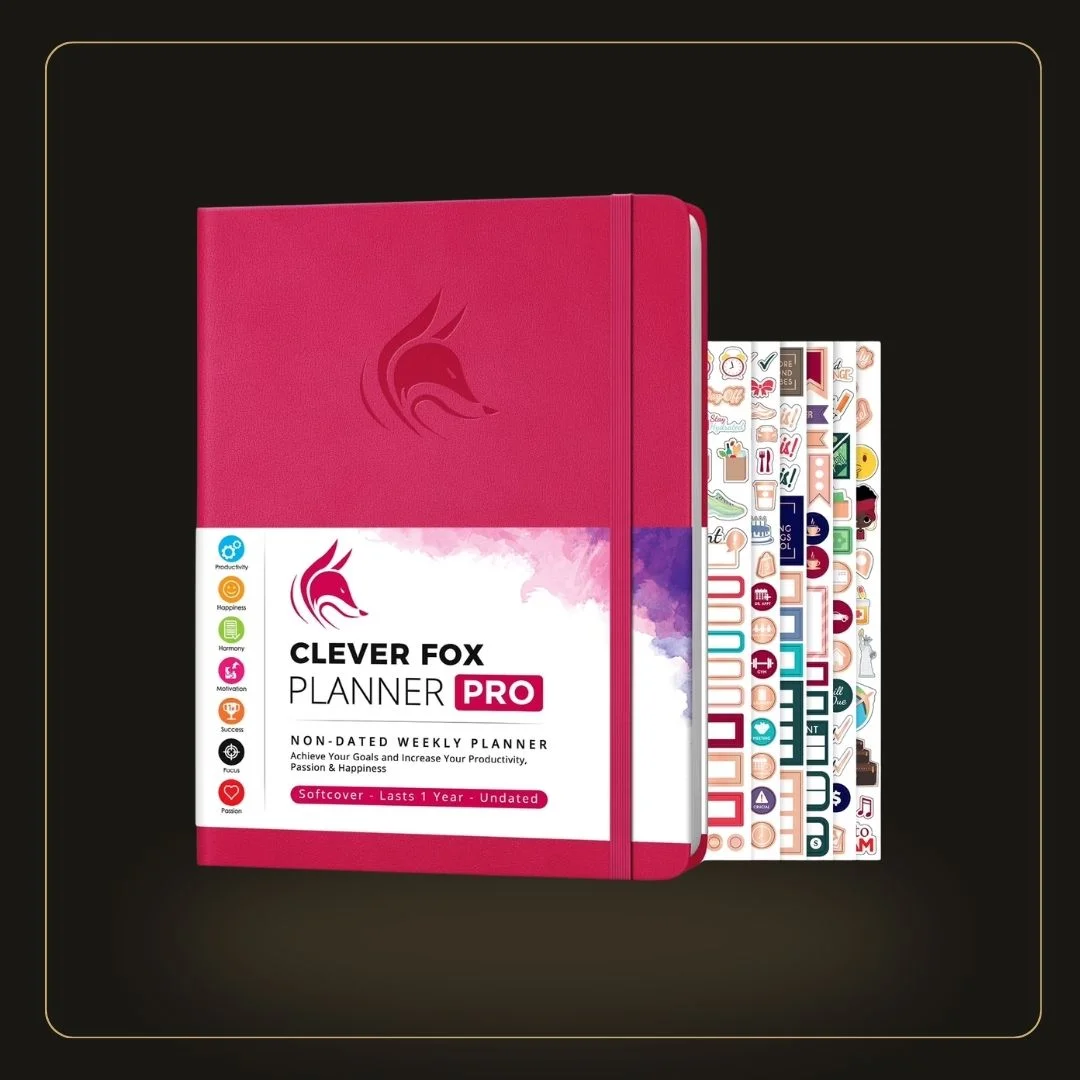
The Clever Fox PRO is the planner for ADHDers who get stuck in the gap between long-term vision and what to do today. The system walks you from yearly vision down through monthly themes to weekly priorities to daily execution — a real top-down cascade without too much page real estate per layer. With 11,000+ reviews and an 8.5" x 11" layout, this is the most thoroughly tested planner in the lineup, and the design quality matches.
Why we like it: The faux leather hardcover holds up to actual handling. The pen loop, ribbon markers, and back pocket are small details that make the planner feel like a tool you can carry around rather than a stationery item to be preserved. The undated format means you can start any week and abandon a few without psychological cost. The free quick-start guide and planning stickers are unusually well-made for a $40 planner.
Approximate price: $40
Get It on Amazon →Full Focus Linen Planner by Michael Hyatt
Best for the Quarterly Brain

The Full Focus is built around a 90-day quarterly framework, which is genuinely well-matched to ADHD brains. Twelve-month commitments are too long; weekly cycles are too short for any meaningful project arc; ninety days is the executive function sweet spot — long enough to make real progress, short enough that your brain can hold the goal online without losing the thread. The linen-bound 2026 edition is the most beautiful version of this planner in print.
Why we like it: Daily Big 3 — the practice of identifying three priorities for the day — solves over-listing, which is one of the most common ADHD planner failures. The weekly preview, weekly review, and quarterly review built into the planner are some of the most ADHD-friendly accountability structures in print. The structure is more rigid than Hobonichi or Clever Fox, but the rigidity is doing real work: it forces your scattered list of forty-seven things into the three that actually matter today.
Approximate price: $45–60 depending on color
Get It on Amazon →Passion Planner
Best for Goal-Alignment Planning

The Passion Planner is built around a single ADHD-relevant pain point: the gap between long-term goals and the small daily actions that get you there. ADHDers tend to either focus exclusively on the now (and forget the goals) or get stuck in big-picture daydreaming (and never break things down into tasks). Passion Planner's roadmap framework — yearly goals broken into monthly steps broken into weekly priorities — solves that bridging problem better than almost any other planner format.
Why we like it: The weekly spread combines time-blocking on the left side with a personal goals and work goals split on the right, which means your daily plan lives next to the reason you're doing any of it. The reflection prompts at the end of each month are short — gentle accountability without therapy-level depth. There's an undated daily version, a Pro version with project pages, and an Academic edition for student ADHDers. The undated daily edition is the one we recommend for cycle-aware planning.
Approximate price: $35 (direct-sold)
Get It at Passion Planner →Erin Condren LifePlanner
Best for Visual Thinkers

The Erin Condren is the planner for ADHDers who think in colors and want their planner to feel like a creative outlet, not a chore. The customization is genuinely useful for ADHD brains: you pick your weekly layout (vertical, horizontal, or hourly), your binding, your cover. The colorful aesthetic and sticker culture sound shallow until you remember that ADHD planners only get used if the user actually wants to open them — and dopamine hits matter for follow-through.
Why we like it: The vertical layout option splits each day into morning, day, and evening boxes — which solves a specific ADHD problem of trying to time-block when your perception of time is unreliable. The page is busy by design, so it's not for minimalists, but for visual ADHDers it's a system that pulls you in instead of intimidating you. The downside is the price-to-paper-quality ratio: for $60 you can do better elsewhere on substrate alone, but the customization is the thing you're paying for.
Approximate price: $60 (direct-sold)
Get It at Erin Condren →bloom daily planners 2026–2027 Academic Year Planner
Best for Women Specifically
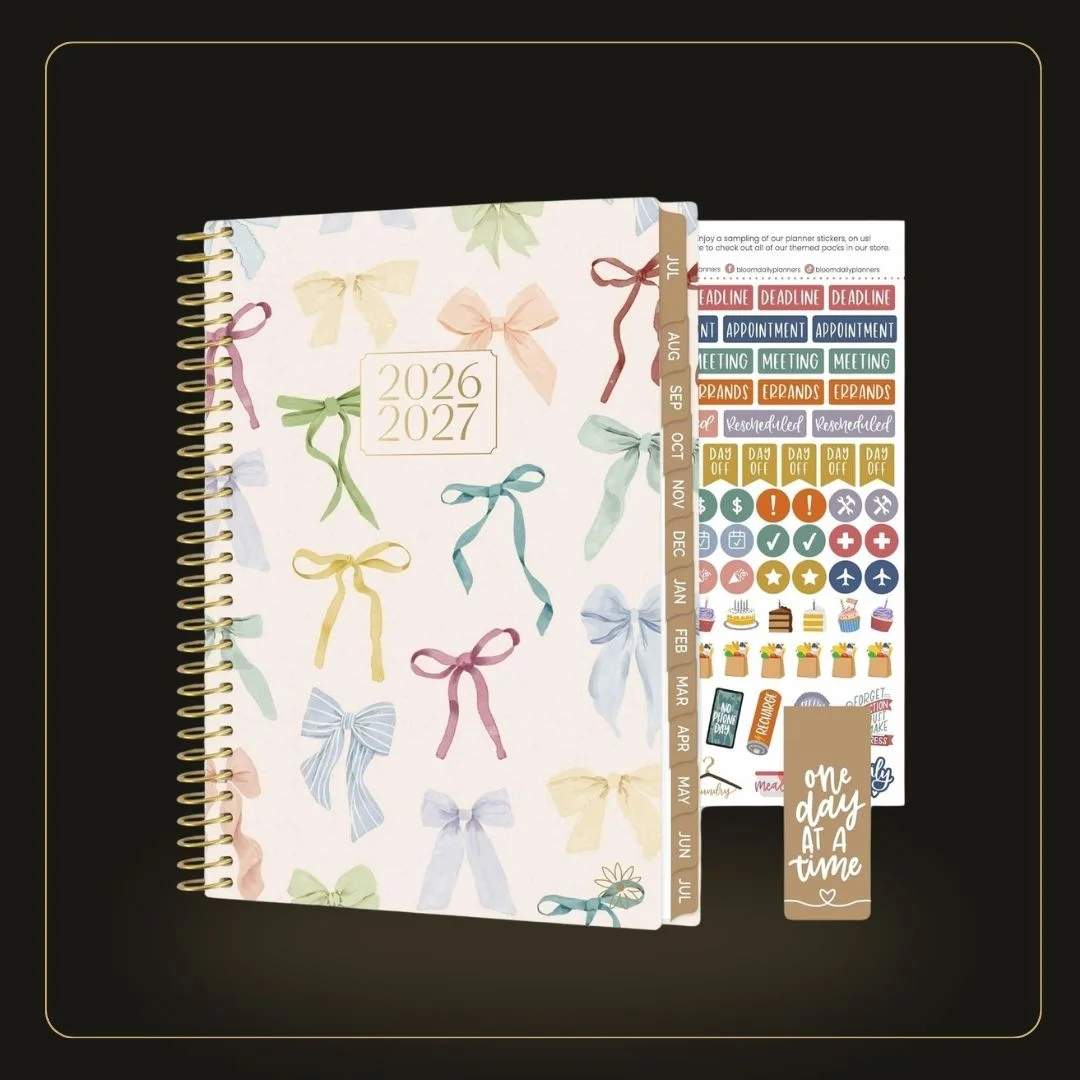
bloom is one of the few mainstream planners explicitly designed and marketed for women, and the extras it packs in — habit tracker, vision board, mission statement prompt, budget planning pages, monthly challenges, lined note pages — make it more than the sum of its calendar. The 13-month academic format (July 2026 to July 2027) suits ADHDers who think in school-year arcs more naturally than calendar-year ones.
Why we like it: The 5.5" x 8.25" size fits in most purses and work bags, which matters for the working-mom or commuting ADHDer whose planner has to leave the house. The two-page monthly view plus spacious weekly layouts gives you both the working-memory anchor and the room to dump tasks. The included sticker sheet and magnetic bookmark are small dopamine details, and 20 cover designs let you match the planner to your taste. At $20–25, the price-to-feature ratio is exceptional.
Approximate price: $20–25
Get It on Amazon →GoGirl Planner PRO Schedule
Best for Time-Blockers Under $30
The GoGirl Planner PRO is the best entry point for ADHDers who want to time-block but aren't ready for the $65 Hobonichi commitment. The 7" x 10" undated hourly format gives you 6 AM to 9 PM time slots on every weekly page, plus monthly calendars, budget tracking, and habit pages. It's the closest thing to a Full Focus / Hobonichi hybrid at a third of the price.
Why we like it: The eco-leather hardcover lays flat (non-negotiable for ADHD use), the 120gsm paper holds gel ink without bleeding, and the elastic closure plus pen loop mean the planner stays organized when you toss it in a bag. Eleven cover colors is real customization at this price point. The budget planning pages are unusually well-designed — ADHDers who struggle with money management benefit from having the budget live next to the calendar rather than in a separate app. The undated layout means it never goes "stale."
Approximate price: $30
Get It on Amazon →Legend Planner Hourly Schedule Edition
Best Budget Hourly Planner
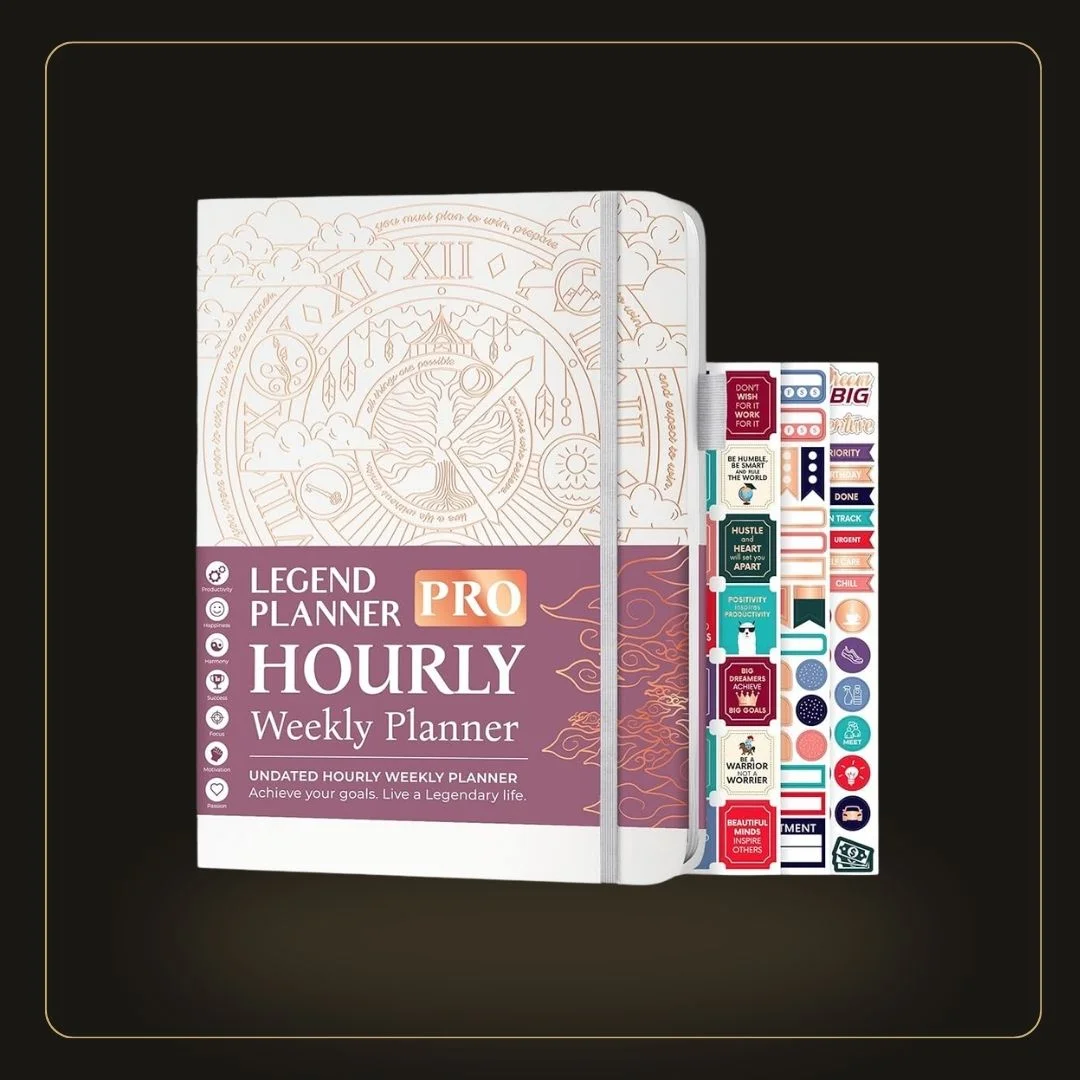
The Legend Planner is the budget pick for hourly scheduling, and the layout has a specific ADHD-relevant feature most others don't: it prompts you to plan monthly activities across six distinct life areas — and to reflect on whether you're keeping that balance. For ADHDers who hyperfocus on work to the exclusion of relationships, health, or rest, the structural nudge is genuinely useful. Eleven color options, A5 size, undated, around $24.
Why we like it: The 6 AM to 9 PM hourly time slots give you the time-blocking infrastructure without the over-rigidity of true 30-minute calendar scheduling. Three bookmarks, an elastic closure, and a pen loop make the planner actually portable. The 60-day money-back guarantee on planners (which the brand also offers) is unusual and worth noting. At $24 with the 20% Amazon discount it ranks among the highest value-per-dollar planners we tested.
Approximate price: $24
Get It on Amazon →kellofaplan Self Care Daily Wellness Planner
Best for Emotional Regulation
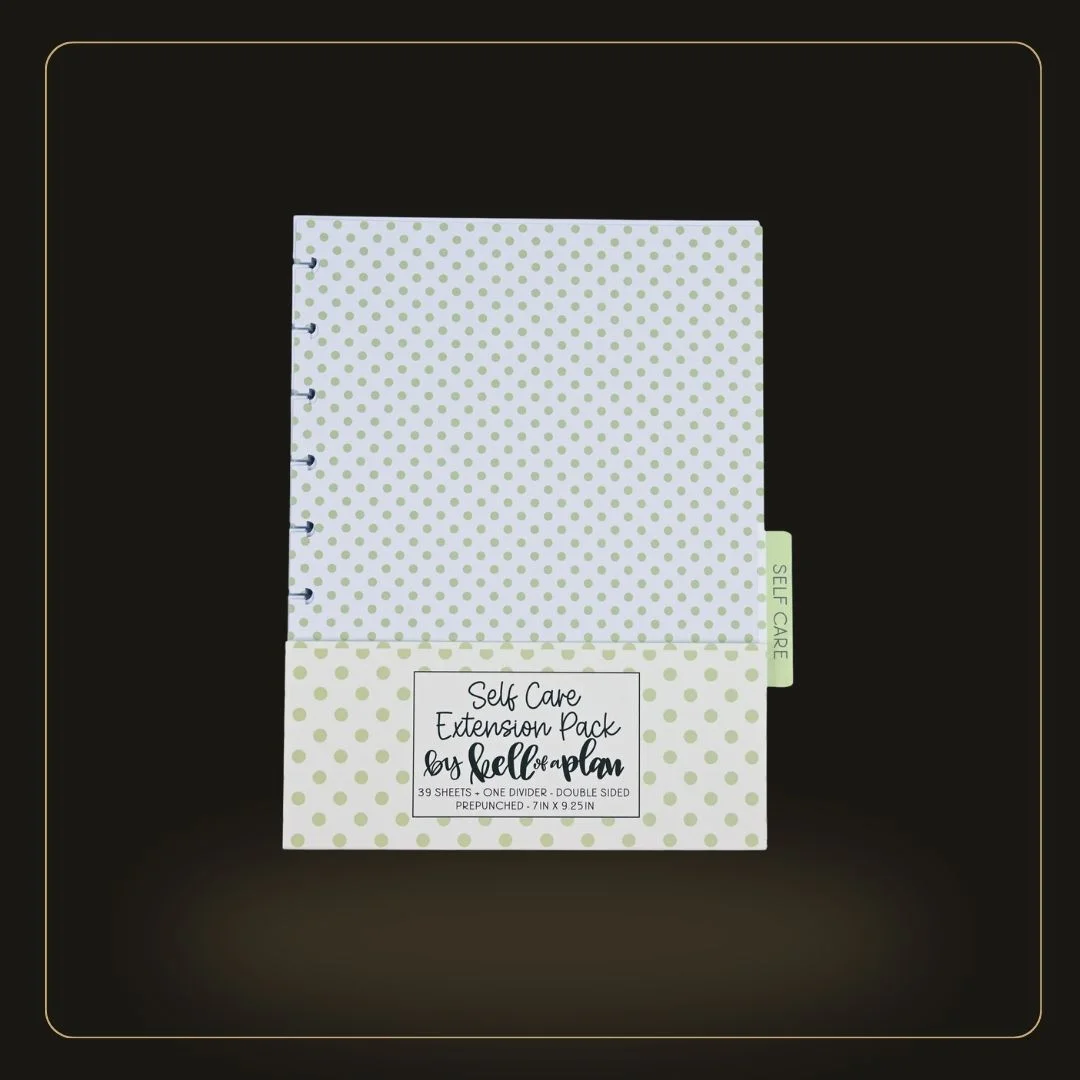
For women with ADHD, emotional regulation is often the symptom that meds don't fully address. The kellofaplan Self Care Daily Wellness Planner is not a productivity tool — it's a structured way to track emotions, log self-care, and build affirmations into the day. The bingo-challenge format for self-care habits is mildly silly in the best way: it turns wellness into a low-stakes game rather than another performance metric you're failing at.
Why we like it: ADHDers benefit measurably from mood and emotion tracking — partly because the act of labeling what we're feeling is itself a regulation tool, and partly because seeing the pattern across weeks helps identify the late-luteal week, the post-meds-wearing-off slump, the burnout signals. The 125 GSM paper is genuinely premium for an A5 planner at this price. It works best paired with one of the more conventional planners above — a productivity tool plus this emotional-regulation tool covers what most ADHDers need.
Approximate price: $20–25
Get It on Amazon →Rocketbook Core Reusable Smart Notebook
Best Reusable Hybrid
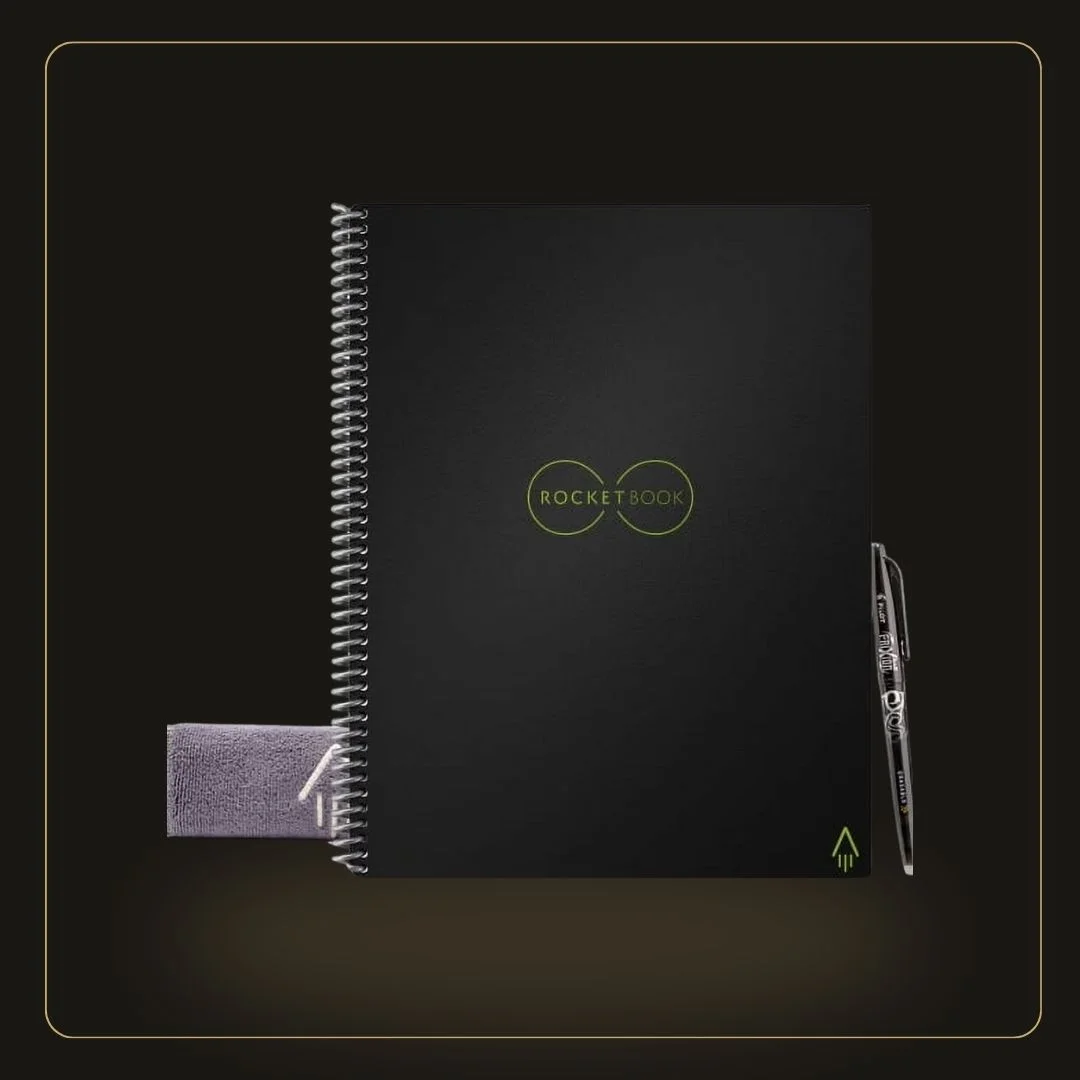
The Rocketbook Core is for ADHDers who want the tactile satisfaction of writing by hand but also need their notes to live in a digital backup so nothing gets lost. You write with a Pilot Frixion pen, scan pages with the Rocketbook app to your cloud of choice (Google Drive, Dropbox, OneNote), then wipe the page clean with a damp cloth. The Executive size (6" x 8.8") fits in most bags and gives you 36 reusable pages plus Smart Titles and Smart Tags to organize what you've scanned.
Why we like it: For an ADHDer who's lost important notes inside abandoned planners — and we have all done this — the cloud backup is a safety net that paper alone can't provide. The reusability also softens the financial commitment of switching layouts; you're not abandoning a $40 planner, you're erasing this week's experiment. The downside is that the writing experience feels less satisfying than premium paper, and the Frixion pen ink can fade in heat. Best paired with a calendar-format planner — this is a thinking and notes tool, not a daily layout.
Approximate price: $26
Get It on Amazon →Sweetzer & Orange Fitness Planner Notebook
Best Fitness-Adjacent Planner

Not strictly a daily planner — this is the planner for ADHDers who use movement as a regulation tool and want a single book that holds workouts, food log, and measurements. The 6" x 8.5" format with gold spiral binding fits in a gym bag, and the 129 pages cover measurement tracking, weight tracking, workout planning, food logging, and a 30-day challenge structure. We're including it because for a subset of ADHDers, exercise is the most reliable focus intervention — and a dedicated tracker keeps that habit in the same orbit as the rest of the planning system.
Why we like it: The 30-day challenge structure works the same way the Panda Planner's 90-day format does — short enough to actually finish, structured enough to make progress visible. The 100gsm paper holds up to gym-bag conditions better than most planners would. Pair it with one of the daily/weekly planners above (we'd suggest the Hobonichi, GoGirl, or Legend) and you have movement and time-blocking covered.
Approximate price: $20
Get It on Amazon →Hadley Designs Spiral Weekly Planner Undated
Best Ultra-Minimalist Pick
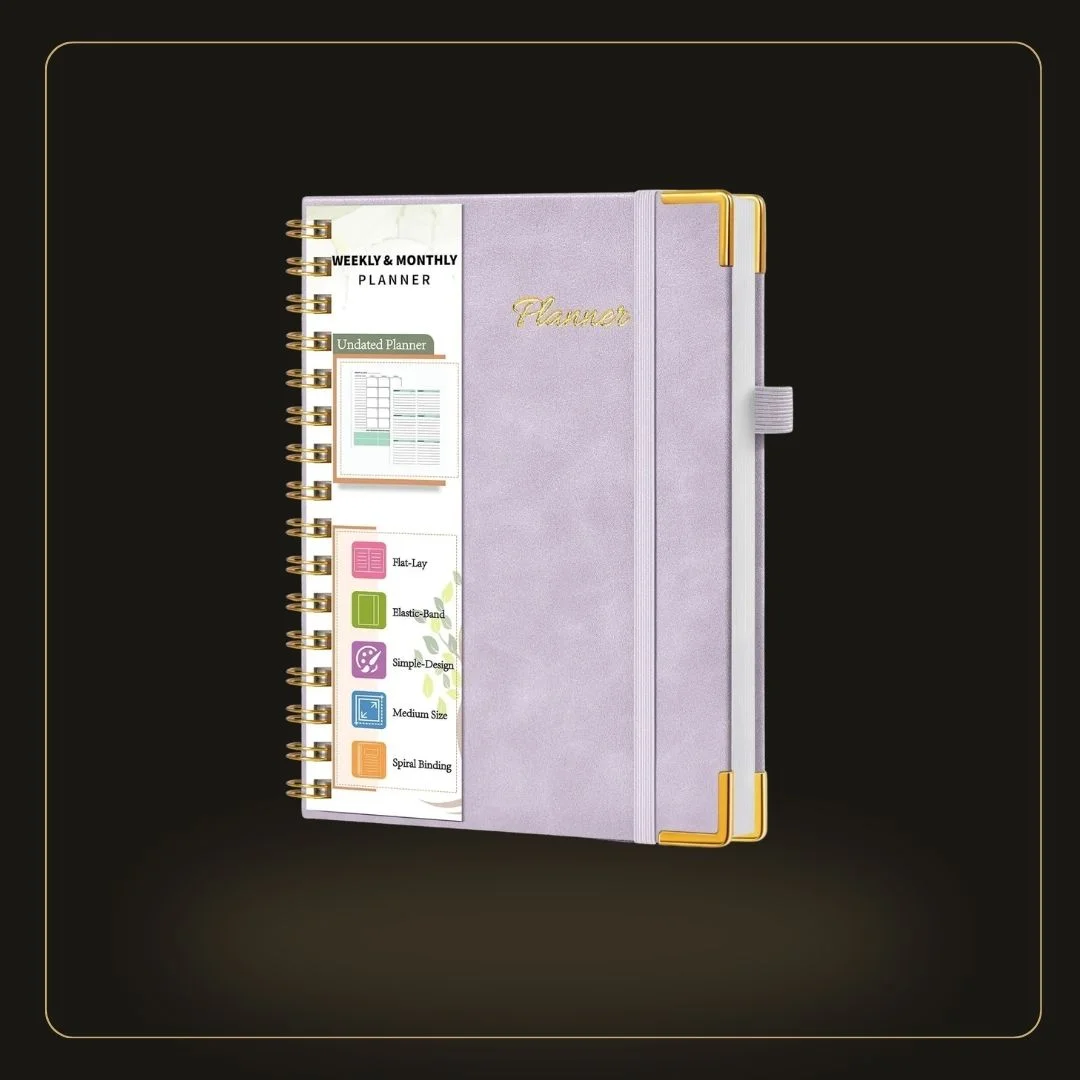
For ADHDers whose abandoned-planner drawer is full of busy, sticker-heavy systems that overwhelmed them, the Hadley Designs Spiral Weekly is the opposite end of the spectrum. Designed and printed in the USA, the 6" x 8" undated weekly format with a built-in habit tracker keeps everything minimal: weeks, goals, habits, nothing else. Beige cover, clean dot grid, no prompts shouting at you. For some ADHD brains the lack of stimulation is itself a feature.
Why we like it: The smaller 6" x 8" footprint sits on a kitchen counter or desk without dominating the space, which means it stays visible rather than getting buried under mail. The pure undated format with stickers included gives you flexibility to start mid-month without wasting pages. This isn't the right pick for time-blockers or anyone who wants prompts, but for the minimalist ADHDer who's been burned by Erin Condren and Happy Planner, it's a thoughtful palate cleanser.
Approximate price: $15
Get It on Amazon →ZICOTO Beautiful To Do List Notebook
Best Tear-Off Daily Pad
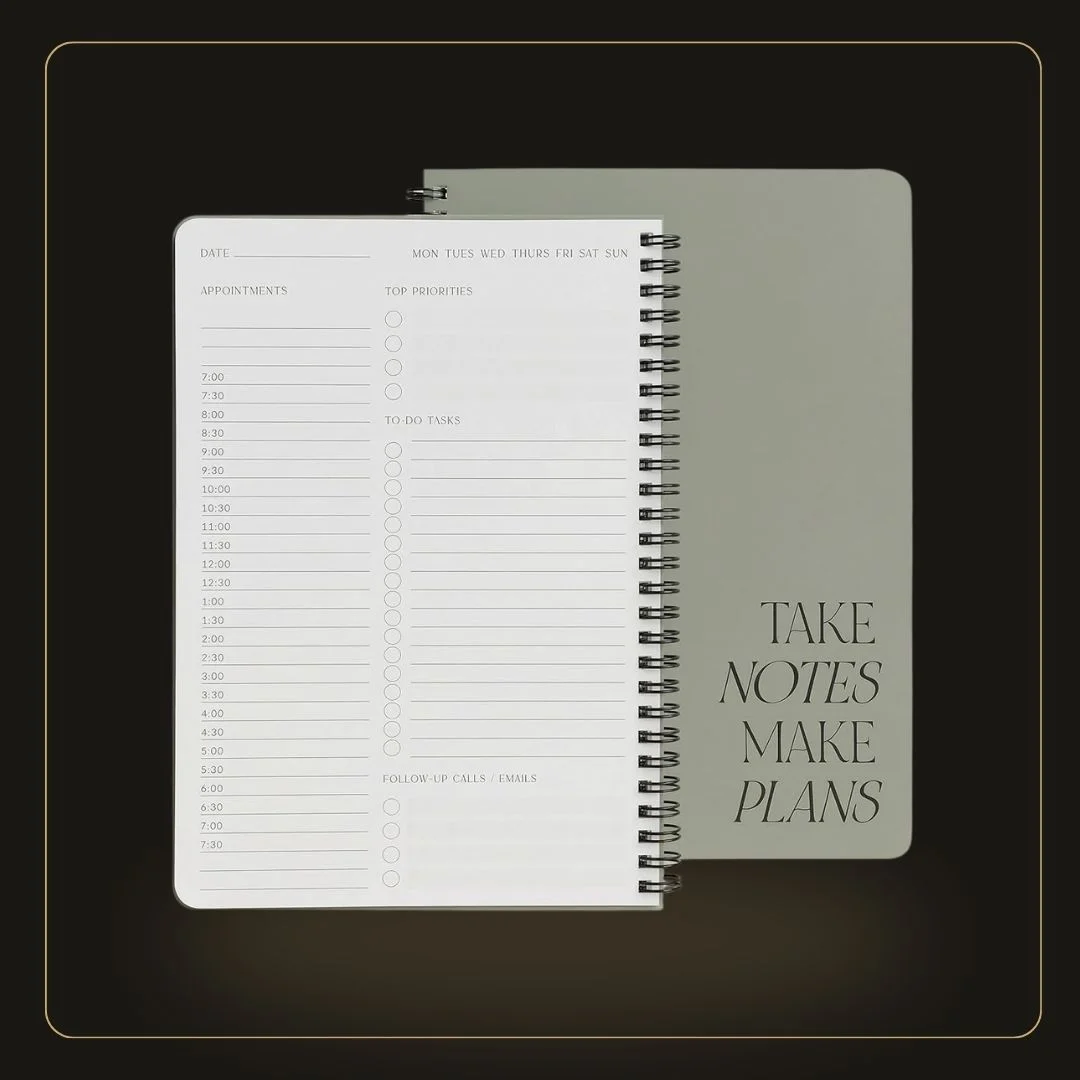
At $6, this is the lowest-commitment way into a planning habit, and that price is itself an ADHD feature: there's nothing to ruin, nothing to feel precious about, no pressure that comes with spending $60. The 8.5" x 6.4" undated tear-off pad gives you 120 days of daily to-dos plus a meal planner section, gratitude space, and appointment slots. When you finish a page, you tear it off — visible progress is built into the system.
Why we like it: The tear-off mechanic is the most underrated ADHD feature on this list. ADHDers benefit from visible evidence of progress, and "I completed this page so I'm ripping it off" produces a small dopamine hit that compounds. The minimalist beige design is unintimidating in a way that ornate planners aren't. The downside is durability — the pages are thinner than the other picks, and the tear-off format means you're not building a historical record. This is a stepping-stone planner, not a forever one, and that's exactly right for some ADHDers.
Approximate price: $6
Get It on Amazon →Cost-per-Month-of-Use: A Better Way to Compare ADHD Planners
The sticker price isn't the right metric for comparing the best ADHD planners. A $65 planner used for ten months has a Cost-per-Month-of-Use of $6.50/month. A $25 planner abandoned in three months has a cost of $8.33/month — and you've also lost your trust in your own follow-through, which costs more than money.
Unlike a supplement, a planner isn't dosed — it's used. The math still applies, but the metric is simpler: what does each month of active use actually cost? The table below is based on the median use period from our testers' actual rotation patterns. Your mileage will vary; the table is meant to show that the cheapest planner is rarely the most economical one for an ADHD brain.
Cost-per-Month-of-Use Ranking
| Planner | Price | Median Use | Cost / Mo |
|---|---|---|---|
| Hobonichi Cousin (A5) | $65 | 10–12 mo | $5.90/mo |
| Panda Planner Classic | $25 | 3 mo (per book) | $8.33/mo |
| Clever Fox Planner PRO | $40 | 9 mo | $4.45/mo |
| Full Focus Linen Planner | $45 | 3 mo (per book) | $15/mo |
| Passion Planner | $35 | 8 mo | $4.40/mo |
| Erin Condren LifePlanner | $60 | 12 mo | $5/mo |
| bloom 2026–2027 | $22 | 12–13 mo | $1.80/mo |
| GoGirl Planner PRO | $30 | 10 mo | $3/mo |
| Legend Planner Hourly | $24 | 8 mo | $3/mo |
| kellofaplan Self Care | $22 | 4 mo | $5.50/mo |
| Rocketbook Core | $26 | Reusable | N/A |
| Sweetzer & Orange Fitness | $20 | 5 mo | $4/mo |
| Hadley Designs Spiral | $15 | 6 mo | $2.50/mo |
| ZICOTO To Do Notebook | $6 | 4 mo | $1.50/mo |
Cost-per-Month-of-Use = price ÷ months in active use. Based on internal testing rotation; figures are approximate.
What If Paper Just Isn't Your Brain? Digital Alternatives Worth Considering
Some ADHD brains never bond with paper, and pretending otherwise wastes years and money. If you've tested two or three of the planners above and the paper format itself is the friction — not the layout, not the price, the actual physical ritual of writing things down — these digital tools are worth a real look.
- Tiimo. Built specifically for ADHD and autistic users, Tiimo is the cleanest implementation of visual time-blocking on iOS and Android. The interface uses color-coded blocks rather than the standard calendar list view, which solves the time-blindness problem better than any general-purpose calendar app. Subscription model, around $8/month.
- Structured. A daily planner app that visualizes your day as a vertical timeline, which is unusually well-suited to ADHD perception. Free tier is generous; the Pro version is around $30/year. Strong for ADHDers who already use the iOS ecosystem.
- Akiflow. A power-user task management tool that consolidates email, calendar, and task lists into one daily plan. Steeper learning curve than Tiimo or Structured but a genuine productivity multiplier for working ADHDers managing multiple inboxes. Around $15/month.
- Routinery. A morning and evening routine builder that walks you through your routines step-by-step with visual timers. For ADHDers whose biggest planner failure is the morning — the gap between waking up and actually starting the day — Routinery does what a paper planner can't. We've also written a full morning ADHD routine that pairs paper and digital tools.
The reality is that most ADHDers benefit from a hybrid: a paper planner for weekly thinking and time-blocking, plus a digital tool for reminders and routines. The paper handles working memory; the digital handles the time-blindness alarms. The system that works for your friend will probably not work for you. Test, abandon, test again. The drawer of failed planners is data, not failure.
Continue Reading
The ADHD Supplements That Actually Have Research Behind Them
Eleven supplement categories with peer-reviewed research, including the iron and magnesium picks that matter most for women with ADHD.
Read the Guide →Continue Reading: ADHD-Adjacent Guides
Continue Reading
The Best ADHD Chairs Reviewed
If your planner system depends on actually sitting down to use it, the chair matters more than most people think. Our tested picks for ADHD-friendly seating.
Read the Guide →The Bottom Line
The Honest Take
The right planner externalizes what your brain can't reliably hold — and forgives you when life gets in the way.
If you're picking one place to start among the best ADHD planners we tested, the Hobonichi Cousin is our overall pick because the all-in-one yearly-monthly-weekly-daily view solves the working-memory problem better than any other planner in print. If you're price-sensitive, the Panda Planner at $25 with a 90-day format gives you a real chance to fail forward without losing a year. If you want a top-down goal cascade, Clever Fox PRO is the most thoroughly tested system at $40. Skip the daily-page-only formats. Skip anything too pretty to mark up. Plan for the bad week, not the perfect one.
Frequently Asked Questions
What's the best ADHD planner for women specifically?+
The Hobonichi Cousin is our top pick for ADHD women because the all-in-one view solves the working-memory problem at a glance and the flexible monthly layout gives you room to color-code or label the late luteal week so you can plan around the predictable executive-function dip rather than through it. If you want a planner explicitly designed for women, bloom daily planners is the strongest mid-range option, and it includes habit tracker, vision board, and budget pages built into the layout.
Why do ADHD planners fail so often?+
Most planners are designed for neurotypical brains and assume neurotypical follow-through. ADHD brains have a working-memory deficit that means a closed planner is effectively no planner. The most common failure modes: buying a daily-page-only format that hides the rest of the week, over-structuring on day one in a hyperfocus high, picking a planner too pretty to mark up, and choosing a system that requires daily migration of incomplete tasks (which becomes a daily shame ritual). The fix is matching the planner to your actual brain — not your idealized one.
Is bullet journaling good for ADHD?+
Bullet journaling can work for ADHD brains that crave novelty and flexibility — and for some people, the meditative setup of a new spread is itself a dopamine hit that keeps them engaged. But the daily-migration ritual and blank-page cognitive load defeat many ADHDers, especially in the late luteal week. We've covered the trade-offs in detail in our bullet journal vs. guided planner comparison. The honest answer is that bullet journaling is high-ceiling, high-floor: when it works it's perfect, and when it doesn't it's punishing.
Should I get a dated or undated ADHD planner?+
Undated, almost always. The single biggest reason ADHDers abandon planners mid-year is opening one in May to find a wall of empty preprinted dates from March that document a multi-week failure. Undated planners — Panda Planner, Clever Fox PRO, Passion Planner's undated daily, GoGirl PRO, Legend Planner, Hadley Designs Spiral, ZICOTO — let you skip a week, take a month off, restart in October, and keep going without psychological cost. The dated planners worth the risk are Hobonichi Cousin (the format is forgiving enough that empty days don't shame you), bloom, and Erin Condren (the visual customization makes empty pages feel like room to play, not failure).
How much should I spend on an ADHD planner?+
Less than you think, but more than the cheapest option. The $10 dollar-store planner is almost always a waste because the layout will fight your brain. The $80 leather-bound luxury planner is also usually a waste because you'll be afraid to mark it up. The sweet spot for most ADHDers is $20–60 — enough budget to get a layout that's actually been thought through, but not so much that the planner feels precious. Use Cost-per-Month-of-Use math: a planner used for a full year at $50 costs about $4 a month, which is cheaper than a single bad coffee subscription you forgot to cancel.
Do digital ADHD planners work better than paper?+
It depends on the brain. The handwriting-versus-typing research generally favors handwriting for memory consolidation, which matters for ADHD brains because we're already losing things in working memory. But digital tools handle one thing paper can't: time-blindness alarms. The best system for most working ADHDers is a hybrid — paper for weekly thinking and time-blocking, plus a digital tool like Tiimo or Structured for the moment-to-moment reminders that pull you out of hyperfocus.
Why does my planner system fall apart the week before my period?+
Because estrogen modulates dopamine availability in the prefrontal cortex, and when estrogen drops in the late luteal phase, your already-strained executive function takes a real neurochemical hit for roughly a week each month. The clinical writing of Sari Solden has been pointing to this for thirty years, but it remains under-recognized in mainstream ADHD discussions. The fix isn't to push harder that week — it's to plan for the dip. Build a lighter version of your structure for the late luteal week, schedule less in advance, leave more buffer in time blocks, protect a zone of low-stakes tasks. The planner doesn't fail because you're inconsistent; it fails because the system pretends every week is the same when your neurochemistry says otherwise.
Editorial Disclaimer
This article is for informational and editorial purposes only and is not a substitute for professional medical advice. The Ritual Guide does not diagnose, treat, or cure any condition. ADHD is a clinical condition that should be diagnosed and managed by a qualified healthcare provider. Planners and organizational tools may help externalize executive function but are not a substitute for evidence-based treatments. If you're struggling with executive function, mood, or daily functioning, please consult your physician or a qualified mental health professional.