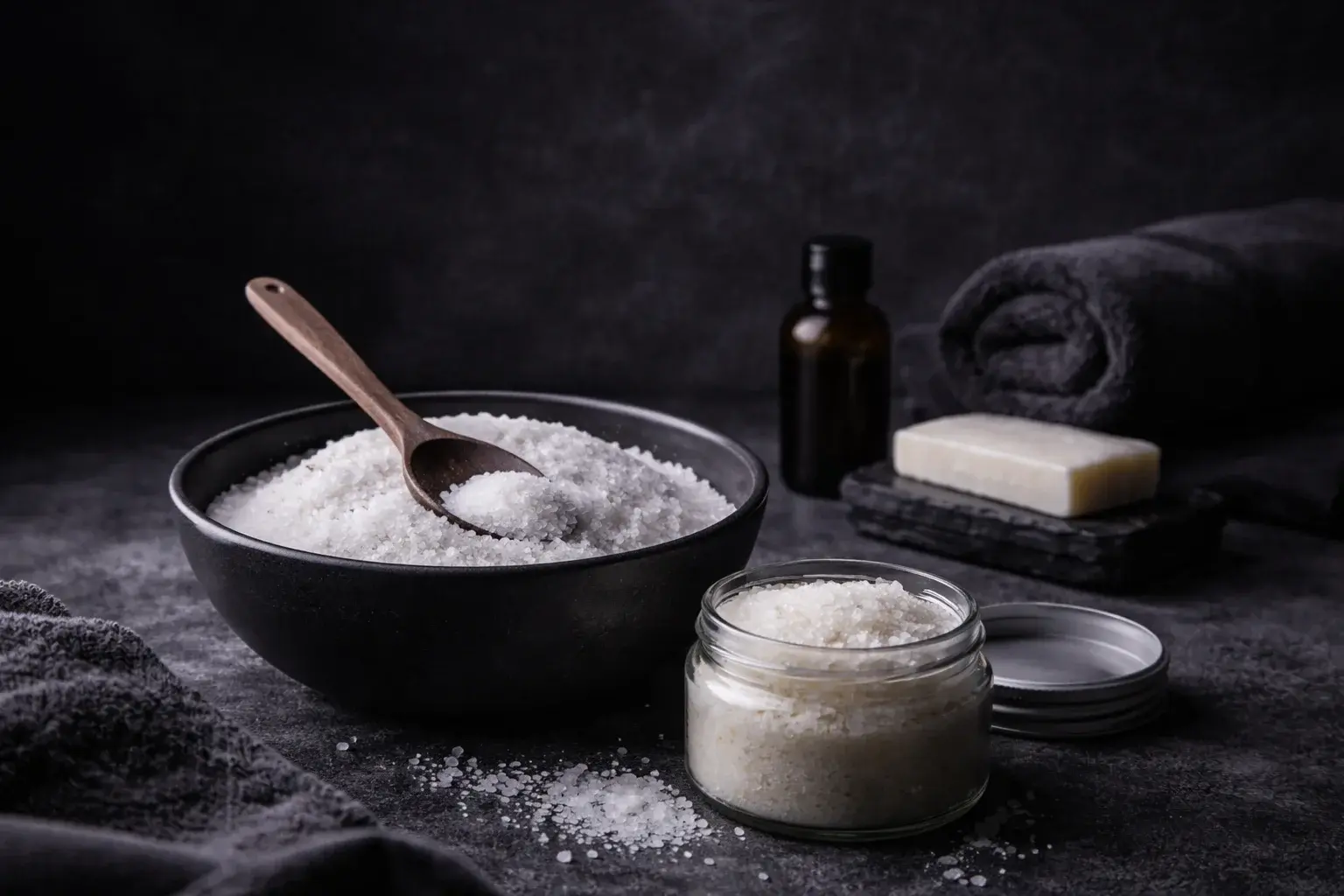
There's a very specific kind of tired that calls for an Epsom salt soak. Not the kind you sleep off. The kind that sits in your shoulders, travels down your lower back, and reminds you of every hour you spent at a desk, on your feet, or pushing through a workout you probably should've scaled back on.
We've been taking Epsom salt baths on and off for years — some nights out of genuine recovery need, other nights just because we know the sleep that follows is better. That experience, combined with going deep on what the research actually says about epsom salt soaks and where the category has genuinely gotten interesting, is what this guide is built on.
Below we've ranked the best epsom salt soaks and scrubs by formula quality, review evidence, brand transparency, and real usefulness in a daily routine. We've also included a buyer's guide on what to actually look for — because there's more nuance here than most people realize.
The Best Epsom Salt Soaks and Scrubs We Recommend
These picks were evaluated on formula quality, ingredient transparency, value per ounce, verified consumer feedback, and practical fit within a recovery or pre-sleep routine. They're ranked by quality — not by any commercial arrangement.
1. Ancient Minerals Magnesium Bath Flakes, 4.4 lbs
Best For: Readers who want a meaningful mineral upgrade from standard Epsom salt
Ancient Minerals isn't technically Epsom salt — it uses magnesium chloride rather than magnesium sulfate — but it belongs here because it's what people reach for when they've decided plain Epsom salt isn't quite cutting it. The flakes come from the Zechstein Seabed, a deep underground deposit in the Netherlands that's consistently cited for its purity and isolation from modern environmental contaminants.
The formula's fragrance-free, no fillers, and the brand's been in this category since 2007 — which is a long track record for what's still a niche segment. Reports across its review base are consistent: faster sleep onset, reduced muscle soreness, and a bath experience that feels noticeably different from a standard soak.
Why We Like It: The Zechstein sourcing is verifiable and the magnesium chloride format is a legitimate differentiator — not just a marketing angle.
Price: Around $16.96 for 4.4 lbs at time of writing (on sale from $19.95) — check current pricing.
Get It on Amazon: Ancient Minerals Bath Flakes
2. Dr. Teal's Epsom Salt Soaking Solution, Lavender, 3 lbs
Best For: Pre-sleep wind-down and muscle relief in one step
Dr. Teal's is the product most people end up with after a few weeks of trying to figure out the Epsom salt bath thing — and it holds that position for good reasons. The formula's magnesium sulfate USP (United States Pharmacopeia grade, same standard used in pharmaceutical applications), blended with lavender essential oil. It's paraben-free, phthalate-free, vegan, and never tested on animals.
The lavender isn't just a scent choice. It's doing real work in the context of a pre-sleep soak — adding an aromatherapy layer to the thermoregulatory wind-down so the whole ritual compounds on itself. Under six dollars for three pounds makes nightly use genuinely realistic.
Why We Like It: It delivers a functional pre-sleep ritual at a price that removes every excuse not to do it — the lavender lands without being overwhelming.
Price: Around $5.87 for 3 lbs at time of writing — check current pricing.
Get It on Amazon: Dr. Teal's Lavender Soaking Solution
3. Epsoak Epsom Salt, Unscented, 19 lbs
Best For: High-frequency bathers who want bulk purity and the best cost-per-soak available
Epsoak is what you buy when you've decided Epsom salt baths are a real part of your routine and you're done paying convenience-store prices for a three-pound bag every two weeks. It's 100% magnesium sulfate USP in a 19-lb resealable bag — no fragrance, no fillers, medium-grain crystals that dissolve cleanly. Made in the USA, cruelty-free certified, and the return rate is below the category average.
At $0.11 per ounce, daily soaking becomes financially sustainable in a way that smaller bags just don't allow. The unscented formula's also a clean slate — add your own essential oils if you want, or keep it plain.
Why We Like It: The 19-lb format removes the "I need to buy more" friction that quietly kills bath habits. For anyone soaking three or more times a week, this is the practical choice.
Price: Around $33.99 for 19 lbs at time of writing — check current pricing.
Get It on Amazon: Epsoak Bulk Epsom Salt, 19 lbs
4. Amazon Basics Epsom Salt Soak, Unscented, 3 lbs
Best For: No-frills muscle recovery and foot soaks when budget's the only constraint
We're not going to oversell this one. It's plain fragrance-free magnesium sulfate in a resealable three-pound bag at $0.07 per ounce — the lowest per-ounce cost in this guide. It dissolves quickly, performs comparably to name-brand alternatives in a basic soak, and doesn't try to be anything it's not.
People who try it tend to stick with it. The reviews are consistent and the complaints are almost nonexistent — which, for a product this simple, is exactly what you want to see.
Why We Like It: Sometimes the most useful recommendation is the one that removes every possible reason not to start. At this price point, there's no barrier.
Price: Around $3.37 for 3 lbs at time of writing — check current pricing.
Get It on Amazon: Amazon Basics Epsom Salt, Unscented
5. Muscle Rehab Epsom Salt Recovery Soak
Best For: Athletes and physically active people who want post-workout botanicals alongside their magnesium soak
Muscle Rehab combines magnesium sulfate USP with arnica, turmeric, and ginger oils — a formulation that's clearly built around recovery rather than relaxation. The scent profile runs toward peppermint, clary sage, vetiver, and eucalyptus, which reads much more like a recovery room than a spa. It's vegan, free of dyes, sulfates, parabens, and artificial fragrance, and it's made in Texas by a woman and veteran-owned small business.
Arnica's got a longer track record in topical pain relief than most botanicals in this space, and the ginger and turmeric additions are consistent with their anti-inflammatory profiles. For anyone who's tried a plain Epsom salt soak and found it underwhelming for acute recovery, this formulation is the logical next step.
Why We Like It: The formulation shows its reasoning — this isn't just Epsom salt in a fancier jar, and the veteran and woman-owned, Texas-made origin adds supply chain accountability that's uncommon in this category.
Price: See price in cart at time of writing — check current pricing.
Get It on Amazon: Muscle Rehab Epsom Salt Recovery Soak
6. Aromasong Epsom Salt with Dead Sea Salt, 5 lbs
Best For: Readers who want a broader trace mineral profile and some skin texture benefits alongside muscle recovery
Aromasong blends magnesium sulfate with Dead Sea salt, which brings sodium, bromide, calcium, and additional magnesium into the mix. It's fragrance-free and works both as a bath soak and as a base for DIY scrubs mixed with a body wash. A 2005 study in the International Journal of Dermatology found that bathing in a magnesium-rich Dead Sea salt solution was associated with improved skin barrier function and reduced inflammation in people with atopic dry skin — that's the evidence base this blend is drawing on.
Most of the criticism in its reviews comes down to dissolution time, which is an easy fix: add the salt to a few inches of hot water first, then fill the tub. On the skin texture side, reports are consistently positive.
Why We Like It: The mineral blend's a legitimate differentiator from plain magnesium sulfate, and the dual soak-or-scrub flexibility makes it a versatile addition to a bathroom shelf.
Price: Around $24.97 for 5 lbs at time of writing — check current pricing.
Get It on Amazon: Aromasong Epsom and Dead Sea Salt
7. ZZZELLNESS Epsom Salt Plus Bubbles, Coconut & Tea Tree, 12 oz
Best For: Readers who want the ritual feel of a bubble bath without giving up the magnesium component
ZZZELLNESS takes a genuinely different angle on the category: it's a foaming Epsom salt soak available in three scents — unscented, lavender, and coconut and tea tree. The magnesium sulfate core does the recovery and relaxation work while the foaming formula delivers the sensory experience of a proper bubble bath. It's free of harsh chemicals and drying sulfates.
At $1.50 per ounce it's the highest-cost option in this guide by a significant margin — that's the trade-off for the format. As a pure recovery protocol tool, the plainer options earlier in this list are more efficient. As a bath ritual where the experience is part of the point, it earns its spot.
Why We Like It: The foaming format fills a real gap — for people who want both function and experience, it's the only product in the category that delivers both cleanly.
Price: $17.99 for 12 oz at time of writing — check current pricing.
Get It on Amazon: ZZZELLNESS Epsom Salt Plus Bubbles
Buyer's Guide: How to Choose the Right Epsom Salt Soak or Scrub
Before getting into the specifics, it helps to understand what Epsom salt actually is and what the research says it does — because the category's surrounded by a lot of confident claims that deserve some honest scrutiny.
What Is Epsom Salt, and What Does the Research Actually Say?
Epsom salt is magnesium sulfate — a compound made of magnesium, sulfur, and oxygen. It dissolves in warm water and has been used for muscle relief, skin softening, and relaxation for centuries. The question that gets asked eventually is whether the magnesium actually absorbs through the skin in meaningful amounts.
The honest answer: it's genuinely mixed. A 2017 review in Nutrients found that most positive human studies involved small samples, non-peer-reviewed designs, or significant methodological limitations — making systemic absorption from a standard bath difficult to establish with confidence. A University of Birmingham study did find that daily soaking over seven consecutive days was associated with increased blood magnesium concentrations in most participants, though the study had its own limitations. What's well-supported regardless: warm water immersion relaxes muscles, supports sleep onset through the thermoregulatory response, and softens skin.
USP Grade: Why It Matters
Look for products labeled magnesium sulfate USP. That designation means the salt meets the purity standards set by the United States Pharmacopeia — the same grade used in pharmaceutical applications. Every magnesium sulfate product in this guide uses USP-grade material. If a product doesn't specify USP on the label, the purity standard's unverified.
Scented vs. Unscented
Scented soaks — lavender in particular — add an aromatherapy layer with its own modest but real evidence base for relaxation. For sleep prep, lavender's a reasonable addition. For fragrance sensitivities or DIY oil blending, unscented's the better base. For foot soaks on sensitive or compromised skin, unscented is always the safer call.
Magnesium Sulfate vs. Magnesium Chloride
Standard Epsom salt is magnesium sulfate. Ancient Minerals uses magnesium chloride, which is generally considered more soluble and may have a somewhat different absorption profile based on in vitro evidence. For most people, the practical difference is modest. For anyone focused specifically on the mineral absorption side, magnesium chloride flakes are worth considering.
Cost-Per-Soak Math
The standard recommendation is 1–2 cups (roughly 250–500g) per full bath. Here's how that breaks down across the products in this guide:
- Amazon Basics (3 lbs / $3.37). Approximately $0.40–$0.80 per soak.
- Dr. Teal's (3 lbs / $5.87). Approximately $0.70–$1.40 per soak.
- Epsoak (19 lbs / $33.99). Approximately $0.45–$0.90 per soak.
- Ancient Minerals (4.4 lbs / $16.96). Higher per-soak cost; typically used in smaller amounts for foot soaks rather than full-bath doses.
For daily or near-daily bathers, Epsoak's 19-lb format is the most financially sustainable by a clear margin.
Scrubs vs. Soaks: Different Use Cases
Epsom salt scrubs — either pre-formulated or made at home by mixing salt with a carrier oil — work by physically removing dead skin cells through mechanical exfoliation. That's a different mechanism from a soak: the scrub stays on the skin in a concentrated form, makes direct contact with the stratum corneum (the outermost skin layer), and gets rinsed away. For readers focused on skin texture or dullness, a scrub's a more targeted tool than a bath. Use scrubs one to two times per week — daily use on most skin types is too aggressive.
Who Should Check With a Doctor First
Epsom salt soaks are generally safe for most healthy adults. People with kidney disease, certain heart conditions, or diabetes should check with a healthcare provider before using them regularly, as magnesium metabolism can be affected by these conditions. Anyone with open wounds, sunburn, or actively inflamed skin should skip soaks until the skin's healed.
How to Build an Epsom Salt Soak Into Your Evening Recovery Ritual
The bath's most useful when it's timed intentionally. The mechanism linking warm baths to better sleep is the thermoregulatory response: core body temperature rises during the soak, then drops as you cool down, reinforcing the natural temperature drop that triggers sleep onset. A warm bath taken one to two hours before bed — around 104–109°F for 10–15 minutes — may support both sleep onset and sleep quality based on current evidence.
For recovery, timing the soak within a couple of hours of a hard workout is a reasonable protocol. Add one to two cups of Epsom salt to a warm bath, stay in for 12–20 minutes, and follow with a light moisturizer while skin's still slightly damp to hold in hydration.
If a full bath isn't practical, a foot soak with one cup of Epsom salt in a basin of warm water for 15–20 minutes captures much of the relaxation benefit. For sleep-focused goals, pairing an Epsom soak with a magnesium glycinate supplement for sleep gives you both the topical and oral pathways in the same evening. Our nighttime wind-down routine lays out the full sequence — timing, order, and product choices — for an evidence-informed pre-sleep ritual.
Finding the Right Soak for Your Routine
The epsom salt soak category spans from $3 for plain magnesium sulfate to premium mineral blends with sourcing credentials and recovery-specific botanicals. The right pick depends less on price than on what you're actually trying to do.
For sleep prep, Dr. Teal's Lavender's the most accessible starting point. For high-frequency soakers who want the best cost-per-use on a clean formula, Epsoak's 19-lb bag is the clear answer. For readers interested in the magnesium chloride distinction, Ancient Minerals is the reference product in that segment. For post-workout recovery with botanical reasoning behind the formula, Muscle Rehab earns the spot.
The product you'll actually use consistently beats the one that sits on the shelf. If you're new to this, start with any unscented USP-grade option and build from there. For the oral magnesium side of the equation, our guide to magnesium supplements for sleep covers the form differences in depth, and our magnesium glycinate vs. citrate comparison helps narrow down which form fits which goal. For the broader recovery science, our post on what magnesium does at night goes deeper on the mechanisms.
As always, if you've got a condition affecting kidney function, heart health, or mineral metabolism, check in with a healthcare provider before making Epsom salt soaks a regular part of your routine.
Frequently Asked Questions
How much Epsom salt should you use per bath?
The standard recommendation is 1–2 cups (roughly 250–500g) dissolved in a full bathtub of warm water. Some recovery protocols call for up to 600g. For foot soaks, one cup in a small basin of warm water is sufficient. Start on the lower end and adjust based on how your skin responds.
How long should you soak in an Epsom salt bath?
Most recommendations fall between 12 and 20 minutes. The University of Birmingham study used 12-minute baths and found measurable changes in magnesium markers after consistent daily use. Longer soaks don't appear to add meaningfully to the benefit, and extended soaking can begin to dry out the skin.
Is there a difference between Epsom salt and Dead Sea salt?
Yes — a meaningful one. Epsom salt's pure magnesium sulfate. Dead Sea salt's a broader mineral blend that includes sodium chloride, magnesium, potassium, calcium, and bromide. Dead Sea salt's wider mineral content is why it tends to show up specifically in skin condition and exfoliation contexts rather than pure recovery use.
Can you use an Epsom salt soak every day?
For most healthy adults, daily use is generally considered safe — and some protocols specifically recommend consecutive daily baths to see cumulative changes in magnesium markers. If skin becomes dry or irritated with daily soaking, pulling back to three or four times per week and following each soak with moisturizer usually resolves it.
What's the difference between a soak and a scrub?
A soak dissolves the salt into water and involves full immersion. A scrub keeps the salt in direct contact with the skin surface, where it removes dead skin cells through physical exfoliation before getting rinsed off. Soaks are better for the thermoregulatory, muscle relaxation, and pre-sleep effects. Scrubs are better for skin texture and surface brightness. Both have their place — they're just working on different things.
.webp&w=3840&q=75)
.webp&w=3840&q=75)
.webp&w=3840&q=75)