.webp&w=3840&q=75)
I'm a pharmacy grad. My job, in any product category, is to flip the label, read the actual numbers, and figure out what they mean versus what the marketing wants them to mean.
Home infrared saunas are a category where this skill is genuinely useful, because the specs are almost universally presented in a way that's technically accurate and practically misleading.
EMF ratings that look impressive but measure the wrong thing. Wood types listed without grade. Heater claims that conflate carbon and ceramic panels as if they're interchangeable. Heat-up times quoted at conditions you'll never replicate in a real home setup.
This guide is the label flip. I'll tell you what each spec actually measures, what it means for your experience, and which products hold up when you read them correctly.
A note before we get into it: the evidence base for infrared-specific health claims is thinner than the marketing suggests. The dry sauna cardiovascular research is robust. The infrared extrapolation from that research is real but not direct. The detox claims that lead most infrared marketing are not supported by the evidence. What the evidence actually shows for heat therapy is covered in the recovery pyramid and the format comparison.
This guide is about the equipment, not the physiology. And if you're new to heat practice entirely, the first-time banya guide covers how to structure a session before you invest in permanent home equipment. The banya health benefits piece covers what the research specifically shows for heat at cardiovascular level.
What the Specs Actually Mean
Confused about what the specs of these home infrared saunas mean? Let's get right to it.
EMF Ratings
Nearly every home sauna listing leads with an EMF claim: "ultra-low EMF," "zero EMF," "third-party tested." These claims are real, partially.
Far infrared heaters do emit electromagnetic fields. The relevant unit is milligauss (mG). A reading below 3 mG is generally considered low in the building biology community, though there's no established safety threshold with strong regulatory backing.
The issue is measurement position. Some brands report EMF at the heater surface. Others report it at the position of the person sitting in the sauna. These are very different numbers. A heater that reads 2 mG at its surface may read 8 mG at typical seated distance. When a brand says "ultra-low EMF" without specifying where they measured, the number is incomplete.
What to look for: third-party testing at seated distance, reported in mG, with the test methodology disclosed. The Dynamic Saunas Elite and Mikolo both meet this bar. Brands that report only surface readings or don't disclose methodology are not being dishonest, but they're not giving you the number that matters.
Wood Type and Grade
Hemlock and cedar appear on almost every home sauna listing. They're not the same.
Western Red Cedar is the traditional sauna wood. It's naturally antimicrobial, handles repeated wetting without warping or degrading, and develops a characteristic scent as it heats. It's the correct material for a sauna. The grade matters: knotless kiln-dried cedar behaves differently in high heat than lower-grade cedar with knots, which can split and leach resin.
Canadian Hemlock is more commonly used in budget and mid-range infrared saunas. It's stable, doesn't have cedar's strong scent (which some people prefer), and is typically less expensive. It's a reasonable material, just not the traditional choice.
Watch for "solid hemlock" versus "hemlock veneer over plywood." The latter is noticeably different in durability over years of use. Most listings don't lead with this distinction. You have to read the full spec sheet.
Heater Type
Carbon panels heat a large surface area at a lower temperature, producing a more even heat distribution across the cabin. They heat up faster than ceramic and are more common in mid-range and budget saunas.
Ceramic heaters reach higher temperatures and produce more intense, localized heat. Traditional in older sauna designs. Some people find the heat from ceramic panels more intense in a way that feels closer to a traditional sauna experience.
Neither is objectively better. The question is what heat experience you want. Carbon panels are better for long, lower-temperature sessions focused on cardiovascular response. Ceramic heaters are better for people who want high heat in shorter sessions. Most mainstream home infrared saunas now use carbon panels.
Heat-Up Time
Listings typically quote heat-up time at optimal conditions: room temperature 70°F, single-person load, heaters running at full capacity. In a real basement or garage installation in a cold climate, heat-up times are longer.
A listed heat-up of 15 minutes in ideal conditions may be 25–30 minutes in a cold room in winter. This matters for habit formation. A sauna that takes 30 minutes to reach temperature requires more planning than one that's ready in 15.
The Full Guide
Seven options organized from the most accessible to the most premium, with a genuine portable option for anyone who isn't ready to commit to a dedicated space.
DYNAMIC SAUNAS Elite: Best Overall
Best For: Most buyers. 700 reviews, honest durability data, solid specs at the mid-range price point
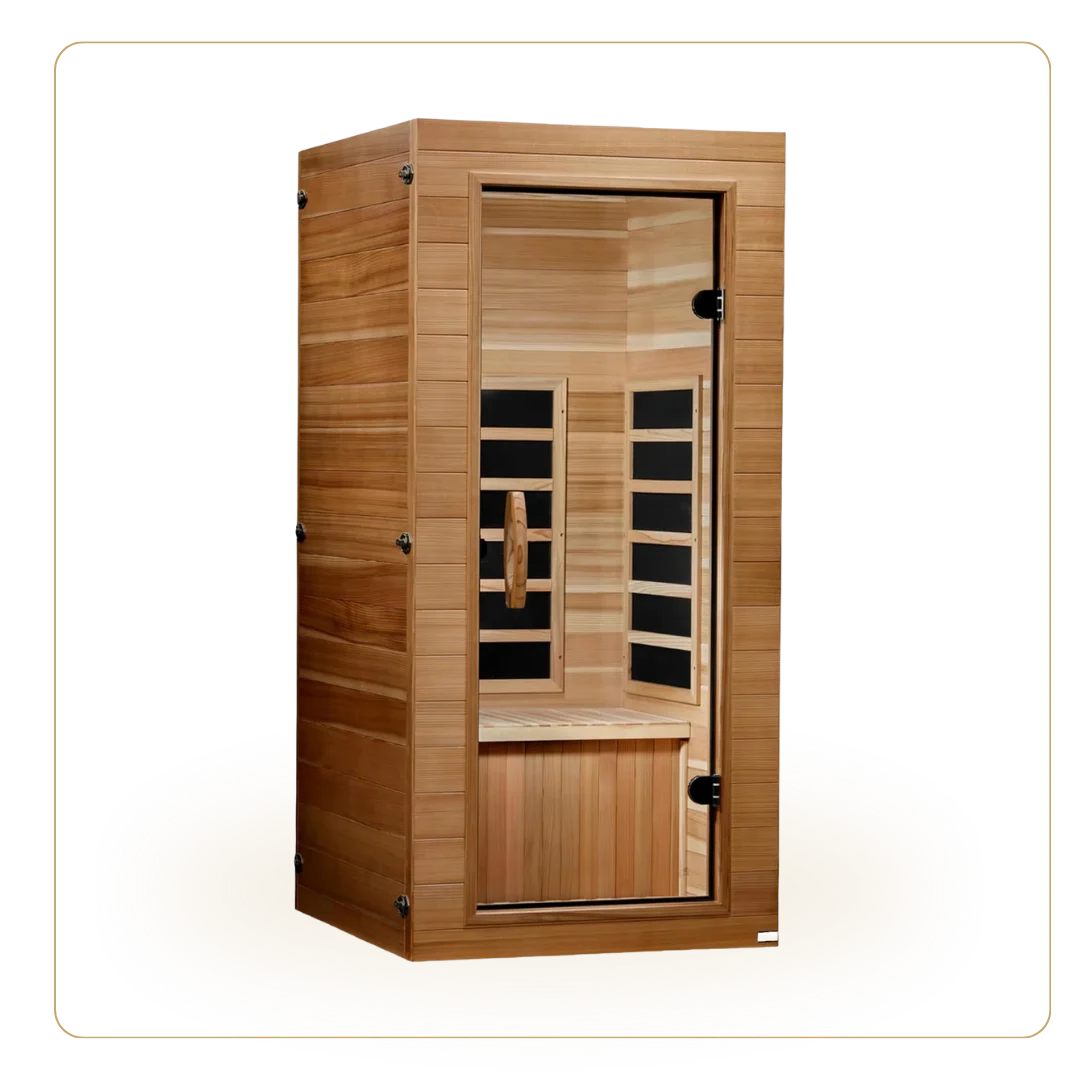
700 reviews at 4.6 stars is the largest real-world dataset in this price bracket. The Dynamic Saunas Elite earns the best overall position not because its specs outshine everything else but because its review distribution is honest.
People report on assembly time (30–45 minutes, needs two people and a screwdriver), electrical requirements (dedicated 15-amp circuit, standard in most homes), and heat consistency. The product does what it says.
Far infrared carbon panels, ultra-low EMF certification, Pacific cedar construction, red light panel, Bluetooth speakers, chromotherapy lighting. Heat-up to 140°F in approximately 15–20 minutes under typical conditions.
The 1-person configuration works well for dedicated home practice. The 2-person configuration ($1,799.99) is the right choice for couples or anyone who wants to use the session socially.
Shared heat practice is materially different from solo use, and the extra width changes the ritual. The 3-person variant ($2,199.99) covers shared household use or anyone who wants the additional bench space for lying down during a session.
Spec note: The EMF testing methodology isn't explicitly disclosed in the listing, which is a mild flag. The "ultra-low" claim is consistent with third-party testing results that have appeared in independent reviews, but it's worth asking the brand directly if EMF is a specific concern for you.
Why We Like It
700 reviews with honest durability feedback, Pacific cedar construction, and the only home sauna in this price range with enough user data to say something meaningful about long-term reliability.
Price
From $1,499.99 (1P) | 2P: $1,799.99 | 3P: $2,199.99
Real Relax 1-Person Full Spectrum Infrared Sauna
Best For: Budget cabin buyers who want full-spectrum and red light without paying Dynamic Saunas pricing
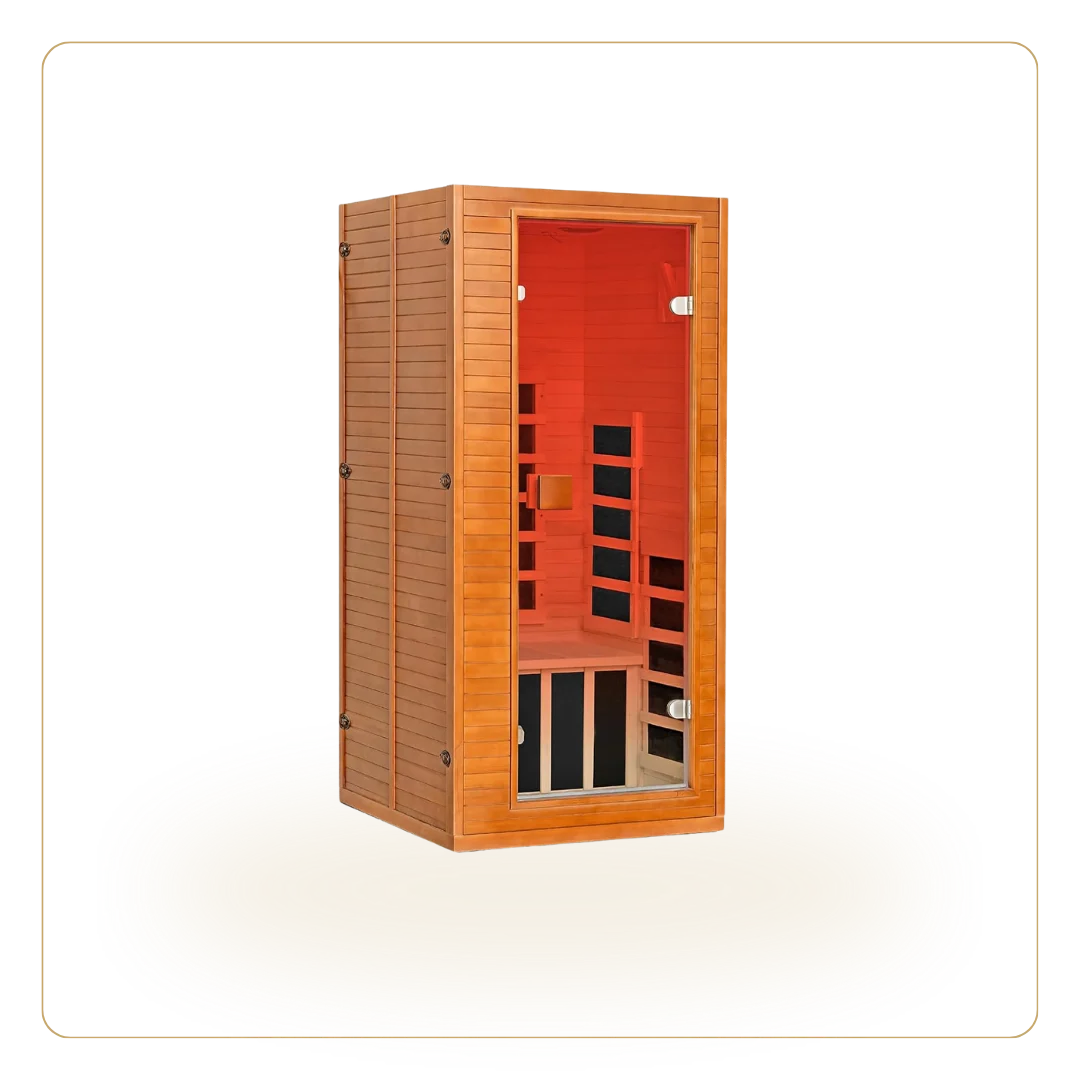
$1,299.99 with 24 reviews at 4.6 stars. The Real Relax is positioned below the Dynamic Saunas Elite on price while adding full-spectrum coverage (near, mid, and far infrared) across 7 heaters, plus 660nm and 850nm red light panels. The heater count and spectrum range at this price point is genuinely good value if you're specifically interested in red light therapy alongside infrared heat.
Canadian Hemlock construction, 1290W, 120V standard outlet (no dedicated circuit required, which matters for renters and anyone whose electrical setup is limited). Dimensions are 31.5" x 30.3" x 67". Compact enough for most spare rooms. 1290W on a standard 15-amp circuit means it can't run at full capacity without tripping a standard outlet if other loads are on the circuit.
The 24-review count is thin for a product at this price. The rating holds but the sample is small. It's a newer listing on an established product line, which explains the count. Worth watching for review accumulation before making a final decision if you want a larger data set.
Why We Like It
Full-spectrum infrared plus red light at the best price in this category. No dedicated circuit required. The heater count for the price is hard to match.
Price
$1,299.99 (check current pricing)
Mikolo 1-Person Far Infrared Sauna: Best Compact
Best For: Small spaces, EMF-focused buyers, anyone who wants solid hemlock under $1,000
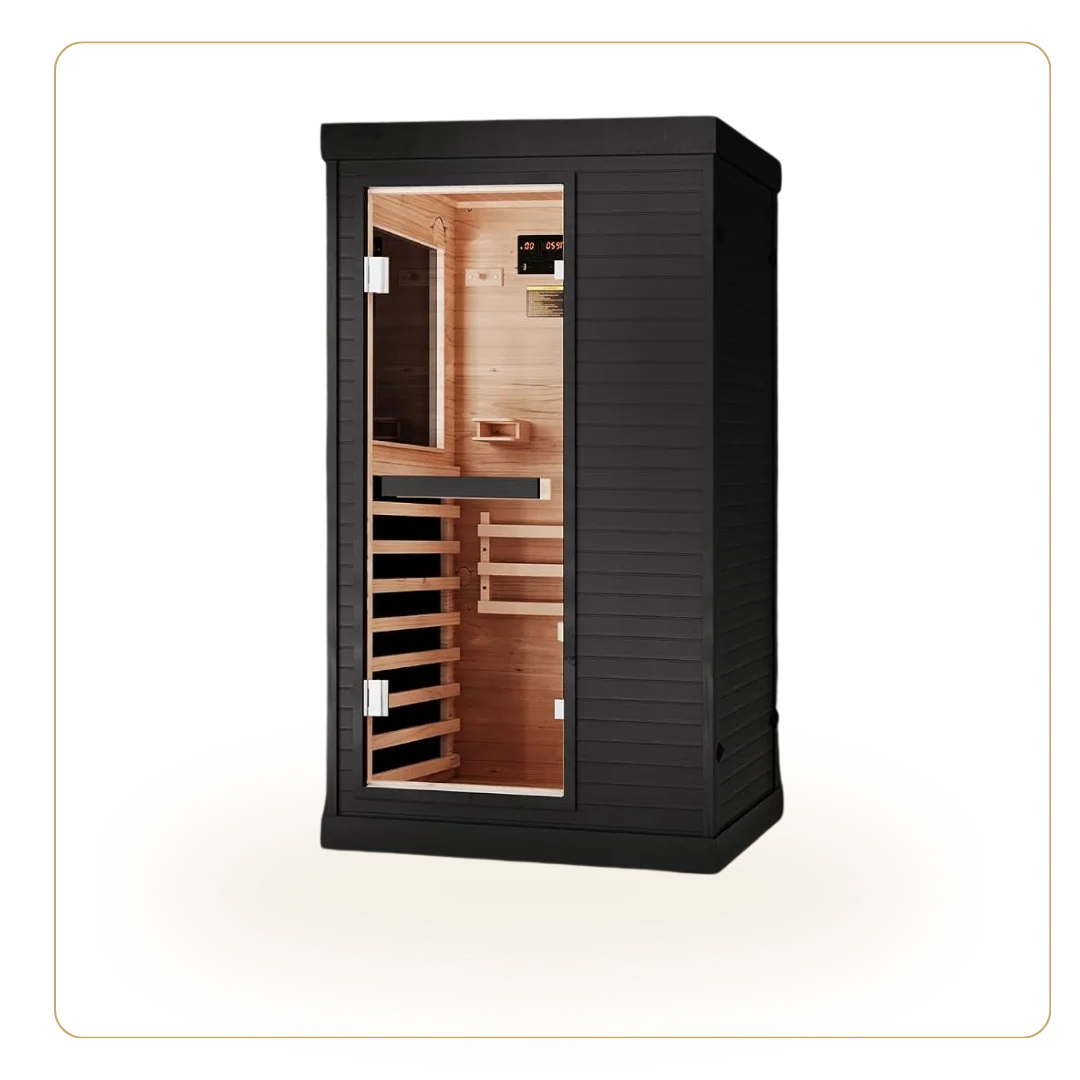
$999.99 (currently -17% off $1,199.99 list). 5.0 stars, but only 3 reviews. The rating is real but the sample is too small to draw conclusions.
The Mikolo earns its place here on spec grounds: solid Canadian Hemlock (not veneer), 5 carbon heaters for coverage, ultra-low EMF tested third-party, chromotherapy and Bluetooth included. At under $1,000 with solid hemlock, it sits above what most brands offer at this price.
The carbon heater count and placement matters. Five heaters covering the back, calves, and side panels produce more even heat distribution than the three-heater configurations common at this price. Even heat distribution means fewer cold spots during a session and more consistent cardiovascular stimulus across the session.
The caveat is the review count. At 3 reviews, there's almost no user data on long-term durability, assembly difficulty, or how the hemlock holds up over two to three years of regular use. It's a spec-strong choice with a thin track record. Buy it if the specs are specifically what you need at this price point, but go in knowing you're an early adopter.
Why We Like It
Solid hemlock, 5-panel carbon heater coverage, third-party ultra-low EMF, and the best spec-to-price ratio under $1,000. Thin user data is the honest caveat.
Price
$999.99 (check current pricing)
Viconor Portable Sauna Box: Best Gateway Option
Best For: Anyone not ready to commit to a cabin. Steam plus red light in a portable format under $150
.webp)
$145.34 for a portable steam-plus-infrared sauna box. The Viconor is a different category than the cabin saunas above. This is a tent-style enclosure you sit inside with your head out, with a steam generator and red light panel built in. 5-layer waterproof insulation, 3L/1200W steamer, 4.0 stars across 30 reviews.
It is not a substitute for a cabin sauna. The heat profile is different, the experience is different, and you're sitting inside a tent rather than a cedar room.
What it is: a low-commitment entry point that lets you test the habit before spending $1,000 to $1,500 on a cabin. If you use the Viconor consistently for three months, buy a cabin. If it sits unused, you've learned that at a much lower cost.
It's also the only option here that doesn't require floor space, a dedicated circuit, or assembly. You set it up, use it, and fold it flat. For renters or anyone in a small apartment, the practical case for the Viconor is real.
Why We Like It
The low-risk entry point. Tests the habit before the investment, stores flat, and works in any room without electrical modifications.
Price
$145.34 (check current pricing)
The Premium Picks
Three options for readers who want to move significantly above the mid-range, either for outdoor installation, near-infrared-specific benefits, or a design-forward cabin with a more considered wellness philosophy behind it.
Plunge Sauna by Blueprint Bryan Johnson
Best For: Outdoor installation, buyers who want the most evidence-tracked protocol behind the product
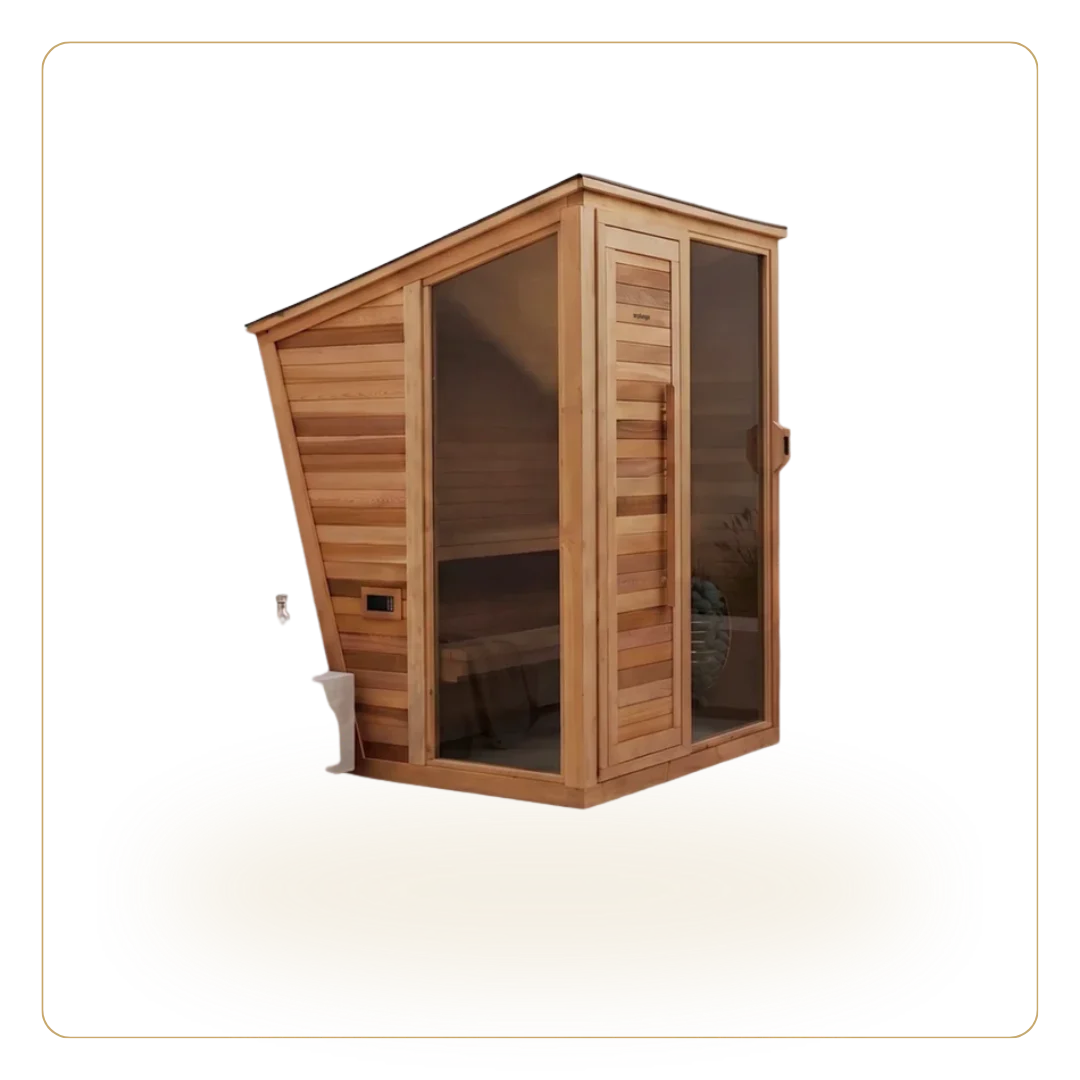
Blueprint is Bryan Johnson's longevity protocol brand, and it carries the most extensively self-tracked wellness practice in the premium consumer space. The Plunge Sauna is designed for outdoor installation and pairs with the brand's cold plunge. That's the correct way to think about it if contrast therapy is the goal rather than just heat exposure in isolation.
The price isn't listed publicly. It's a ShopMy purchase with code BPVIP for the Blueprint-exclusive pricing. The design is outdoor-rated, which removes the space constraint that affects every indoor cabin. If you have outdoor space and want the most protocol-coherent premium option, this is it.
From a pharmacy-brain spec perspective: the Blueprint brand publishes more about its testing methodology than most competitors in this space, which is either reassuring or marketing depending on your level of skepticism. At minimum it's more transparent than average.
Why We Like It
The outdoor-rated premium pick with the most documented protocol behind it. Pairs with the Plunge cold plunge for a complete contrast therapy setup.
Price
Contact for pricing (use code BPVIP)
GOOP Firelight Infrared Sauna: Best Luxury Infrared
Best For: Near-infrared priority, design-forward buyers, anyone sold on the SaunaSpace technology philosophy

The Firelight is SaunaSpace's near-infrared sauna sold through Goop. SaunaSpace's philosophy centers on near-infrared specifically (rather than far infrared, which is what most panel saunas deliver) via incandescent tungsten bulbs rather than carbon or ceramic panels.
The claim is that near-infrared penetrates tissue more deeply and produces benefits distinct from far infrared. The evidence base for this distinction is thinner than SaunaSpace's marketing suggests, but the technology is genuinely different from every other product on this list.
It runs at lower ambient temperatures than a far infrared cabin. The heating mechanism is radiant rather than convective, so the air doesn't get as hot but the tissue exposure is more direct.
Some people find this format more comfortable for longer sessions. The four-bulb standard or the seven-bulb SuperSauna version are both available. Easy to assemble and disassemble, which matters if you don't have a permanent dedicated space.
Humidity-controlled environments only. Not suitable for garages, enclosed porches, or spaces subject to outdoor humidity. That's a real installation constraint worth planning around.
Why We Like It
Genuinely different technology from every other product on this list. Near-infrared via incandescent bulbs, easy assembly, and the most design-considered option available through Goop.
Price
Contact for pricing (check current pricing on Goop)
Glow Infrared Therapy Light by SaunaSpace
Best For: Entry-level near-infrared and red light, targeted use, or adding red light to an existing sauna
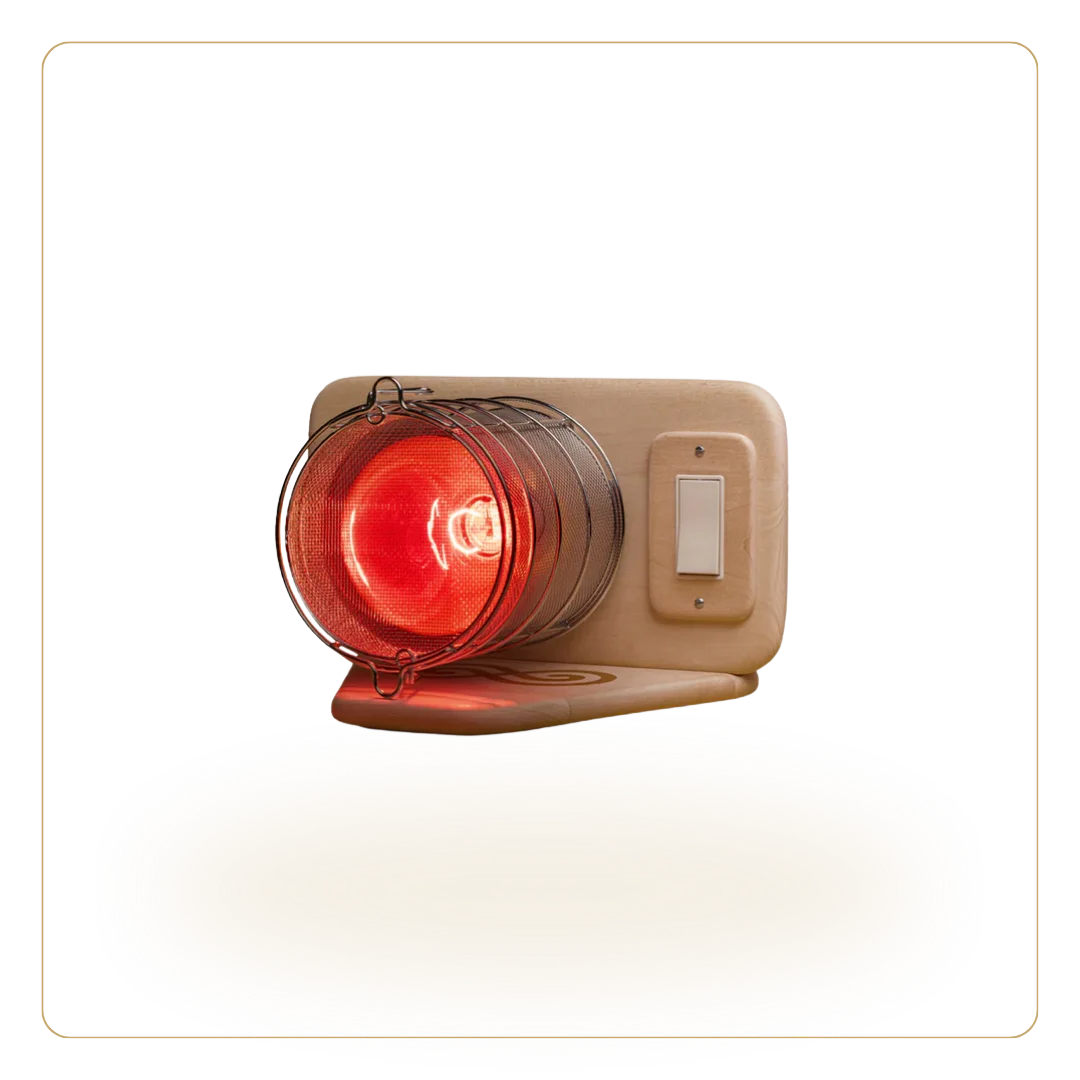
A single-bulb SaunaSpace near-infrared light in raw basswood and stainless steel. Not a sauna. A targeted near-infrared and red light device for specific body areas: shoulders, lower back, knees, wherever you're carrying chronic tension or recovering from an acute strain.
From a pharmacological standpoint, near-infrared and red light therapy (photobiomodulation) has a more developed evidence base for musculoskeletal applications than for systemic recovery.
Local tissue penetration of 630–850nm wavelengths has shown effects on cellular energy production (ATP synthesis via mitochondrial cytochrome c oxidase) in multiple small trials. The SaunaSpace Glow uses the same bulb technology as the Firelight sauna, just in a single-unit portable form.
It can also be mounted inside the Firelight Sauna as an upgrade. For anyone who already owns the Firelight or is considering it, the Glow is the add-on that makes sense first.
Why We Like It
Near-infrared and red light in a targeted portable format, backed by the most coherent technology explanation in the SaunaSpace line. The entry point for people curious about photobiomodulation before committing to a full cabin.
Price
Contact for pricing (check current pricing on Goop)
How to Choose
The question isn't which sauna is best. The question is which sauna fits your actual situation.
If you want the most proven track record at mid-range pricing: Dynamic Saunas Elite 1P. 700 reviews is the only real data set in this bracket.
If you're buying for two people or want to use it socially: Dynamic Saunas Elite 2P. The shared session changes the habit entirely. You're more likely to use it when there's a partner for it.
If full-spectrum plus red light at the lowest possible price is the priority: Real Relax. Better spec-to-price than the Dynamic at the expense of a thinner review base.
If you're EMF-conscious and want the clearest testing at under $1,000: Mikolo. Spec-strong, review-thin.
If you're not ready to commit to a cabin: Viconor. Test the habit first.
If you have outdoor space and want the most protocol-coherent premium option: Blueprint Plunge Sauna.
If near-infrared specifically is the draw: Firelight Sauna or the Glow single-unit, depending on budget and how targeted you want the application to be.
What EMF level should I look for in a home sauna?+
Below 3 milligauss (mG) at seated distance is the building biology community's general guideline, though there's no regulatory standard with strong scientific backing. The key question is where the measurement was taken. Readings at the heater surface are lower than readings at seated distance. Ask brands for their testing methodology and where the measurement was taken. Not just the number. Third-party tested at seated distance with disclosed methodology is the clearest bar.Is cedar better than hemlock for a sauna?+
Cedar is the traditional sauna wood for good reasons: it's naturally antimicrobial, handles repeated moisture exposure without warping, and develops a characteristic scent as it heats. Hemlock is a reasonable alternative that's typically less expensive and less aromatic. The grade matters more than the species: solid knotless kiln-dried hemlock outperforms low-grade cedar. Check listings for "solid hemlock" versus "hemlock veneer over plywood." That distinction affects long-term durability considerably.Do I need a dedicated electrical circuit?+
Most 1-person cabin saunas run on 120V standard outlets, but the wattage (typically 1,200–1,500W) means sharing the circuit with other appliances will trip a breaker. A dedicated 15-amp circuit for the sauna outlet is the practical recommendation even for standard-outlet models. The Dynamic Saunas Elite specifically requires a dedicated 15-amp circuit as noted in its listing. Consult an electrician if you're unsure about your home's circuit capacity. This is one of the real hidden costs of a home sauna installation.Is carbon or ceramic better for infrared heaters?+
Carbon panels heat a larger surface area at lower temperatures and distribute heat more evenly across the cabin. They heat up faster and are better for long, lower-temperature sessions focused on cardiovascular response. Ceramic heaters reach higher temperatures and produce more intense, localized heat. They're better for people who want a more intense heat experience in a shorter session, closer to a traditional sauna feel. For recovery-focused use and habit formation, carbon panels are the more practical choice for most people.What's the difference between far infrared and near infrared?+
Far infrared (FIR, 5–15 microns) is what most home sauna panels deliver. It heats the air in the cabin and penetrates tissue to roughly 1–2 inches. Near infrared (NIR, 0.7–1.4 microns) penetrates tissue more shallowly but at higher intensity per unit area, and is associated with photobiomodulation effects on cellular energy production. Near infrared via incandescent tungsten bulbs is SaunaSpace's specific approach. Most mainstream cabin saunas deliver far infrared. The evidence base for both is real but distinct. For general cardiovascular heat exposure, far infrared has more direct research support.Editorial Disclaimer
The Ritual Guide is an independent publication. Our picks are based on specs, review data, and editorial judgment. We don't receive product from brands for review. Picks aren't influenced by brand payments.
Disclosure: The Ritual Guide is reader-supported. When you buy through links on this page, we may earn an affiliate commission. We independently select and review every product. Our recommendations are never influenced by brand partnerships. Learn more about our editorial process.
.webp&w=3840&q=75)
.webp&w=3840&q=75)
.webp&w=3840&q=75)