.webp&w=3840&q=75)
Editorial Disclaimer
This guide is editorial and informational, not medical advice. Heat therapy is not suitable for everyone. If you have a heart condition, blood pressure concerns, pregnancy, or any condition that affects your response to heat, please speak with your healthcare provider before your first banya session.
My first banya session, I didn't know what the rooms were for. I knew there was a steam room. I knew there was a cold plunge. I didn't know there was a third room: the predbannik.
The predbannik is the changing and recovery room. You arrive there, you undress, you return there between rounds to sit quietly and drink tea while your body works out what just happened to it. In traditional banya culture, it's where people spend most of their time. Not in the heat. In the rest.
I went in expecting the heat to be the point. I left understanding that the rest was the point, and the heat was what made the rest possible.
That realization took about three rounds to arrive at. If I'd known it going in, the first session would have been easier. This guide is what I wish someone had told me before mine.
What the Banya Actually Is
Before the practical details, it helps to understand what you're walking into.
A Russian banya is not a sauna with extra steps. It has a specific three-room structure (predbannik for rest, moechnaya for washing, parilka for steam) and the sequence between them is deliberate. The steam room uses a kamenka, a stone heater that creates dense wet heat when water is ladled onto it. The humidity is much higher than a dry Finnish sauna, which changes how the heat lands on the body.
A full breakdown of how the banya compares to a Finnish sauna, steam room, and infrared cabin is worth reading if you're choosing between formats.
Most public banyas also offer parenie, the venik steam massage at the center of the ritual. A banshchik uses a soaked bundle of birch or oak branches to sweep hot air across the body in a specific sequence.
The short version: go in knowing that the banya has a rhythm. You're not just sitting in heat. You're moving through a designed sequence, and knowing the sequence beforehand means you can follow it instead of improvising under pressure. If you're planning to build a home practice after your first visit, the home banya kit covers the tools organized by stage.
What to Bring
Public banyas generally provide towels, veniks, and sometimes a basic hat. What you bring beyond that depends on the banya. Most have lockers. Call ahead if you're not sure.
The things worth bringing regardless:
- A wool sauna hat. The top of your head overheats faster than the rest of your body in a steam room. A wool hat slows that process and lets you stay in longer without getting lightheaded. If you don't bring one, you'll probably wish you had by the second round.
- Flip flops. The floors between rooms are wet. This is a hygiene and comfort decision, not a wellness one.
- Water. You'll sweat a lot across multiple rounds. Bring water you can sip during predbannik rest periods. Some banyas serve tea, which is traditional and works just as well. What doesn't work is arriving dehydrated.
- A change of clothes. You'll want dry, comfortable clothes for after. Not gym clothes you're going to wear back to the gym. Something soft that doesn't ask anything of your body.
That's it. The banya provides the rest. Don't bring electronics, don't bring anything that can't get wet or warm, and don't bring a full skincare routine to apply between rounds. The point is to do less, not more. If you decide to build a home practice afterward, the sauna aromatherapy guide covers the oils and crystals worth having.
What Not to Do Before You Arrive
- Don't eat a full meal in the hour before. The heat pulls blood toward the skin and away from the digestive system. A full stomach and a hot steam room don't cooperate well.
- Don't arrive already tired. A banya session is physiologically demanding. Your heart rate will go up meaningfully in the steam room. If you're already running on empty, the heat will compound that rather than fix it.
- Don't plan anything strenuous immediately after. The post-banya state is specific: calm, slightly soft, body temperature still settling. Leave space for it. This is a session you schedule on a day when you can rest afterward, not squeeze between errands.
How to Move Through a Session
Most first-timers spend too long in the steam room on the first round because they're waiting to feel ready to leave. The better approach: set a time in your head (10 minutes is enough for round one) and come out before you feel like you need to.
The sequence runs like this:
- Shower before entering the steam room. Most banyas require it. It also warms the skin slightly, which helps the heat absorb more evenly when you go in.
- Enter the parilka and find your position. The lower benches are cooler. Start low on your first round, especially if you're sensitive to heat. The hottest air collects at the top.
- Stay for 10–15 minutes on round one. Less is fine. More isn't better. Your body is calibrating. Come out before you feel pushed.
- Cold plunge or cold water rinse. This is not optional. It's where a large part of the physiological response happens: blood vessels that opened in the heat contract sharply, circulation shifts, the nervous system resets. It will feel shocking. It will also feel clarifying in a way that's hard to describe until you've done it.
- Return to the predbannik and rest. This is the part most first-timers undervalue. Sit. Drink water or tea. Don't check your phone. Your body is doing something. Let it finish.
- Repeat two to four more times. Each round can be slightly longer as you calibrate. A full session typically runs two to three hours total, including rest time.
What Your Body Will Do
It helps to know what's coming so you can distinguish "this is normal" from "I need to stop."
- In the steam room: Your skin will get hot quickly. Your heart rate will rise; this is expected for a healthy adult in sauna conditions. You may feel a wave of heat settle across your chest and shoulders when the banshchik ladles water onto the kamenka. Breathing may feel heavier because of the humidity. None of this is cause for alarm.
- Signs to take seriously: Dizziness, nausea, vision changes, or a feeling of pressure in the chest. These mean leave the steam room calmly and don't go back in for that session. Tell someone at the banya. This is rare but worth knowing.
- After the cold plunge: Most people describe a sharp intake of breath followed, within about 30 seconds, by a feeling of calm clarity. Heart rate drops. Skin tingles. The body feels lighter than it did going in. This is the physiological reset that makes the banya worth repeating.
- In the predbannik: The rest period produces a particular quality of tiredness: not the exhausted kind but the settled kind. Some people feel emotional in a mild way they can't quite explain. Some feel very quiet. This is your nervous system coming down from the heat-cold stress response. It's normal, and it passes into something that most people describe as the best they've felt all week.
- After the session: The post-banya feeling is recognizable once you've had it. Warm from the inside, skin soft, body temperature still coming down, mind quiet. Sleep that night is usually deep.
Etiquette Worth Knowing
These aren't strict rules everywhere, but they're common enough to mention.
- Shower before the steam room. Most banyas require this. Don't skip it.
- Keep noise low in the predbannik. The rest room is for resting. Other people are using it for the same reason you are.
- Don't use your phone in the steam room. Heat damages electronics. Also, you're there to be away from your phone.
- If a banshchik is doing parenie, follow their direction. They'll tell you where to lie and how to position yourself. Let them lead. This isn't the moment to direct the session.
- Don't linger in the steam room past your limit to seem tough. Nobody is watching, and the person who leaves early and feels good for the next hour made the better call.
What to Bring and Buy
The banya provides the core equipment for a public session. But a well-prepared first-timer has more than just a towel. Here's everything worth having, organized by when you use it: before, during, and after.
Before and During: The Session Gear
ASKOLD Wool Sauna Hat
Best For: First-timers. Bring this to your very first session
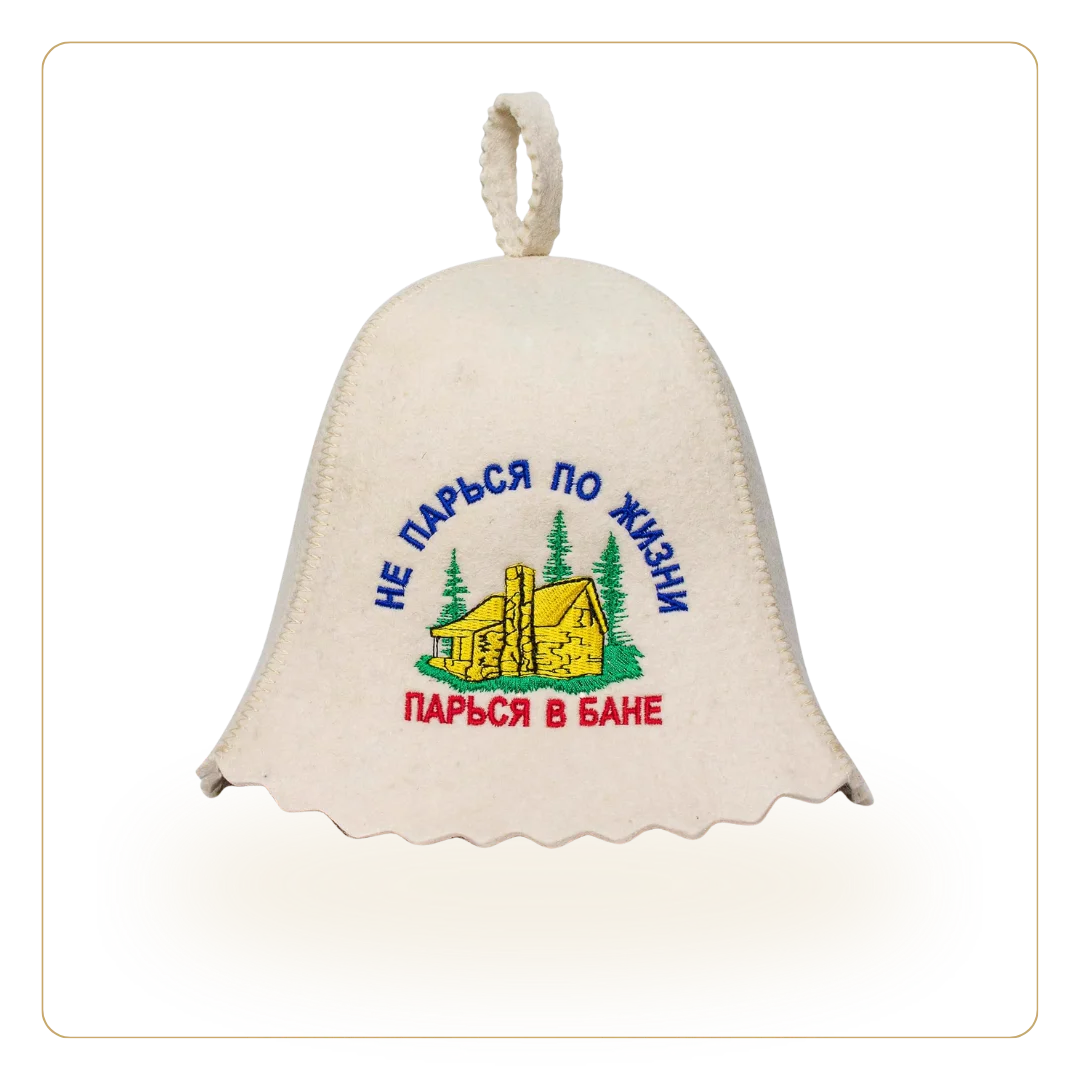
The ASKOLD is the entry-level hat that's been in banya culture long enough to have a reputation. 52 reviews at 4.5 stars, $18.45. It's not the most premium wool on the market, but it does what it's supposed to: slow down head overheating so you can stay in the steam room longer without getting dizzy.
For a first session, this is enough. If you end up doing this regularly, you can upgrade to merino later. Don't go to your first banya without any hat at all. Overheating on the first round tends to set a nervous tone for the whole session that's hard to recover from.
The "Don't Worry in Life" embroidery is either charming or annoying depending on your outlook. The 3mm wool is what matters, and it insulates correctly for banya temperatures.
Why We Like It
Correct wool spec, right price for a first hat, and a banya-specific design that's earned its place through use.
Price
$18.45 (check current pricing)
Birch Sauna Whisk, The Sauna Place (Latvian)
Best For: Your first parenie session. Softer and more forgiving than oak
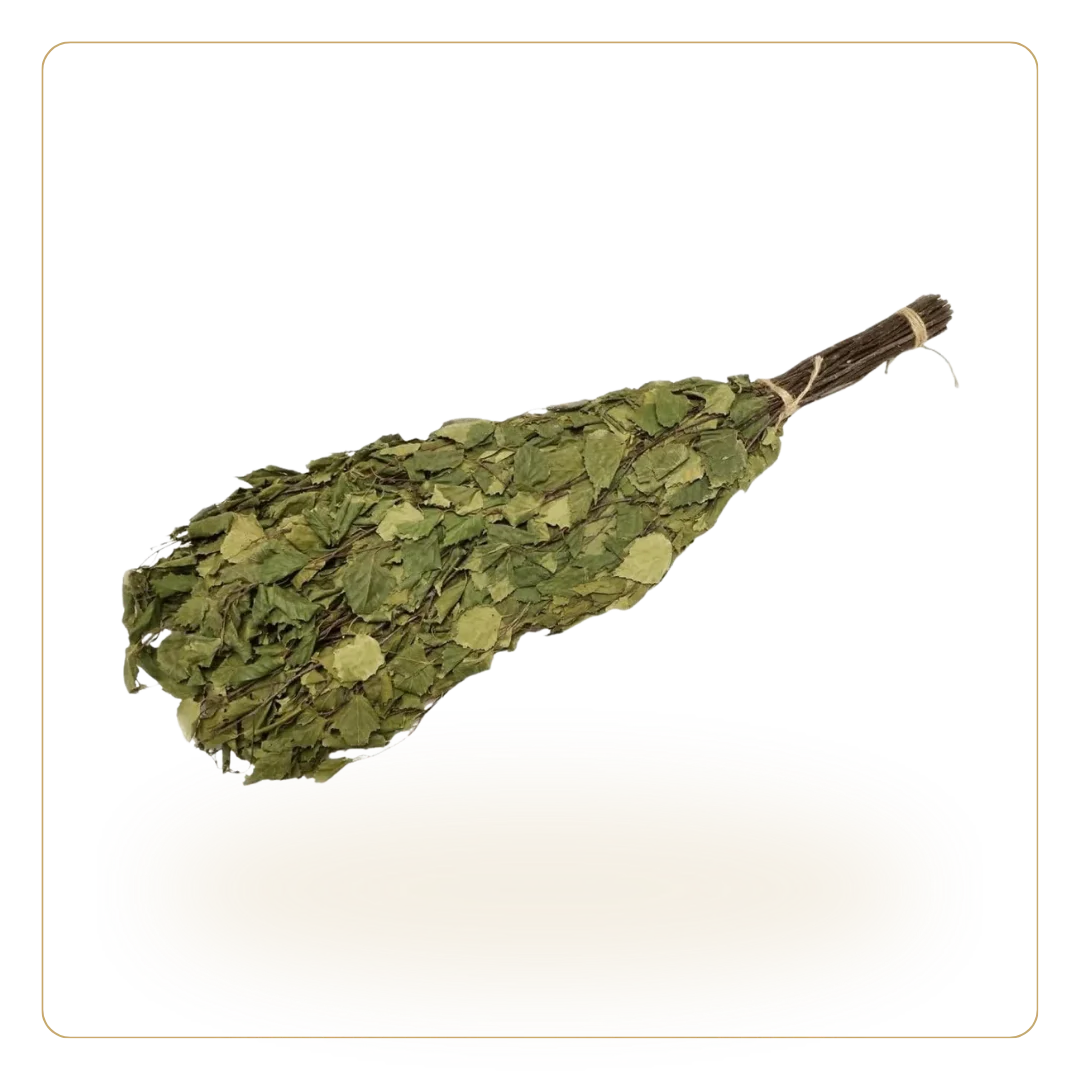
If the banya you're going to allows guests to bring their own venik, bring a birch one for your first session. Birch is the traditional choice and the most forgiving: softer leaves, a gentler scent, and a lighter bundle that's easier to handle if the technique is new to you.
The Sauna Place is a Latvian supplier with a genuine track record. Their birch is harvested in the Baltic region where banya culture has been continuous for centuries. Soak it for 20 minutes in warm water before your session.
Not every public banya expects guests to bring veniks. Call ahead first. But if yours does, this is the one to start with.
Why We Like It
Baltic-sourced, beginner-appropriate softness, and the right starting point before you work up to oak.
Price
$23.99 (check current pricing)
Wiiyita Wooden Sauna Backrest
Best For: Home sauna users. Comfort support during parilka rounds
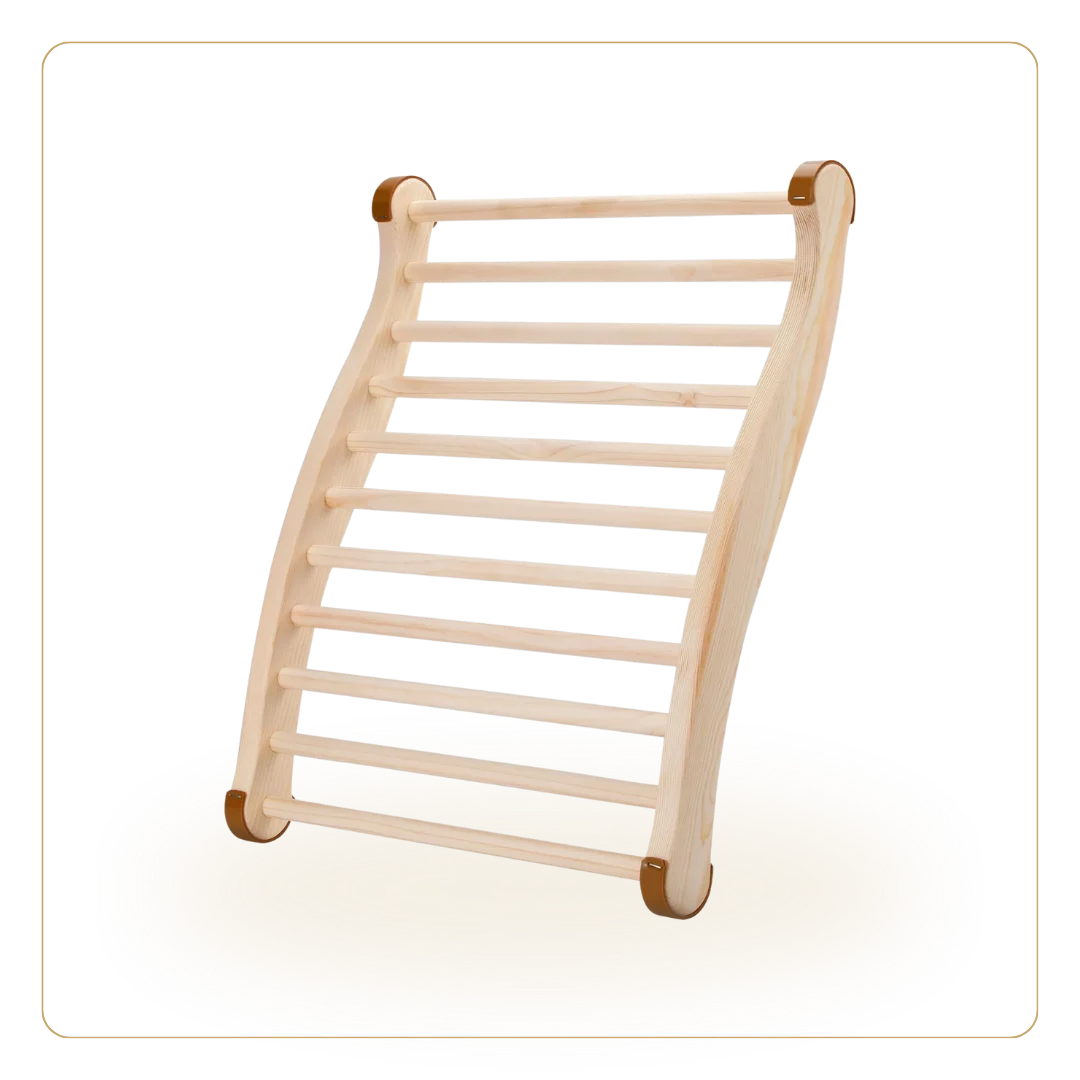
For the reader building a home sauna practice, a backrest changes a lot. Sitting upright in the heat for 15 minutes without support becomes uncomfortable in a way that pulls your attention away from the session. The S-shape on the Wiiyita keeps the lower back in a neutral position, which matters most during the longer middle rounds.
Natural pinewood, slip-resistant, 339 reviews at 4.5 stars with 100+ bought monthly. At $32.99 it's the practical choice rather than a splurge, and it holds up to regular sauna heat without warping.
If you're going to a public banya, you won't need this. Public banyas typically have built-in benches sized for the session. This is for the home setup.
Why We Like It
S-shape natural wood, 4.5 stars from real sauna users, and the upgrade that makes a 15-minute home round actually comfortable.
Price
$32.99 (check current pricing)
Benovo Sauna Headrest, Spruce Wood
Best For: Lying down rounds and the predbannik rest at home
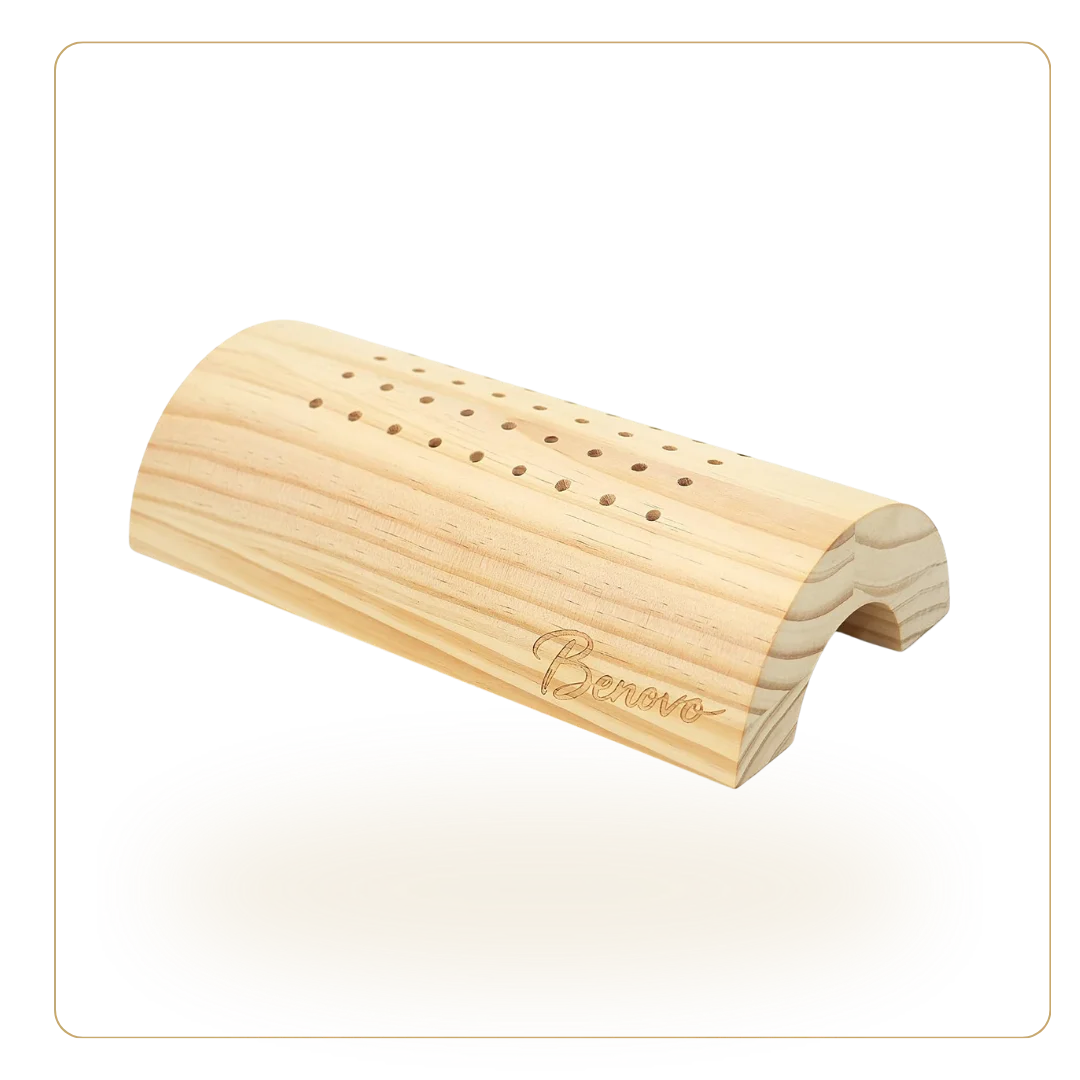
The predbannik rest is where a lot of the physiological work happens after a round. If you're doing this at home, the quality of that rest matters. A headrest means you can actually lie flat on a bench or a reclining chair without craning your neck, which makes 15 minutes of recovery feel different than sitting upright checking your phone.
Benovo's spruce wood headrest is handmade with ventilation holes drilled through the surface. Those holes matter: they keep the contact point from getting hot and stuffy against the neck during the steam room phase. 4.2 stars, $29.99, and one of those products where reviewers who bought it for skeptical reasons end up recommending it.
Pairs naturally with the backrest for a complete reclining setup in a home sauna.
Why We Like It
Ventilated spruce, ergonomic neck curve, and the piece that makes the predbannik rest feel like actual rest.
Price
$29.99 (check current pricing)
After the Session: Recovery and Home Practice
Northwood Sauna Menthol Crystals (4 oz)
Best For: Building home steam practice after your first public banya
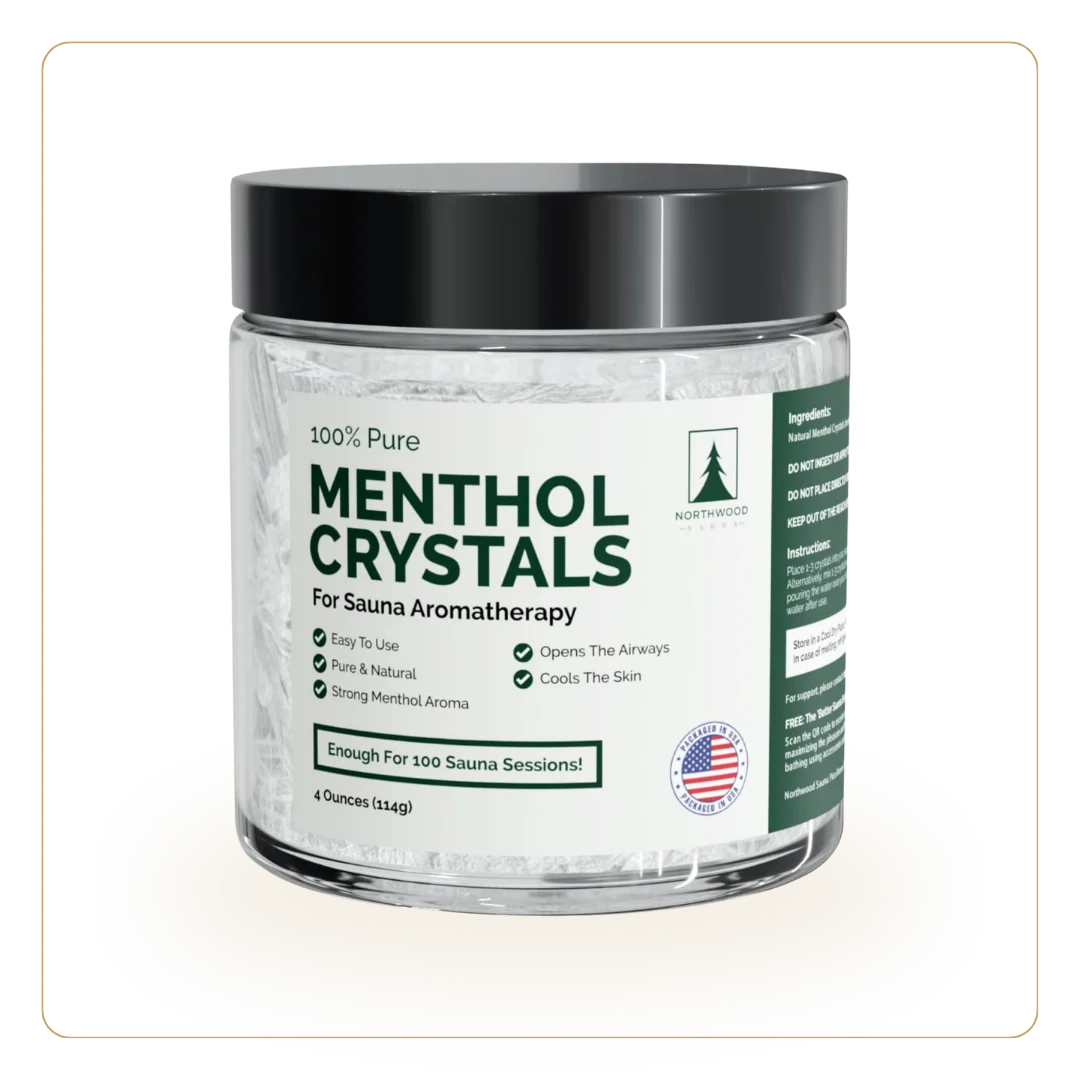
For the reader who comes back from their first session and wants to build something at home. Menthol crystals in a steam shower produce a noticeably different sensory experience than plain steam. Airways open, breathing shifts, and the session takes on a quality that's closer to a real banya aromatherapy round than a shower with the heat turned up.
Northwood's version is 100% pure, no additives, packaged in the US. Use one crystal, not more. This is a less-is-more product, and overdoing it on the first try is unpleasant.
A note for anyone with respiratory sensitivities or asthma: menthol at high concentrations can be irritating for some people. Check with your doctor before using if that applies to you.
Why We Like It
100% pure, correctly dosed for sauna use, and the closest home equivalent to the eucalyptus aromatherapy dimension of a real banya session.
Price
$29.97 (check current pricing)
Rento Birch Sauna Scented Oil
Best For: Home steam practice. Closes the aromatic gap without a wet venik
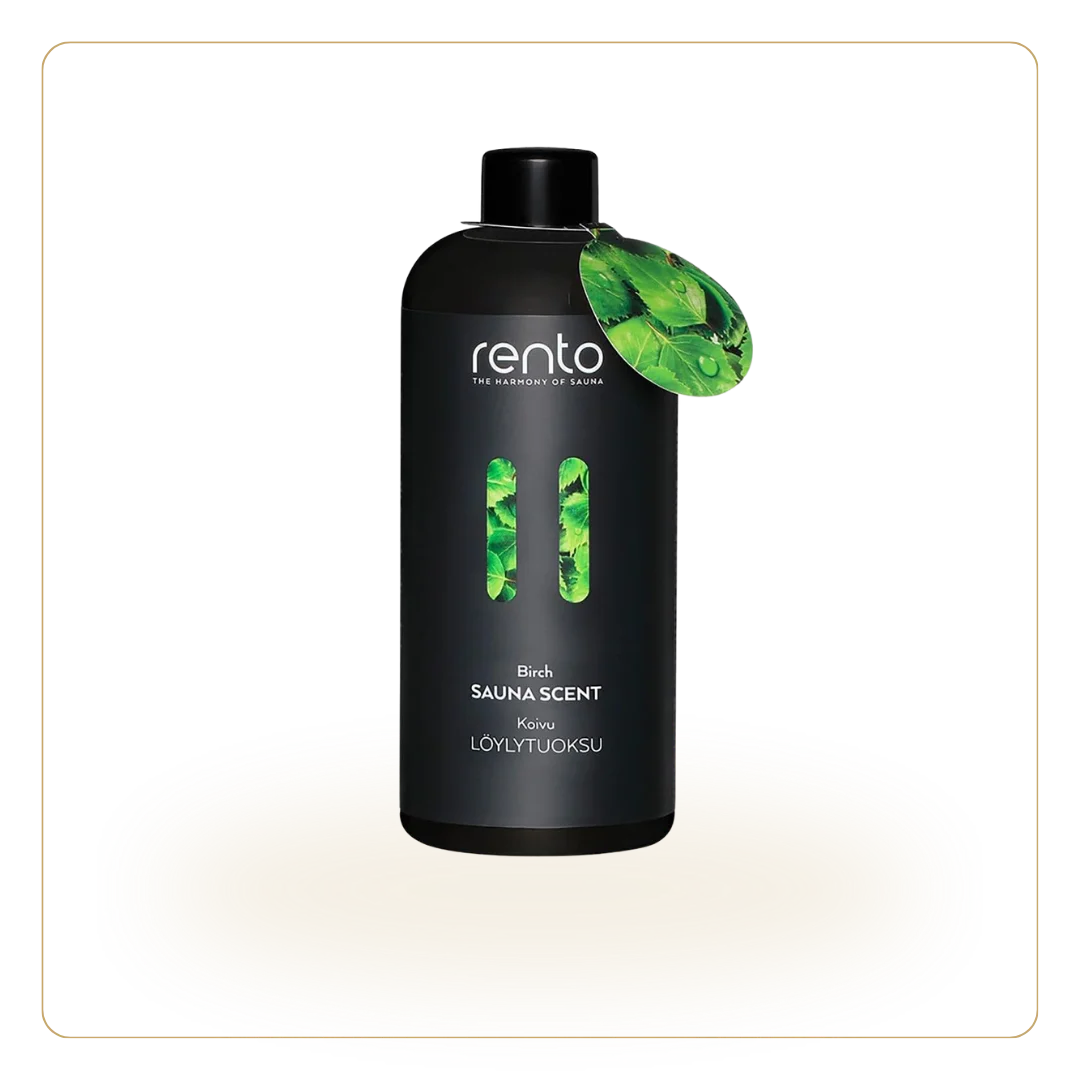
The biggest thing missing from a home steam session compared to a real banya is the aromatics from a wet birch venik. A few drops of Rento's birch oil on the steam source closes that gap more than you'd expect.
Finnish-made, sauna-grade concentration, 470 reviews at 4.3 stars. It disperses correctly in heat without going sharp or synthetic, which is the main failure mode of cheaper sauna oils. Use 3 to 5 drops at session start.
If you alternate this with the menthol crystals across sessions, you get the full aromatic range of a traditional banya at home: the warm birch note and the sharp menthol note, on different days.
Why We Like It
Finnish-made sauna-grade formula, 470 reviews of consistent performance, and the baseline for home banya aromatics.
Price
$9.95 (check current pricing)
Northwood Cedar Bucket and Ladle Set
Best For: Home sauna with a traditional heater. The core hardware piece
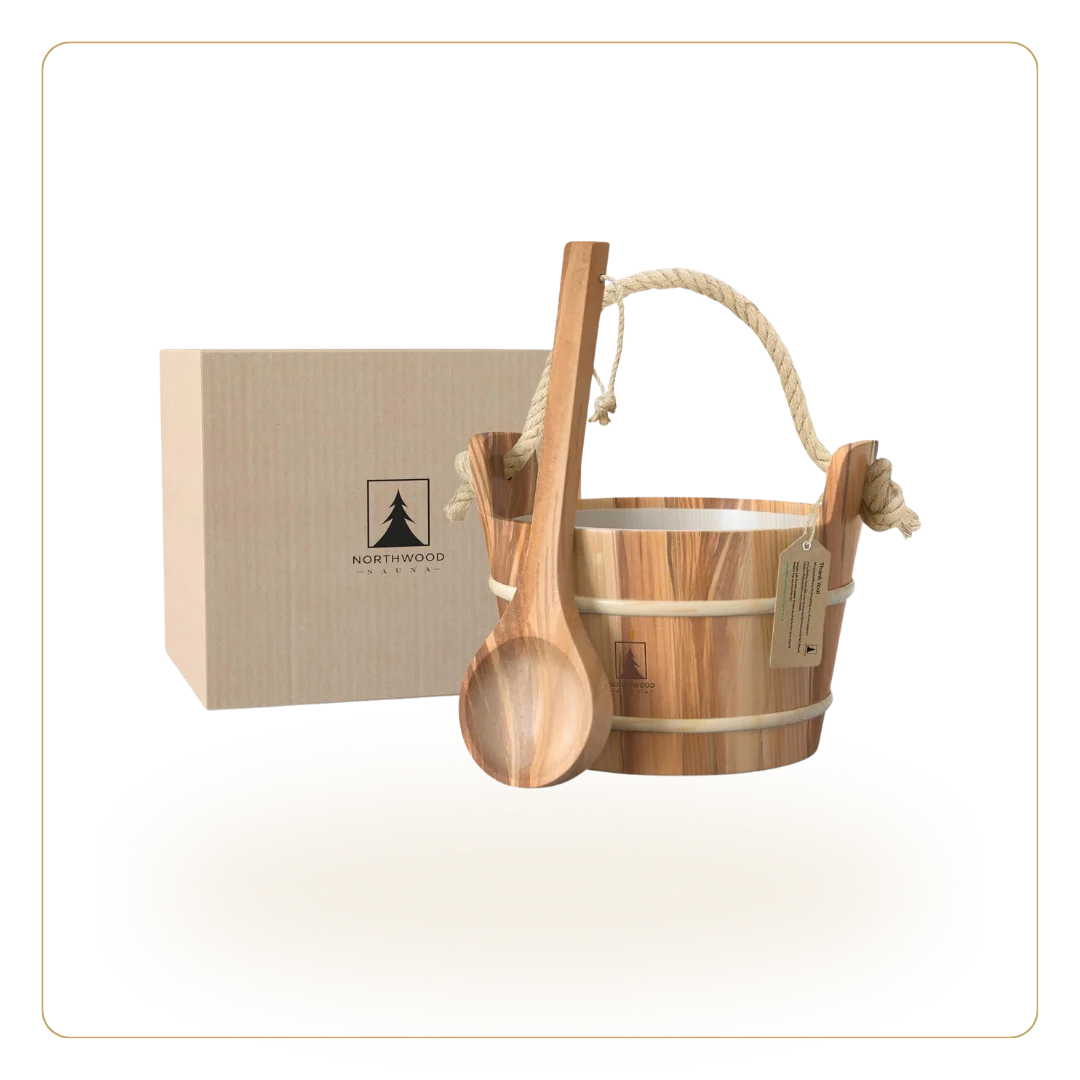
If you're building a home sauna practice, the bucket and ladle is what creates the banya's signature wet heat. Ladle cold water onto hot stones, and the humidity spikes immediately. That's the kamenka effect in miniature, and without it you're running a dry Finnish sauna, not a banya-style steam session.
Northwood's Canadian red cedar set is handmade, holds 4 liters (one gallon), and comes with a natural rope handle that stays cool. 120 reviews at 4.3 stars, Amazon's Choice in its category, 100+ bought monthly. The cedar wood resists warping and handles repeated wetting without degrading.
You don't need this for a public banya session. But if you're setting up at home, this is the first hardware purchase that matters.
Why We Like It
Canadian red cedar, handmade construction, and the piece that turns a home sauna into something closer to a real banya session.
Price
$89.97 (check current pricing)
Sauna Sauce Cooling Body Lotion, Peppermint Eucalyptus
Best For: Post-session skin cooling. The signal that the session is complete
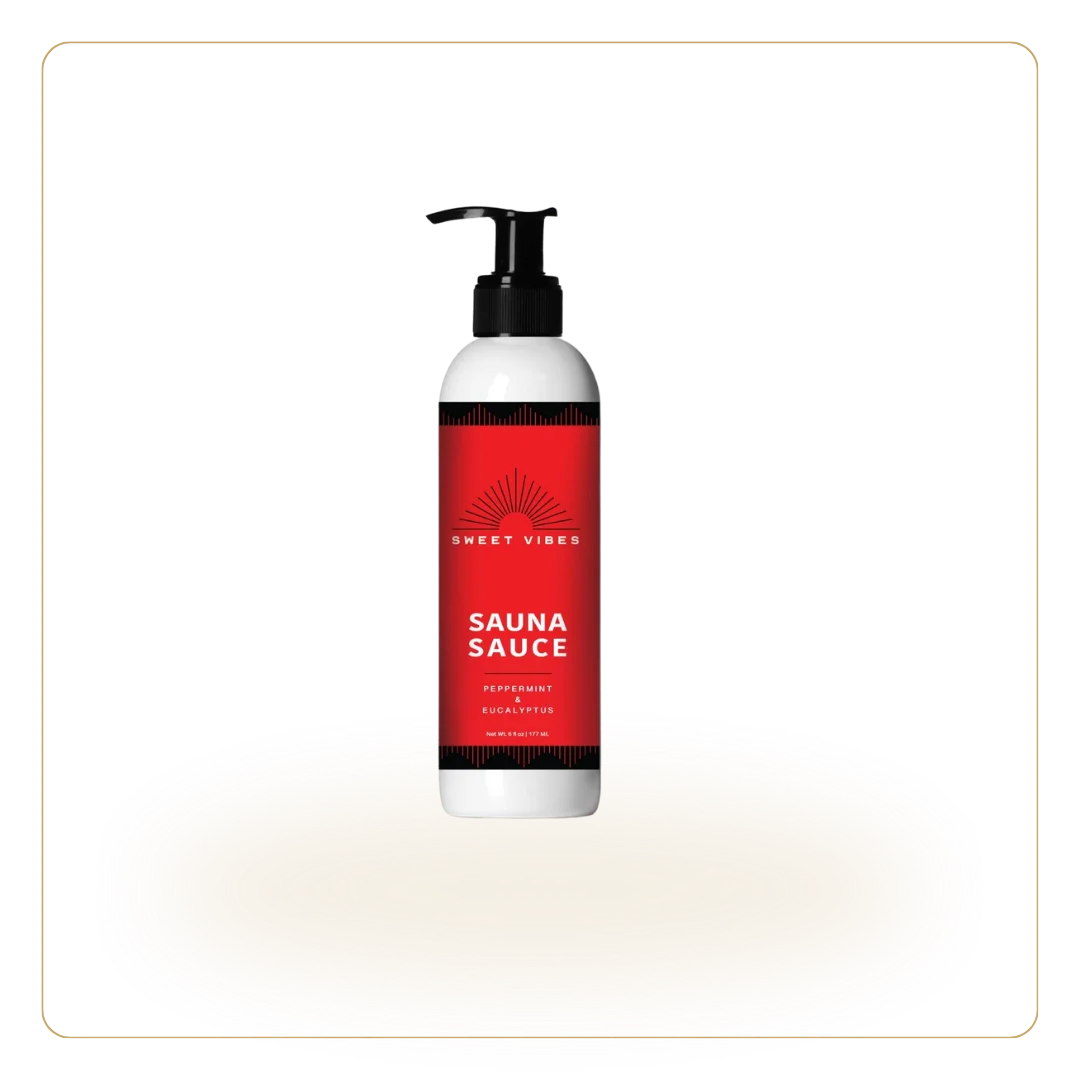
The post-session stage needs a finishing move. Sauna Sauce earns this slot because the peppermint-eucalyptus scent continues the in-session aromatics rather than interrupting them. You step out of the steam smelling like birch and eucalyptus; this keeps that sensory thread going through the wind-down.
Vegan, paraben-free, made in the USA, 79 reviews at 4.5 stars. Apply after your final cold contrast while skin is still slightly warm. The behavioral cue matters: it marks the end of the session as a deliberate step rather than just walking out of the shower.
This is one of those products you don't expect to notice the absence of until you forget it once and the wind-down feels less complete.
Why We Like It
Sauna-specific formulation, peppermint-eucalyptus continuity with the in-session aromatics, and a clean ingredient label.
Price
$39.99 (check current pricing)
Hydrofy Hydrogen Water and Electrolytes
Best For: Post-session rehydration after multi-round sessions
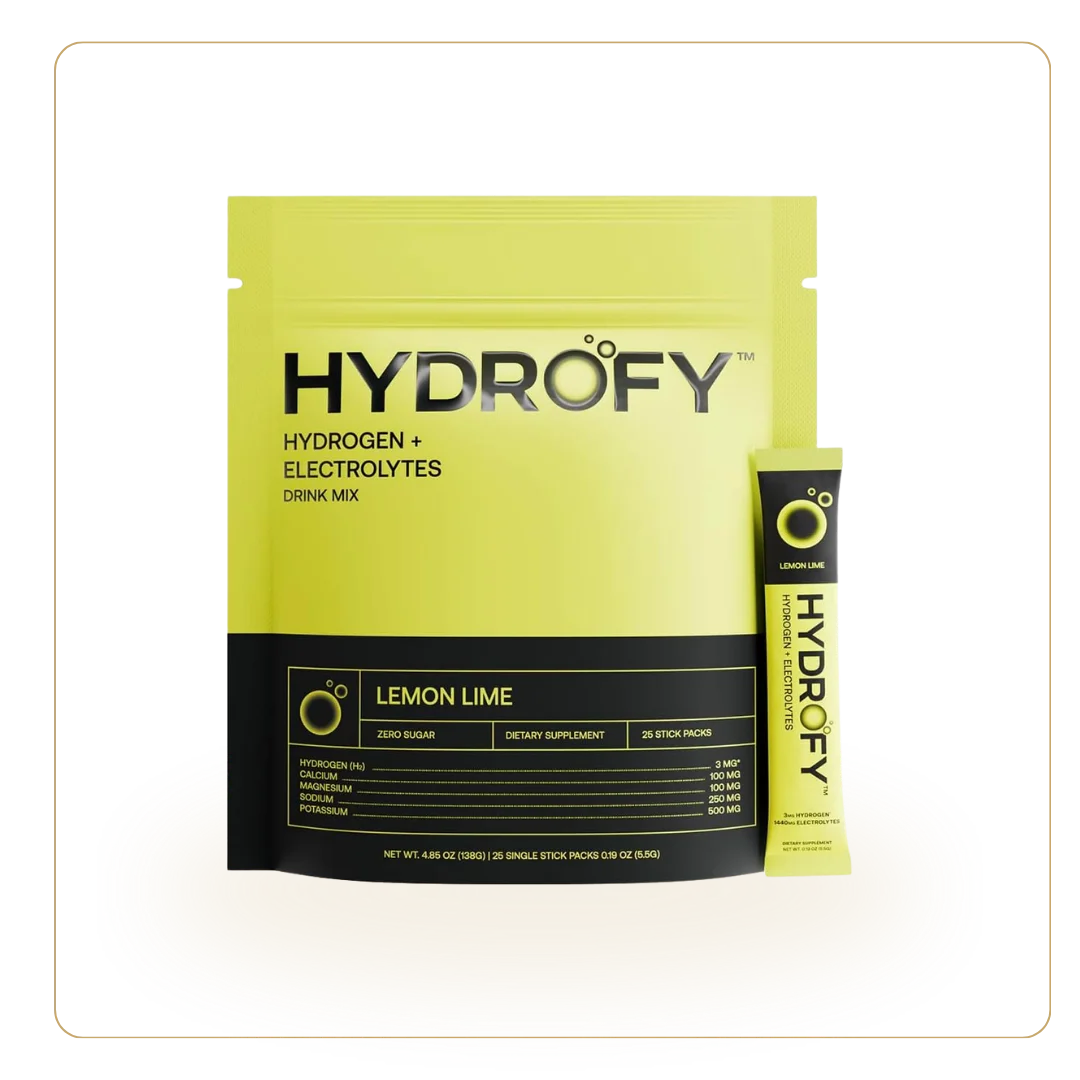
After a three-round banya session, you've lost more than water. Electrolytes (sodium, potassium, magnesium, calcium) leave with sweat, and replacing them with plain water alone doesn't give the body everything it needs to recover well. This is especially true if you tend to sweat heavily.
Hydrofy's blend sits higher on potassium and magnesium than most sports drinks, which matters for post-heat muscle recovery. No sugar, lemon lime flavor, 25 packets per box.
Mix one packet in water before you leave the predbannik for the last time. Gentle rehydration during the rest period, rather than gulping water in the changing room on the way out, is closer to how the traditional banya rest ends.
Why We Like It
Electrolyte ratios designed for real deficiencies rather than sodium loading, no sugar, and the right format for the predbannik wind-down.
Price
$44.99 (check current pricing)
Suvast 100% Wool Sauna Hat, Natural Felt
Best For: Traditional banya regulars who want the most authentic felt hat
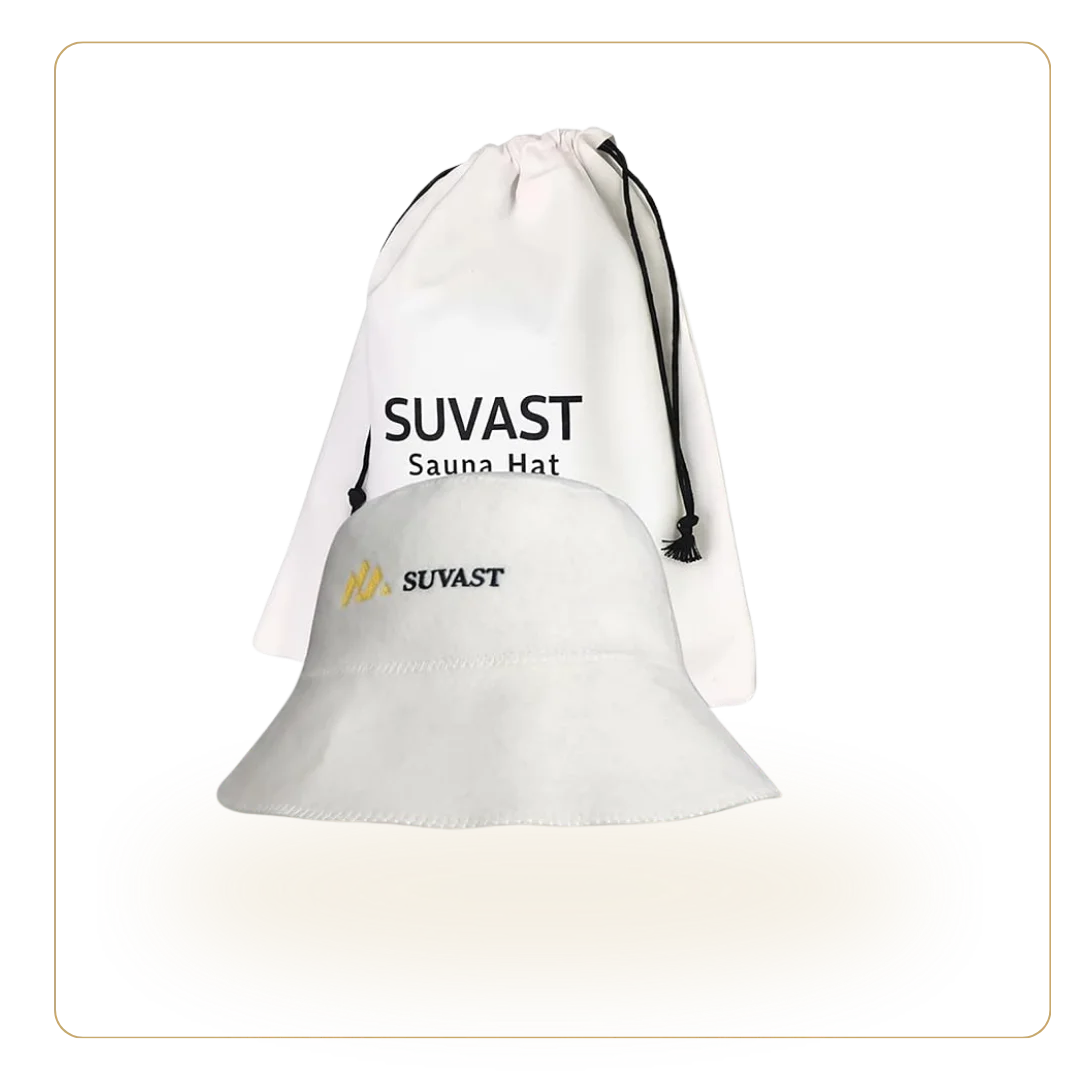
The Suvast is the most traditionally-shaped hat in this guide. Natural wool felt, plain white, no slogans or embroidery. In traditional banya culture, the hat is a functional object, not a personality statement, and the Suvast leans into that.
If you want the ASKOLD's personality or the DIVELUX's community reputation, those are better starting points. If you want something that looks like it belongs in a 100-year-old Russian bathhouse, this does.
100% wool, Amazon's Choice at $19.99, 40 reviews at 4.0 stars. The lower review count reflects a newer listing rather than a quality concern. Hand wash only.
Worth adding to the consideration set for readers who've done their first session and want to kit out properly for a regular practice.
Why We Like It
The most traditional-looking hat on this list. 100% natural wool felt, no branding, no gimmicks. Just the correct object for a banya session.
Price
$19.99 (check current pricing)
How long is a first banya session?+
Plan for two to three hours, though your first session may feel complete after an hour and a half. A typical session involves three to five rounds in the steam room, each 10–20 minutes, with cold contrast and predbannik rest between each one. Don't try to rush through the rounds. The rest periods are not optional, and cutting them short defeats most of the purpose of the session.Is the banya safe if I have a heart condition?+
Please speak with your cardiologist or healthcare provider before your first session. The banya involves meaningful cardiovascular demand. Heat raises heart rate, and the cold plunge causes a sharp vascular response. For people with controlled hypertension, some cardiologists consider sauna-style heat therapy low risk, but that's a conversation to have with your specific provider, not a general rule to rely on.Do I need to do the cold plunge?+
Not every banya requires it, and cold plunging carries its own considerations for some health conditions. That said, the contrast between heat and cold is where much of the physiological response happens. Without it, you're mostly doing a steam room session rather than a full banya protocol. If you can't do a full cold plunge, a cold shower or cold water poured over the skin works as a partial substitute. For heart or blood pressure concerns, ask your doctor before the cold contrast specifically.What should I eat or drink before a banya session?+
Light food at least an hour before is fine: fruit, a small snack, something that won't sit heavily. A full meal in the hour before is uncomfortable. Alcohol before a banya session is a bad idea: it impairs your ability to read your body's signals and increases dehydration. Arrive well hydrated, bring water to sip during rest periods, and plan for electrolyte replenishment after the session rather than during it.I felt emotional during or after my session. Is that normal?+
Yes, and it's more common than people admit. The heat-cold contrast produces a real physiological shift that can surface emotions that don't usually get attention when the nervous system is running at its normal pace. Some people feel tearful, some feel very quiet, some feel an unexpected sense of relief. None of it is cause for alarm. It generally passes into the settled, calm post-banya feeling that most people find is why they want to come back.Disclosure: The Ritual Guide is reader-supported. When you buy through links on this page, we may earn an affiliate commission. We independently select and review every product. Our recommendations are never influenced by brand partnerships. Learn more about our editorial process.
.webp&w=3840&q=75)
.webp&w=3840&q=75)
.webp&w=3840&q=75)