You stopped buying plastic water bottles. Great. So did a lot of people.
But here is the part that is harder to hear: whatever you switched to probably has the same problem.
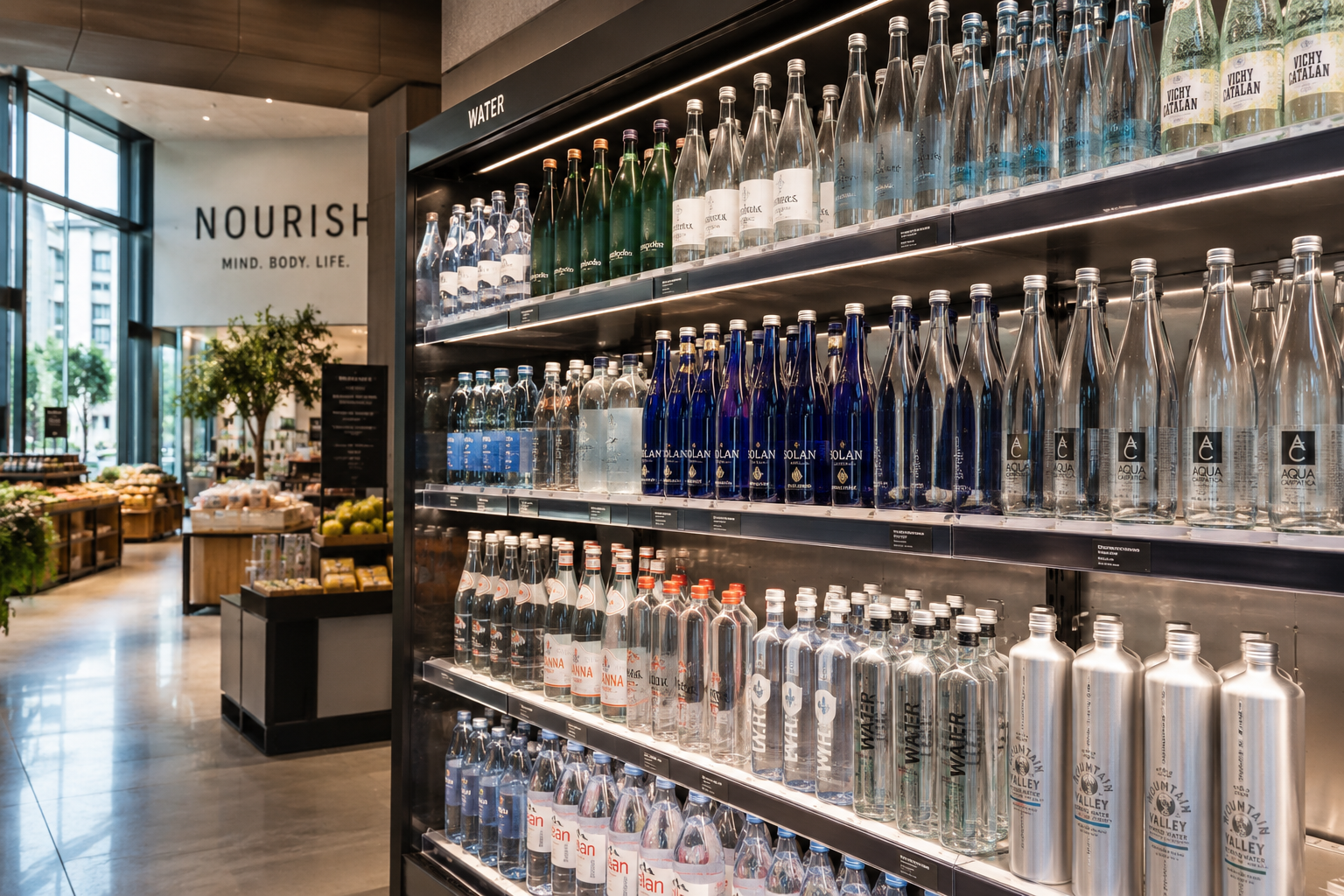
Glass bottles with metal caps? A 2025 study from the French food safety agency ANSES found they can contain nearly three times more microplastic particles than plastic bottles. The culprit is the polymer-based paint on the caps, which sheds plastic fragments every time you twist one open (Chaib et al., Journal of Food Composition and Analysis, 2025).
Standard aluminum cans? Most are still lined with a spray-on coating that contains BPA substitutes. The industry calls them "BPA-free," but that label just means they swapped one chemical for another. Many replacements, like BPS and BPF, carry their own endocrine disruption concerns.
Paper cartons? Lined with polyethylene plastic on the inside. The paper is the packaging, yet the plastic is what actually touches your water.
A 2024 Columbia University study published in PNAS found roughly 240,000 plastic fragments per liter in bottled water, with 90% of them small enough to cross cell membranes and enter your bloodstream (Qian et al., PNAS, 2024). A separate study published in the New England Journal of Medicine found that patients with microplastics detected in their arterial plaque had a 4.5X higher risk of heart attack, stroke, or death over nearly 3 years of follow-up (Marfella et al., NEJM, 2024).
And in April 2026, the EPA flagged microplastics and pharmaceuticals as drinking water contaminants for the first time.
The science is moving faster than the water industry. But a handful of brands are starting to take packaging seriously, not just as a sustainability story, but as a health one. Here is who is doing what:
WaterOuai
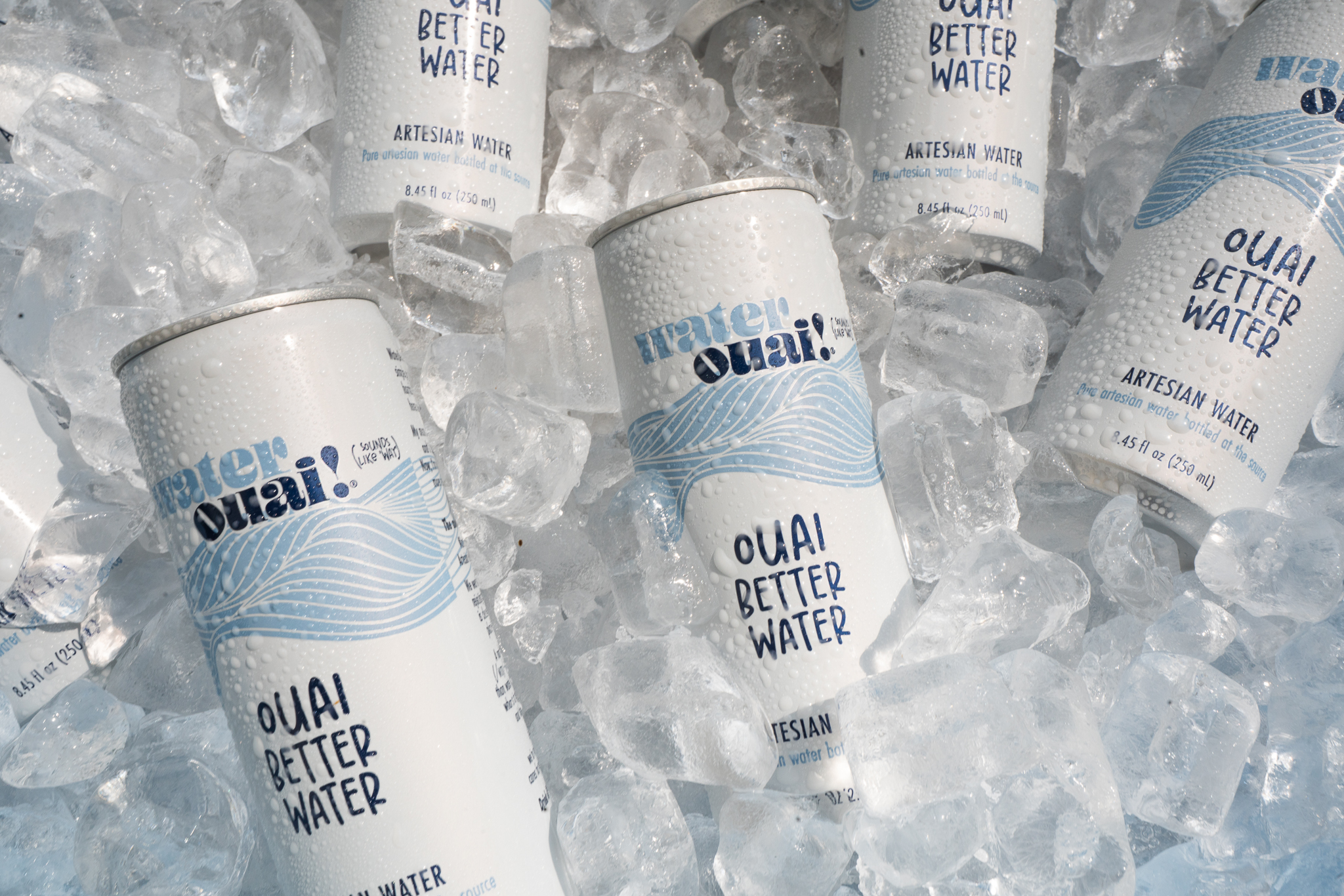
WaterOuai launched this week, founded by Holly Thaggard (the founder of Supergoop) and her 18-year-old son Will. If that sounds like a big leap from sunscreen to water, Holly sees it differently.
"We have changed the way the world thinks about sunscreen, and this is what we are going to do in the water category today," she told Inc. in an exclusive interview.
The product is an 8.45 ounce aluminum can filled with artesian water from the Edwards Aquifer in the Texas Hill Country, a 70 million year-old limestone formation that supplies water to roughly two million people including San Antonio. But the can itself is the story.
WaterOuai's SUPERCAN uses technology from Toyo Seikan, one of the largest can manufacturers in Japan. Instead of spraying a chemical lining onto the inside of a formed can (the industry standard), the process laminates a solid PET film directly onto the flat aluminum sheet before the can is shaped. No spray-on coatings. No solvent-based curing. No BPA, PFAS, phthalates, or bisphenol substitutes.
It is the first U.S. water brand to use this manufacturing process. The technology itself has won international packaging awards, but until now it had not been applied to a consumer water product in the States.
We asked Holly what made her decide the next chapter after Supergoop was about water.
"The evolution from SPF to H2O is a natural one. I have always said my two biggest beauty secrets are sunscreen and H2O," she told us. "I never expected to be pivoting into an entire new category. But it honestly felt like something I had to do after my son, Will, approached me and asked about how we can help change the way the world drinks water."
Will grew up never drinking out of plastic bottles. When he was in elementary school, a researcher named Michael Gurion came to his school assembly and told the room of parents: if you take anything from our hour together, do not let your boys drink out of plastic water bottles. That changed the Thaggard household. Years later, on a family vacation in South Africa, Will told his mom he had found a Japanese manufacturer using a new kind of can lining. Holly reserved the domain before they left the safari camp.
"He grew up never drinking out of plastic bottles, and after he understood why and learned more about the potentially harmful health effects of drinking microplastics, he felt inspired to find a way to bring cleaner water that is accessible and portable to more people," Holly said. "Especially to young kids and children who are more vulnerable."
We asked Holly what it is like building a company alongside her son versus building Supergoop alone.
"I spent 20 years building Supergoop, which means Will spent his entire life watching me on this journey," she said. "As a mom, it is an honor to see the same spirit and desire to innovate and help make the world a better place instilled in my son. I did not expect to build another company after Supergoop, but I saw such an amazing opportunity to help Will build a business and start a new legacy."
When Thaggard launched Supergoop more than twenty years ago, sunscreen was something people put on at the beach. She spent years partnering with schools, donating sunscreen to afterschool programs, and educating consumers until daily SPF became a wellness standard. She sold a majority stake to Blackstone for upwards of $700 million. TIME named Supergoop one of the 100 Most Influential Companies.
She is running the same playbook with WaterOuai. The brand is launching through hotels, schools, longevity clinics, and private aviation rather than grocery stores. Partners include Hotel Jerome in Aspen, Fountain Life, Jet Linx Aviation, and a handful of private schools in Texas. The team is under five people, bootstrapped, and includes early Supergoop employees.
We asked Holly what she is doing differently this time around.
"Sunscreen and water are two different categories, but there are certainly throughlines when it comes to the prevention-focused mission, the importance of education, and both brands being centered around preventative health and wellness," she said. "We are starting out with a small but mighty team who are all focused on helping us grow sustainably, while also spreading awareness and focusing on education at the heart of it all."
Loonen
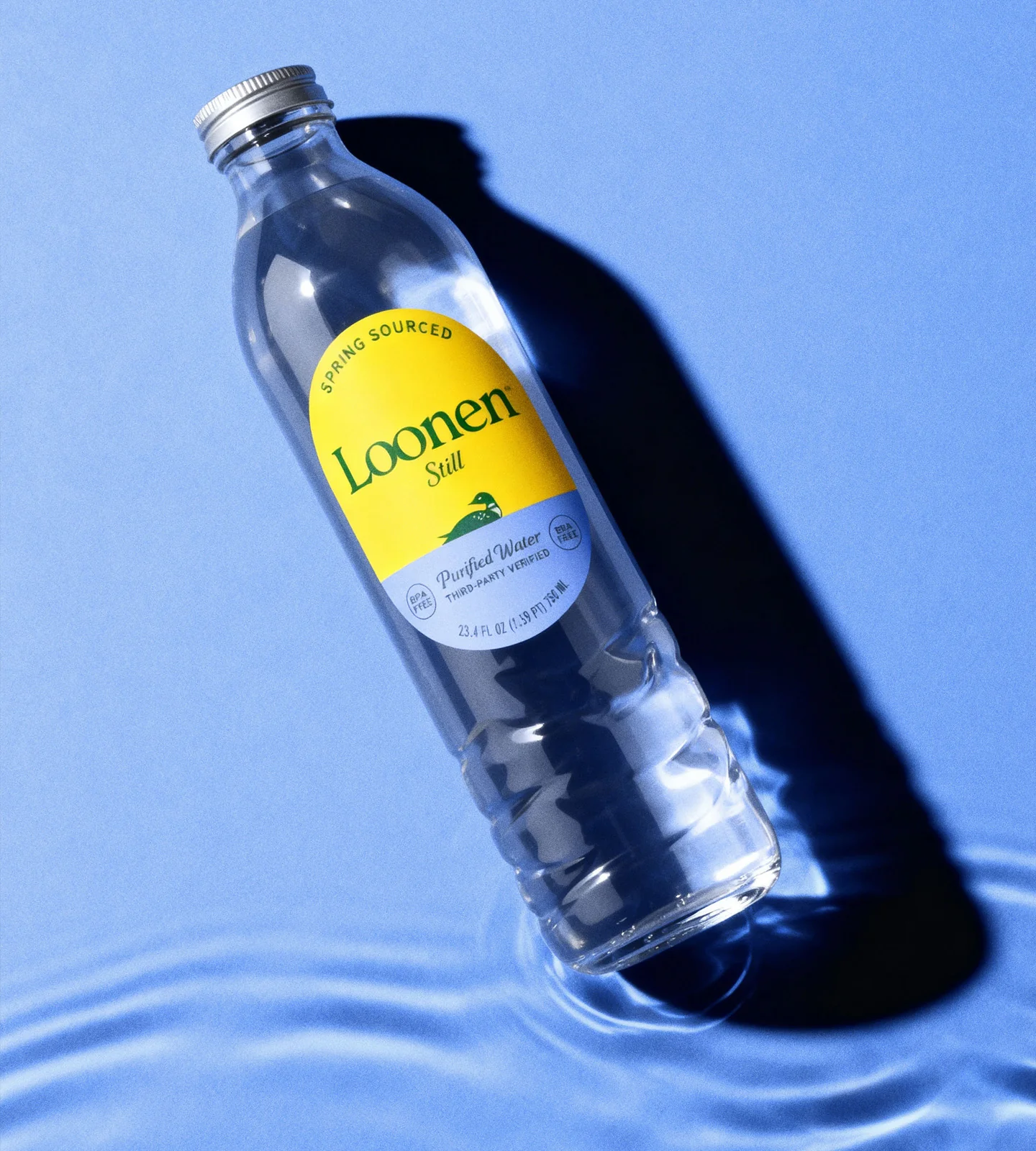
Loonen is the other new brand worth paying attention to. Founded by Clara Sieg and David Kimmell, Loonen launched in late 2025 with $6 million in funding from Brand Foundry and a different approach to the same problem.
"Before Loonen, I spent close to two decades on the investing side, and that taught me how hard building something is," Clara told Emily Sundburg of FeedMe. "I saw a lot of things fail and had no desire to be a founder because of that. But then life happens."
What happened was pregnancy. A few years ago, while trying to get pregnant, Clara started learning about plastics and endocrine disruptors. "We made swaps in our household that felt sustainable, just the boring, day-to-day parts of life that add up," she said. "That is when I got obsessed with water. Most of the category sits in plastic or plastic-lined aluminum, and there is very little transparency around what is actually in your water, even when it comes in glass."
Where WaterOuai focuses on reinventing the can, Loonen focuses on testing and transparency. The brand tests its finished product for over 350 contaminants, including microplastics, PFAS, phthalates, and bisphenols. Results are published and accessible via QR codes on every bottle. Their cap liners are independently verified as non-detect for PFAS and BPA. "Most others rely on geography and a waterfall picture as a proxy for purity," Clara said. "We chose a loon and test results." The loon is their logo, and there is a reason for it. Loons return to the same lake year after year unless the water quality declines. Researchers actually use them as bio-indicators for water purity.
The water is sourced from Palomar Mountain Spring in California and packaged exclusively in glass. Yes, glass, the same material the ANSES study flagged. But Loonen addresses the cap issue directly by verifying and disclosing its cap liner chemistry, something almost no other glass bottle brand does.
"Most other companies blend up their margins by adding plastic and plastic-lined aluminum into their SKU mix," Clara said. "But we are uncompromising on glass. Water has a very long shelf life, no temperature control required, meaning hot trucks, hot warehouses, and pallets baking in the sun. What degrades plastic? Light, heat, and time."
Loonen is available on Amazon ($35 for a 6-pack) and recently launched in Sprouts at $3.99 per bottle, with broader retail distribution through Geyser coming in New York.
Liquid Death
Liquid Death made canned water cool. That is not a small thing. The brand is valued at over $700 million, sells in tallboy cans, and turned "Death to Plastic" into a cultural moment. They have done more to get people off plastic water bottles than probably any other brand in the last five years.
But here is what Liquid Death does not do: disclose what is inside the can.
The brand describes its liner as an "FDA-approved food-grade polymer, nearly 20x thinner than paper, chemically stable and bonded to metal." That is vague enough to cover most standard coatings on the market. They do not name the polymer. They do not publish testing. They do not claim to be PFAS-free or phthalate-free.
That does not mean the product is unsafe. It means the brand's story is about plastic waste and marketing, not about what is touching your water inside the can.
Open Water
Open Water launched in 2014, making it one of the earliest aluminum-packaged water brands. The cans are BPA-free, and the brand emphasizes that aluminum is infinitely recyclable. The water is purified with added electrolytes.
Like Liquid Death, Open Water does not disclose the specific chemistry of its can lining beyond "BPA-free." The focus is on getting people off plastic, not on what the aluminum alternative is lined with.
Boxed Water Is Better
Boxed Water leans hard on the paper angle. The cartons are 74% paper, 25% plastic, and 1% aluminum. The brand has promoted claims like "100% plant-based" and "biodegradable," though in June 2025 the BBB's National Advertising Division found that some of those claims were not adequately supported.
The inner lining is polyethylene, a type of plastic. So while the outside is paper, the layer that actually contacts the water is still a plastic film. Boxed Water at least discloses this, which is more than most.
Flow Water
Flow packages its water in Tetra Pak cartons and has been expanding into aluminum bottles. The water is spring-sourced from the U.S. and Canada, and the brand emphasizes alkalinity and mineral content. Like Boxed Water, the Tetra Pak format uses a polyethylene inner lining.
Flow is working toward 100% compostable packaging, but that is still in development. For now, the container lining situation is similar to Boxed Water.
Waiakea
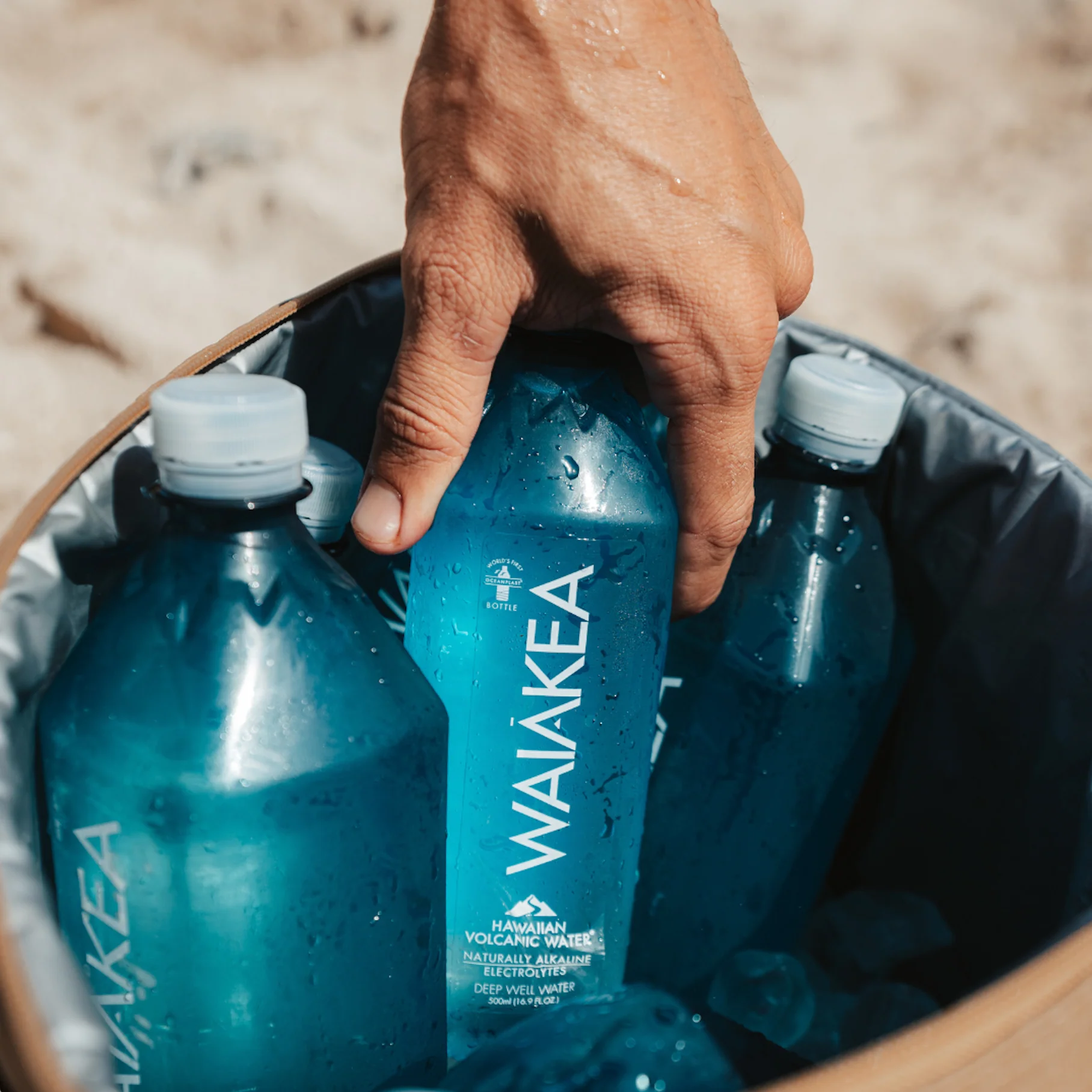
Waiakea filters through 14,000 feet of Hawaiian volcanic rock, which gives it a natural mineral profile and a good origin story. The brand positions itself as carbon-neutral and uses aluminum bottles.
The sustainability claims are strong. The liner transparency is not. Like most brands here, Waiakea says "BPA-free" without going further.
What This All Comes Down To
The clean water space in 2026 is split into two camps.
The first camp solved the plastic waste problem. Brands like Liquid Death, Open Water, and Boxed Water made it easy and socially acceptable to stop buying plastic bottles. That matters, but their story largely stops at the outside of the container.
The second camp is going deeper. WaterOuai and Loonen are asking a different question: what is the container doing to the water inside it? One is solving it through manufacturing innovation. The other is solving it through radical testing and transparency. Both are addressing the part of the problem that most brands have not touched yet.
Neither approach is wrong, but they are solving different problems. If your main goal is just getting off plastic, any aluminum or glass option is a step forward. If you care about what is actually lining the inside of your container and whether it is leaching into your water, the field narrows fast.
The research is not going to slow down. The NEJM findings, the Columbia nanoplastics data, the ANSES cap study, the EPA flagging microplastics as a contaminant for the first time. This is heading in one direction. The brands that built for it early are the ones that will look smart in five years.