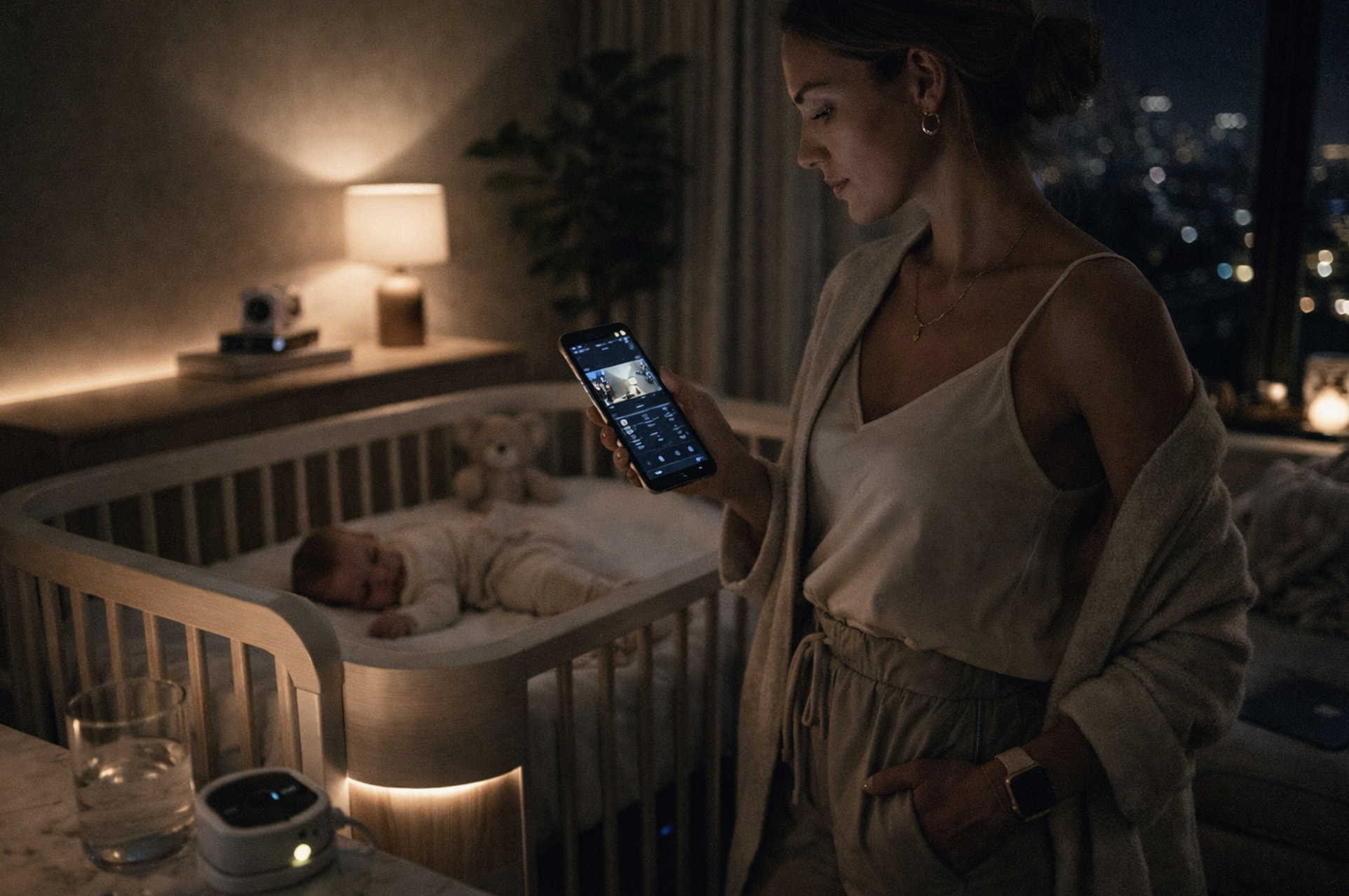
If there’s one thing every new parent wants more of, it’s sleep. My baby girl just turned one, and let me tell you... those first months were brutal. Friends swore their babies were sleeping through the night at 8 weeks. For me? Try 8 months. In the beginning, she was up 8–10 times a night (usually just wanting her paci popped back in). It wasn’t until I finally sleep-trained her - yes, a couple of tough cry-it-out nights - that she started resting better, and so did I.
That’s why I’m endlessly fascinated by smart parenting products. Anything that promises a little more peace of mind (and an extra hour of sleep) is worth looking at. Especially when you’re juggling midnight wakeups with the reality of going back to work.
Welcome to the era of smart parenting: a growing wave of products that promise better rest, more safety, and a calmer connection to your baby. Think AI-powered cribs that rock your little one back to sleep, wearable socks that track vitals, and baby monitors that feel more like mini command centers.
Why Parents Are Leaning on Baby Tech
The reality is, most babies wake up at least once or twice per night in the first year. Beyond sleep, there’s also safety: monitoring breathing, keeping tabs on room temperature, and making sure your baby is comfortable. These needs have fueled a multi-billion-dollar market:
- The smart baby monitor industry is valued at $1.4 billion today and projected to grow to $3.7 billion by 2034.
- Smart cribs reached $335 million in market value last year and are only getting more popular.
For many families (mine included), these products aren’t just conveniences, they’re a lifeline. Because for many of us waking up every two hours, you’ll try just about anything that might help everyone sleep better.
The Cult of Cradlewise
If you’ve heard of one product in this space, it’s probably Cradlewise. Since launching in 2019, this direct-to-consumer darling has built a cult following for its AI-powered smart crib. At $2,000, it’s a serious investment, but many parents I know swear it’s worth it.
Here’s why:
- The crib uses AI to detect when your baby is waking and automatically bounces them back to sleep.
- Built-in speakers play white noise or music.
- A camera monitors breathing and movement.
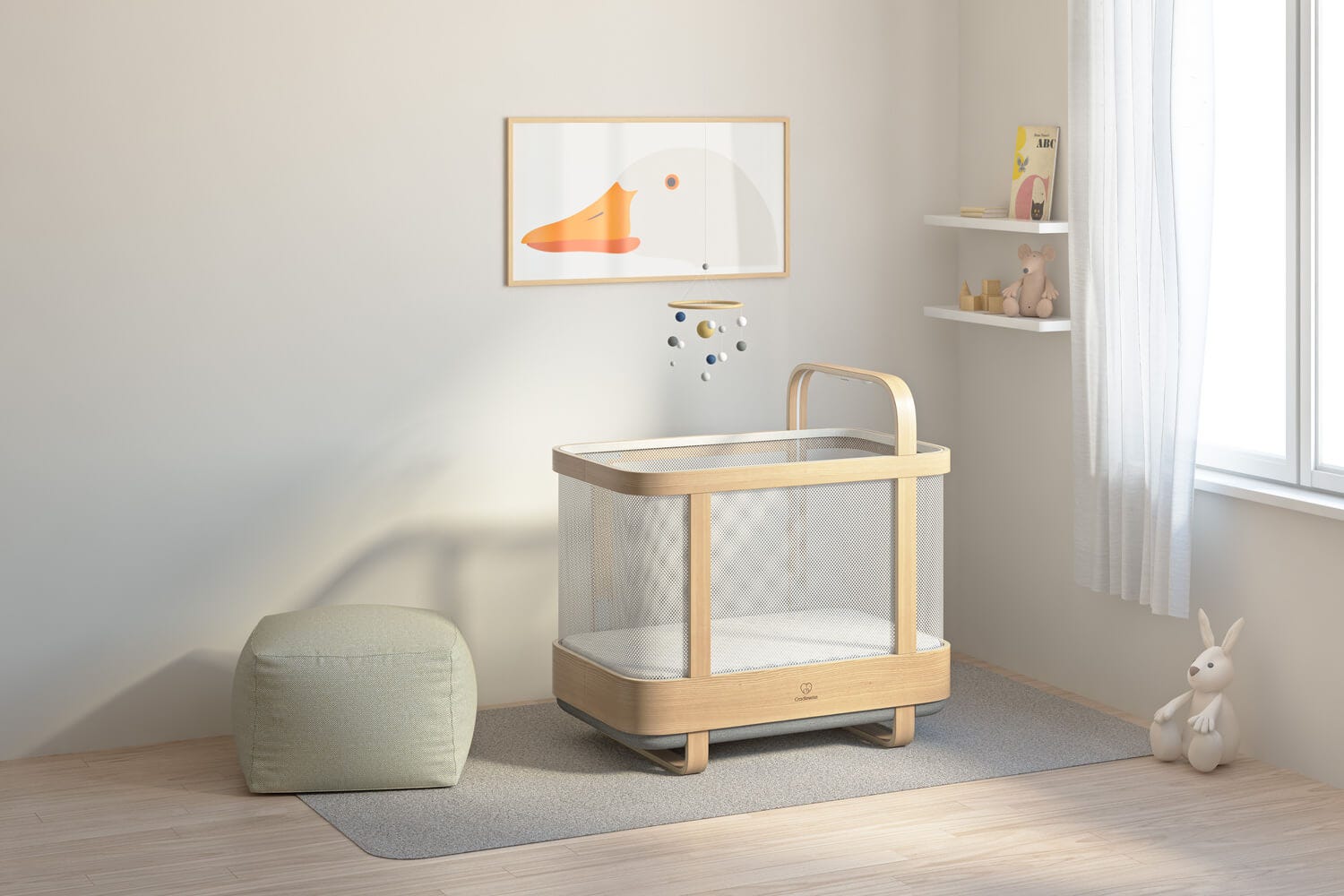
As a mom who’s paced the room at 3 a.m. trying to soothe my daughter back to sleep, I can see the appeal. The idea that a crib could “step in” when your baby stirs—even just long enough for you to get through a REM cycle—feels like a dream.
Meet Harbor: The New Wave of Smart Baby Monitors
While cribs get a lot of buzz, monitors are where most parents start—and a new brand called Harbor is stepping into the space with fresh energy. Unlike older, clunky monitors, Harbor is designed to be intuitive, sleek, and parent-first.
Harbor connects directly through your phone with smart features that make it more than just a camera:
- Environmental tracking: temperature and humidity sensors to keep your baby’s sleep space safe.
- Motion + sound detection: alerts that cut through the noise of everyday life.
- Built-in lullabies and white noise: no need for extra gadgets cluttering your nursery.
- Peace of mind: modern design and connectivity so parents feel in control, not overwhelmed.
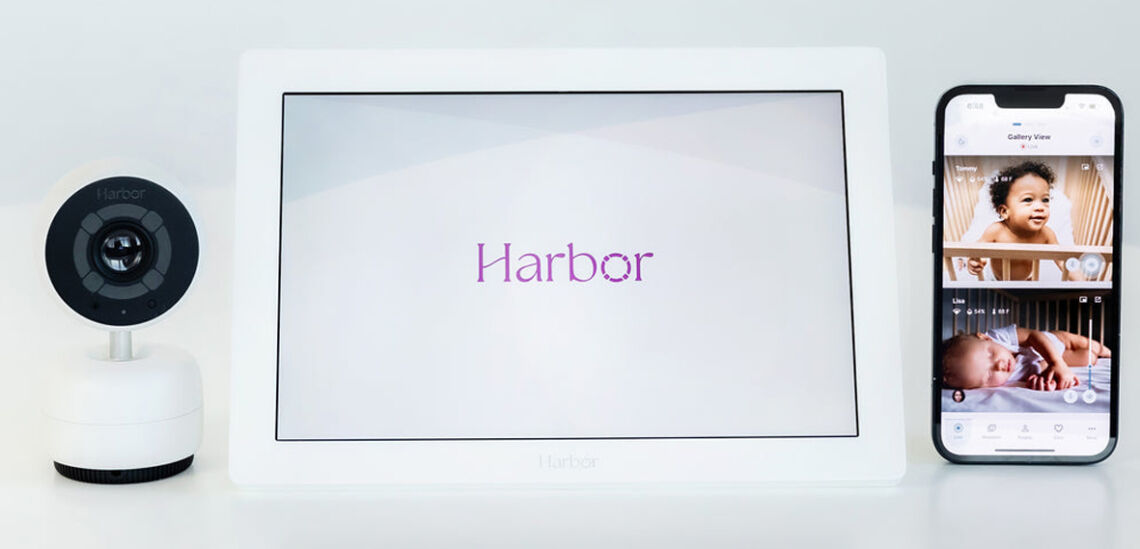
I wish I’d had Harbor during those early paci-pop-back-in months. Just knowing you can monitor the environment, get alerts, and soothe your baby from an app could make those exhausting stretches more manageable. I plan to use it for baby #2 though and compare to my Babysense monitor.
Other Smart Parenting Innovations to Know
This isn’t just about cribs and monitors. The category is booming with innovation across baby essentials:
- Wearable breast pumps: discreet, bra-friendly pumps controlled by apps, giving moms more flexibility.
- Owlet Dream Sock: wearable tech that tracks oxygen levels, heart rate, and sleep metrics.
- Cybex Gazelle e-stroller: a stroller with battery-powered wheels and a built-in rocking function.
- Arenti monitors: wi-fi connected systems with lullabies, motion detection, and air quality tracking.
Every product leans into the same promise: less worry, more rest, and more time to focus on actually being with your baby.
What’s Next for Smart Parenting?
Like all tech, there are trade-offs. These products are pricey, and not every family has the budget to drop $2,000 on a crib. There are also conversations to be had about data privacy, device over-reliance, and remembering that no gadget can replace a parent’s instincts.
But the trend is clear: parents are embracing technology that lightens the load. In the next few years, expect to see even more integrated ecosystems, like monitors that sync with cribs, wearables that feed data into apps, and AI systems that learn your baby’s rhythms and needs.
Parenting will never be “easy.” But if these tools give families a little more rest, reassurance, and space to enjoy the small moments, they just might be worth it. And if there’s one thing I’ve learned, it’s that sleep really is the most essential tool in your parenting toolbox.
G'night..